

720 Credit Score: Is It Good Enough Or Are You Leaving Money on the Table?
You finally hit 720. You've been paying on time, keeping your balances down, maybe even disputing a few old errors. And now you're wondering: is this actually good, or am I still in the middle of the pack?
Here's the honest answer: a 720 credit score is solid, but it's not the finish line. It puts you comfortably in the "Good" tier, and it opens real doors. But there's a gap between "good enough to qualify" and "good enough to get the best deal." That gap is costing a lot of people money they don't even know they're losing.
Let's break it all down so you know exactly where you stand and what to do next.
What Does a 720 Credit Score Actually Mean?
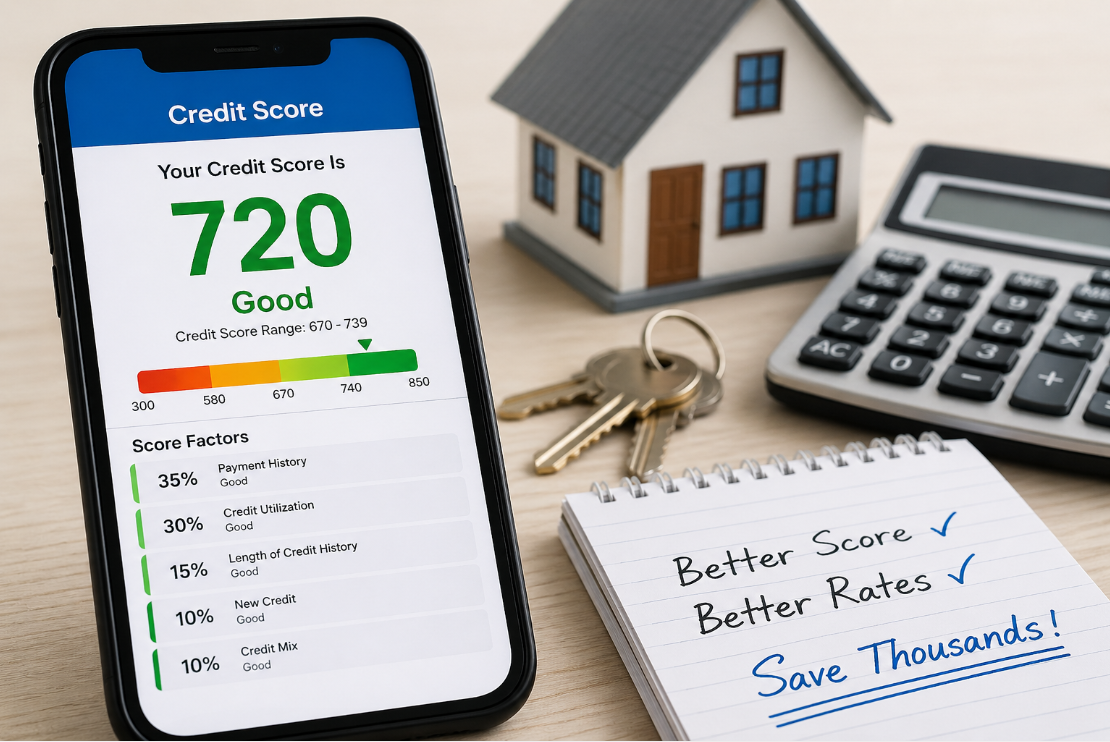
Credit scores run from 300 to 850. A 720 puts you in the "Good" category on the FICO scale, which spans from 670 to 739.
Here's how the full range breaks down:
FICO Range Category 800 – 850 Exceptional 740 – 799 Very Good 670 – 739 Good ← You're here 580 – 669 Fair 300 – 579Poor
According to Experian, the average American consumer has a FICO Score of 715 as of 2025. That means a 720 puts you just above average, not elite, but definitely not struggling either.
The takeaway? You're doing better than most. But "better than most" and "best possible terms" are two different things.
Is a 720 Credit Score Good?
Yes. Full stop.
Lenders see a 720 as a signal that you generally pay your bills on time, manage debt responsibly, and represent a relatively low risk. The statistical default rate for borrowers in the 720–739 FICO range is just 1.9%. Compare that to 4.6% for people in the 660–679 range, and you start to see why lenders treat you differently.
That said, a 720 is on the lower end of the Good tier. It's not the same as 760, 780, or 800. And when it comes to big-ticket loans, mortgages, auto loans, and personal loans, that difference adds up to real money.
What Can You Get with a 720 Credit Score?
🏡 Mortgages
Good news: you qualify. A 720 clears the minimum threshold for conventional loans (which require 620) and FHA loans (which require 580). You're not going to get turned away at the door.
But here's what most people don't talk about: you probably won't get the best available rate either. Lenders typically reserve their lowest mortgage rates for borrowers with scores of 740 and above. A difference of 20–30 points on your credit score can mean a meaningfully different interest rate and, on a 30-year mortgage, that compounds into thousands of dollars over time.
The good news? With a 720, you should qualify for rates close to the national average. And if you shop around with multiple lenders, which you absolutely should, you can find competitive offers.
🚗 Auto Loans
A 720 puts you in what lenders call the "prime" borrower category for auto loans. According to MyFICO data from early 2026, borrowers with a 720+ score are looking at an average APR of around 6.37% on a 60-month new car loan.
Drop down to the 690–719 range? That's 7.82%. Drop to 660–689? You're at 9.74%.
On a $40,000 car loan, those percentage points translate to roughly $4,000 more in interest paid over the life of the loan, even though all three scores are technically "good credit." The numbers don't lie.
💳 Credit Cards
With a 720, you'll qualify for most standard and rewards credit cards. Cash back cards, travel rewards, and lower APR offers are all within reach.
What's not within reach yet? The premium stuff. Airport lounge access, the most elite travel cards, and the very best 0% APR balance transfer offers tend to require 750 or higher. Not far off, but not there yet either.
💰 Personal Loans
Personal loans? You're in good shape. Most online lenders, banks, and credit unions will approve you, and you'll likely see competitive rates. Just remember: lenders also factor in your debt-to-income ratio and income, so a great credit score doesn't guarantee every offer.
What's Holding Your 720 Score Back?
Here's the real talk: most people sitting at 720 got there responsibly, but a few things are quietly preventing them from breaking into the "Very Good" tier.
Common culprits:
Credit utilization above 30%. Even if you pay your balance every month, carrying high balances relative to your limit drags your score down. Aim for under 10% if you want to push toward 750+.
A thin credit mix. FICO rewards you for handling different types of credit, revolving (credit cards) and installment (auto loans, mortgages, student loans). If you only have one type, you may be leaving points on the table.
Short credit history. A 720 achieved quickly with only a few years of history is more fragile than one built over a decade. The longer your accounts stay open and in good standing, the stronger the foundation.
A few late payments from years ago. Even old negative marks can suppress your score, especially if your file is otherwise thin. As they age and fall off, your score naturally climbs.
Recent hard inquiries. Applied for several cards or loans in the last 12 months? Multiple hard pulls can temporarily knock your score down a few points each.
How to Move Your 720 to 750 (and Beyond)
The jump from 720 to 750 isn't just cosmetic. It moves you from the bottom of "Good" to the middle of "Very Good," and lenders notice. Here's how to get there:
1. Drop your credit utilization below 10%. This is the fastest lever most people can pull. If your credit limit is $10,000 and your balance is $2,500, that's 25% utilization. Pay it down to under $1,000 and watch your score respond.
2. Don't close old accounts. Old accounts with clean histories are gold. Closing them shortens your average account age and removes available credit, both of which hurt your score.
3. Set up autopay for everything. Payment history is 35% of your FICO Score. One missed payment can take months to recover from. Autopay isn't just convenient, it's credit score insurance.
4. Space out new credit applications. Every time you apply for new credit, a hard inquiry hits your report. Space applications at least six months apart whenever possible.
5. Review your credit report for errors. This one is underrated. A 2024 survey found that a significant portion of credit reports contain errors or inaccuracies. An incorrect late payment, a duplicate account, or a collection that isn't yours can suppress your score unfairly. You're entitled to free reports from all three bureaus; check them.
6. Diversify your credit mix. If you only have credit cards, consider whether an installment loan (like a credit-builder loan) makes sense for your situation. A healthy mix can contribute up to 10% of your total score.
720 Credit Score: The Bottom Line
720 Is Good — But Are You Missing Out on Better Rates?
A 720 credit score puts you ahead of most borrowers — but even a small score increase could save you thousands on loans, credit cards, and mortgage rates. See what’s holding your score back and discover your fastest path to top-tier credit. :contentReference[oaicite:0]{index=0}
Get My Free Credit Analysis →No pressure. No guesswork. Just clear answers on how to move from good credit to great credit.
A 720 credit score means you've done a lot right. You'll qualify for mortgages, auto loans, personal loans, and a wide range of credit cards. You're a lower-risk borrower, and most lenders will work with you.
But here's the honest perspective: a 720 is a great launching pad, not a destination. The difference between 720 and 760 is the difference between "approved" and "approved at the best rate." On a mortgage or car loan, that gap translates into thousands of real dollars.
You're close. The habits that got you to 720 are the same ones that get you to 760 and beyond. The only question is whether you're actively optimizing or just coasting.