
Can I go to jail for not paying collections? It is one of the most common and most feared questions people ask after falling behind on debt.
No. You cannot be arrested for not paying a credit card or medical bill. But ignoring a court order after a lawsuit is a different story. Here is exactly where the risk comes from.
Myth: You can go to jail for unpaid debt
Fact: You cannot be jailed for the debt itself, but ignoring court orders related to that debt can create legal consequences
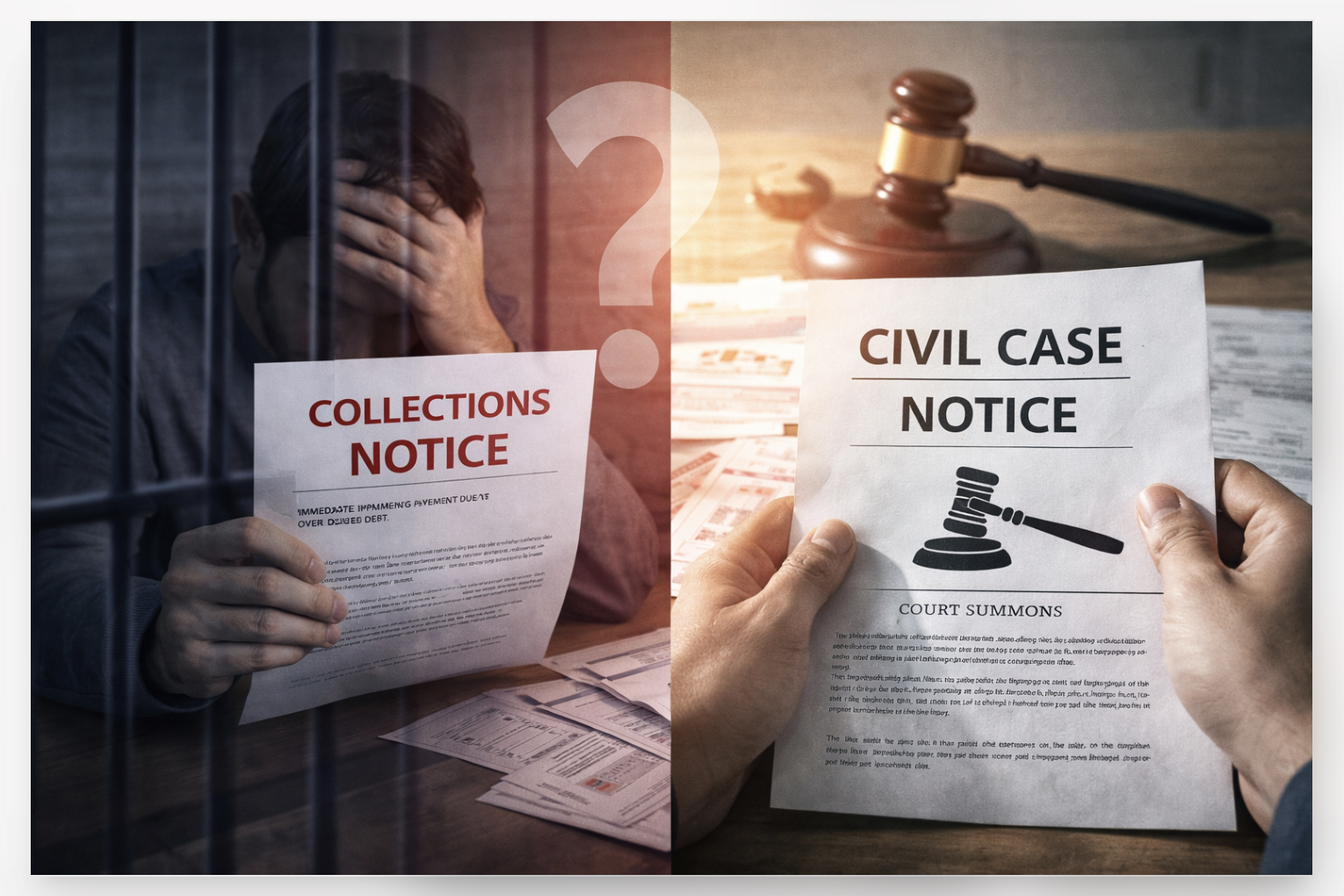
Unpaid collections are handled in civil court, not criminal court. But if a lawsuit is filed and you ignore a court summons, fail to appear at a hearing, or do not comply with a judge’s order, the consequences can escalate. In some cases, this can lead to a warrant related to noncompliance with the court, not the debt itself. This distinction is critical and often misunderstood.
This article explains what actually puts someone at legal risk, what does not, and how to respond in a way that protects your rights and avoids unnecessary escalation.
Debt Collection · Consumer Rights · FDCPA · Civil vs Criminal Debt · Court Orders
A debt collector told you that you could go to jail. That is a lie. But there is a real way debt can lead to arrest, and it is not what most people think. Here is the truth.
Updated March 2026 · Sources: CFPB, FTC, Nolo, Upsolve (reviewed March 2026), Ohio Fesenmyer Law, FDCPA 15 U.S.C. § 807(4)
Why People Are Scared of This
Debt collectors use fear. It works.
They call and say things like "you could be arrested" or "officers may be sent to your home." These threats feel real. But they are against the law. The Fair Debt Collection Practices Act, or FDCPA, makes it illegal for any collector to threaten you with jail for an unpaid debt. It does not matter how old the debt is. It does not matter how large it is. Threatening arrest to get you to pay is harassment under federal law.
If a collector says you will be arrested for not paying a credit card, they are lying to you and breaking the law at the same time. You can report that to the Consumer Financial Protection Bureau and also sue them for up to $1,000 per violation.
The United States Abolished Debtor's Prisons in 1833
This is not new law. The U.S. did away with debtor's prisons almost 200 years ago. Before 1833, people could be locked up just for owing money. That practice ended. Today, owing money on a credit card, medical bill, or personal loan is a civil matter. Civil matters are handled by civil courts. They are not crimes.
No judge in any U.S. state can sentence you to prison for failing to pay a collection account. It cannot happen. The law does not allow it.
So When Can Debt Lead to Arrest?
There is one real path from debt to jail. It does not go through the debt itself. It goes through the court.
Here is how it works. A debt collector sues you. You get a summons in the mail. You ignore it. The court enters a default judgment against you. You now owe that amount under a court order. The collector then asks the court to order you to appear at a debtor's examination. This hearing lets them ask questions about your income and assets. If you get that order and ignore it, a judge can hold you in contempt of court. A contempt warrant can be issued. That warrant is what leads to arrest.
You are not in jail for the debt. You are in jail for ignoring a court order. That is an important difference. But for the person behind bars, the end result feels the same.
Debts That CAN Lead to Jail
There are types of debt where jail is a real possibility. These are different from regular consumer debt.
Child support. This is a court-ordered obligation, not a regular debt. Missing child support payments can lead to contempt of court charges. Judges take this seriously. Some states allow incarceration for willful failure to pay.
Tax fraud or tax evasion. Not paying your taxes is different from fraud. The IRS does not arrest people for simply falling behind. But if you intentionally filed a false return or hid income, that is a federal crime. Criminal charges and prison are possible in those cases.
Deliberately bouncing checks. Writing a check you know will not clear, with the intent to defraud, can be treated as fraud in many states. That is criminal, not civil.
These situations involve either a court order or criminal intent. A credit card you stopped paying does not fit either of those. It is just a civil debt.
What a Collector Can Legally Do
Not being able to arrest you does not mean collectors have no power. They have real tools. You should know what those are.
They can call and write to you. They can report the debt to the credit bureaus. They can sell the debt to another collector. And most importantly, they can sue you. If they win in court, a judge can order wage garnishment in most states. They can also levy your bank account or place a lien on property you own.
In Ohio, wage garnishment caps at 25% of your net take-home pay. Your Social Security income, disability payments, and workers compensation are protected from garnishment for consumer debt.
None of that involves jail. It involves money leaving your paycheck or your bank. That is serious enough on its own, but it is a very different thing from being arrested.
What to Do If a Collector Threatens You With Jail
Write down what they said. Get the date, time, and the collector's name if possible. Save any voicemails. Take notes right after the call while it is fresh.
Then file a complaint at consumerfinance.gov. The CFPB logs every complaint and the collector must respond within 15 days. You can also file a complaint with the FTC at ReportFraud.ftc.gov.
Beyond complaints, you can sue the collector yourself. The FDCPA lets you recover up to $1,000 in damages per lawsuit, plus court costs and attorney fees paid by the collector. Many consumer law attorneys take these cases on contingency, meaning you pay nothing unless you win.
What to Know About the Court Process Itself
The path from collection call to court is not instant. It takes time. The collector must first decide to sue. Then they file a case. Then they serve you with a summons. You have a window to respond. In Ohio, that window is 28 days in most courts.
If you respond to the summons, you have a voice in the case. You can raise defenses. You can challenge whether the debt is yours, whether the amount is correct, and whether the statute of limitations has expired. Many debt buyers cannot prove a clean chain of ownership, and cases get dismissed because of that.
If you do not respond, you lose automatically. That default judgment is what opens the door to garnishment and, in the worst case, a contempt warrant if you later ignore post-judgment court orders too.
The single most powerful thing you can do with a collection lawsuit is show up. Or at minimum, file a written Answer before the deadline. That one step changes everything about the outcome.
Threatened With Arrest Over a Debt? Start Here.
Illegal threats from collectors are worth fighting. At the same time, the collection entry sitting on your credit report is hurting your score right now. A free 3-bureau audit finds every FCRA error in those entries before you decide your next move.
Get My Free Credit Audit → Secure · 2 minutes · No credit card requiredFrequently Asked Questions
Can you go to jail for not paying a credit card?
No. Credit card debt is a civil matter. You cannot be arrested or charged with a crime for not paying a credit card balance. A collector can sue you and a court can order garnishment if they win. But none of that involves jail. A collector who tells you otherwise is breaking federal law under the FDCPA.
Can you go to jail for not paying a medical bill?
No. Medical debt works the same way as credit card debt. It is civil, not criminal. A hospital or collection agency can take you to court, but they cannot have you arrested for the bill itself. If you get a court order afterward and ignore it, that is a separate issue. But the bill alone will never land you in jail.
Can a debt collector have you arrested?
No. A debt collector cannot have you arrested for owing money. Threatening arrest to pressure you into paying is a direct violation of the FDCPA, Section 807(4). You can report this threat to the CFPB and sue the collector for up to $1,000 in statutory damages plus any actual losses. Save every recording and write down every detail of the call.
What happens if you just never pay a collection?
The collector may continue calling. They may report the debt to the credit bureaus, where it stays for 7 years from the date of first delinquency. They may sell the debt to another collector. And they may sue you in civil court. If they sue you and win, they can garnish wages or levy bank accounts in most states. If you ignore court orders after that point, you risk a contempt warrant. But no one is coming to arrest you simply because you owe money to a collection agency.
Is it a crime to not pay a debt?
No. In the United States, not paying a consumer debt is not a crime. It is a civil matter. Crimes require criminal intent and a specific violation of criminal law. Failing to pay a credit card or medical bill does not meet that standard. The exception is intentional fraud, like knowingly bouncing checks or hiding assets from a bankruptcy court. Those involve criminal intent and can be treated as crimes.
Can you go to jail for old debt?
No, not for the debt itself. Old debt, often called zombie debt, is still a civil matter. Once the statute of limitations expires, the collector cannot win a lawsuit against you either. They can still call, and they can even still file a case, but you can raise the expired SOL as a complete defense. No amount of age on the debt makes it criminal. You still cannot be jailed for it.
-
I Got a Court Summons from a Debt Collector: Do I Have to Show Up? The 28-day answer deadline, how to file a free written response, and what really happens if you ignore a summons in Ohio courts.
-
Statute of Limitations on Debt in Columbus, OH Ohio's 6-year SOL window and how to raise it as a defense if a collector sues you on an expired account.
-
Can a Debt Collector Sue You for a 10-Year-Old Debt? How zombie debt works, why collectors still pursue old accounts, and your legal rights when the SOL has already expired.
-
CFPB: Can I Be Arrested for an Unpaid Debt? The official government answer from the Consumer Financial Protection Bureau. Confirms that arrest threats from debt collectors are FDCPA violations, and explains exactly when a court order, not the debt itself, can lead to a warrant.
-
FTC: Debt Collection FAQs The Federal Trade Commission's guide to your rights under the FDCPA. Covers what collectors can and cannot say, how to report illegal threats, and how to stop contact from collectors who break the rules.
-
Nolo: Civil Contempt and Debtor's Examinations Explained Nolo's attorney-written guide on the specific path from a civil debt lawsuit to a contempt arrest. Explains what a debtor's examination is, which states allow civil contempt warrants, and how to avoid the situation entirely.