
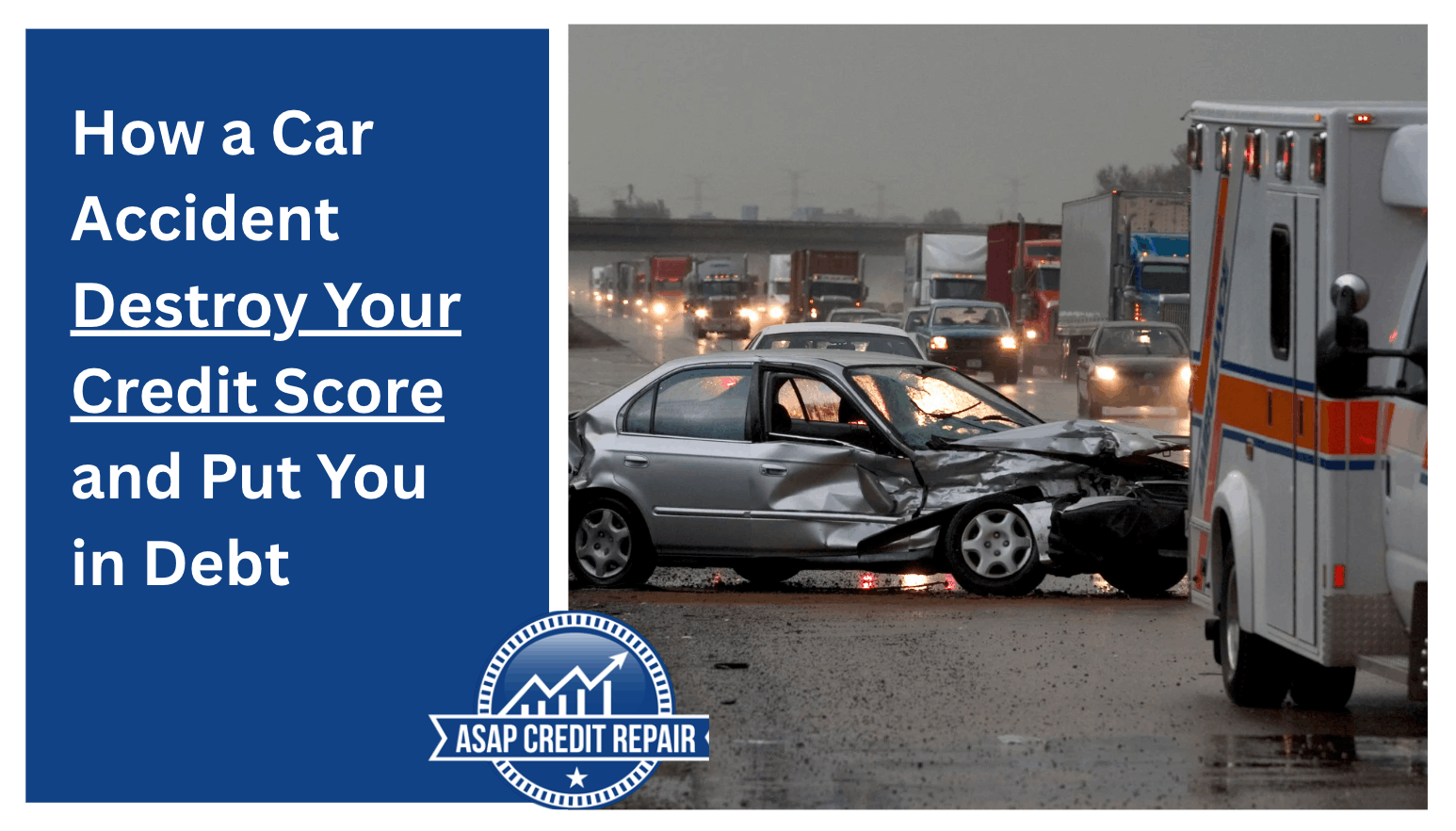
How a Car Accident Can Destroy Your Credit Score and Put You in Debt
Most people think about injuries after a crash. Few think about what the bills do to their finances months later. Here is the full picture.
By Joe Mahlow | Updated: March 13, 2026
⚡ At a Glance: What This Article Covers
- A car accident can slash your credit score by 50–100+ points through medical collections
- Medical debt is the #1 cause of bankruptcy in the U.S. — crashes are a leading trigger
- Missed payments, maxed cards, and gap loan balances all compound the credit damage
- You can pursue compensation for medical bills, lost wages, and future losses
- Acting early — with legal and credit repair help — dramatically limits the financial fallout
The ambulance ride. The emergency room. The follow-up appointments, the physical therapy, the prescription costs. Then the missed paychecks while you recover. Then the car repair bill. Then the collection notice.
For millions of accident victims across the country, a single crash sets off a financial chain reaction that lasts far longer than the physical injuries. According to Investopedia, medical debt is now the leading cause of personal bankruptcy in the United States — and car accidents are one of the fastest ways to accumulate it.
Most people walk away from a crash thinking about their health. Very few think about what that accident is quietly doing to their credit score and their financial future. By the time the damage becomes visible, it is often already severe.
Here is what actually happens to your finances after a car accident, and what you can do about it.
Is Accident Debt Wrecking Your Credit?
Medical collections, late payments, and surprise balances after a crash can stay on your report for up to 7 years. Don't let someone else's negligence define your financial future.
Get Your Free Credit Report Analysis →Why Do Accident Victims End Up in Debt?
The path from a car accident to serious debt is not complicated. It follows a predictable sequence that plays out the same way for thousands of people every year.
It starts with medical costs. Even a moderate accident can generate bills that run into the tens of thousands of dollars. An emergency room visit alone can cost between $2,000 and $10,000, depending on the treatment required. Add imaging, surgery, specialist visits, and rehabilitation, and the total climbs fast. Most people do not have savings that cover those numbers.
Then the income stops. Injuries keep people out of work. Some miss a few days. Others miss weeks or months. Some never return to the same job at all. When income drops and bills keep coming, people start making hard choices. They pay rent. They buy food. Medical bills get pushed to the back of the line.
When medical bills go unpaid long enough, providers send them to collections. That is when the credit damage begins. Learn more about how to prevent medical debt from going to collections after accidents before it reaches that stage.
How Does a Car Accident Hurt Your Credit Score?
A car accident does not show up on your credit report directly. But the financial fallout from one absolutely does. Several things can happen in sequence that each take a separate bite out of your score.
Medical Debt Sent to Collections
When a hospital or provider sends an unpaid bill to a collections agency, that agency can report it to the credit bureaus. As NerdWallet explains, a collections account can drop your credit score by 50 to 100 points or more depending on your starting score and how many accounts are involved. The damage stays on your report for up to seven years.
For a deeper look at the long-term effects, read our guide on how medical debt can impact your credit score and what you can do to dispute or resolve those entries.
Missed Payments on Existing Accounts
When money gets tight after an accident, people often fall behind on credit cards, car loans, or personal loans. A single payment that is 30 days late can drop your score significantly. Multiple late payments compound the damage quickly.
Maxed Out Credit Cards
Some accident victims put medical expenses and repair costs on credit cards just to survive the immediate crisis. High credit utilization — the percentage of your available credit that you are using — is one of the biggest factors in your credit score. Running balances up to or near their limits can cause a sharp drop even if you never miss a payment.
Vehicle Financing Problems
If your car is totaled and the insurance payout does not cover what you owe on your loan, you are left with a gap balance. If you cannot cover that gap, it can go to collections and hit your credit the same way medical debt does.
Lawsuits and Judgments
If you are found liable for an accident and a judgment is entered against you, that judgment can appear in public records and affect your financial standing in ways that go beyond your credit report alone. Justia's auto accident legal resource center provides a strong overview of how liability and judgments work in personal injury cases.
What Kinds of Debt Do Accident Victims Carry?
Accident-related debt falls into several categories, and most victims end up carrying more than one type at the same time.
- Medical debt — emergency treatment, hospitalization, surgeries, physical therapy, prescriptions, and ongoing care
- Vehicle repair or replacement debt — especially when insurance pays out less than what you owe (gap balance)
- Lost income — not a bill you receive, but money that stops coming while expenses stay the same
- Out-of-pocket costs — transportation to appointments, home care, childcare, and mobility equipment that insurance often does not cover
Can You Recover Financial Losses After an Accident?
Yes — and this is the part most accident victims do not fully understand when they are in the middle of the crisis. If another driver caused your accident, you have the legal right to pursue compensation that goes well beyond vehicle repair and immediate medical bills.
A personal injury claim can include compensation for all medical expenses (past and future), lost wages and reduced earning capacity, pain and suffering, property damage, and in serious cases, long-term care costs. That means the full financial picture of what the accident cost you — not just the first set of bills.
The challenge is that insurance companies do not automatically offer full compensation. They calculate their exposure and try to settle for as little as possible. Accepting an early settlement offer before you understand the full scope of your medical treatment and financial losses is one of the most costly mistakes accident victims make.
If you were injured in Texas, working with an experienced Texas car accident lawyer can help you understand the full value of your claim and prevent you from settling for far less than you deserve. Once you sign a release, you typically cannot go back and ask for more — even if your injuries turn out to be more serious than they appeared at first.
Your Accident Left More Than Physical Damage — Here's How to Fight Back Financially
Even after a settlement, accident victims are often left with collection accounts, damaged credit, and debt they didn't create. That's where credit repair becomes essential. Here's what ASAP Credit Repair can help you address:
- Medical collections appearing on your credit report from accident-related bills
- Late payments triggered by income loss during recovery
- Inaccurate or duplicate accounts submitted by debt buyers
- Negative items tied to gap loan balances on totaled vehicles
You don't have to absorb someone else's negligence on your credit report for the next seven years.
Start Your Free Credit Repair Review →What Happens If Medical Bills Go to Collections While Your Case Is Pending?
This is one of the most stressful parts of the process and one that injury lawyers deal with regularly. Your legal case can take months or even years to resolve. Your medical bills do not wait.
Some medical providers will agree to a medical lien — meaning they hold off on sending your bill to collections in exchange for a guarantee that they will be paid from your settlement when it comes through. Not all providers offer this, and negotiating it requires knowing who to contact and how to frame the request.
An experienced injury lawyer often handles this directly on behalf of their clients. They communicate with providers, set up payment agreements, and make sure that the bills do not drag down your credit while the case moves forward. The injury lawyers at Sutliff & Stout work with clients throughout Houston to manage exactly this kind of situation — making sure that financial pressure does not force victims into bad settlements before their cases are properly developed.
How Can You Protect Your Credit Score After an Accident?
You cannot always prevent the financial impact of a crash, but you can take steps to limit the damage.
- Contact your medical providers early. Tell them you were in an accident, that a claim or lawsuit is in progress, and ask about your options for deferring payment. Many providers have programs for exactly this situation.
- Talk to your creditors. If you know you are going to miss payments, call your lenders before the due date. Some will offer hardship programs, temporary deferrals, or reduced payment arrangements that protect your credit history.
- Check your credit reports. You are entitled to free credit reports from all three major bureaus through AnnualCreditReport.com. Review them for errors — especially if medical debts appear that you were not aware of or that are connected to your accident.
- Do not ignore collection notices. Ignoring debt does not make it go away. Responding to a collections agency and setting up even a minimal payment arrangement can sometimes prevent the account from being reported or reduce the impact on your score.
- Get legal help before accepting any settlement. A settlement that does not account for your ongoing treatment, future income loss, and total debt exposure may leave you holding bills the payout does not cover. A Texas car accident lawyer can assess the full value of your claim before you agree to anything.
Frequently Asked Questions
Can a car accident directly affect my credit score?
Not directly — the accident itself does not appear on your credit report. However, the financial consequences that follow, such as unpaid medical bills sent to collections, missed loan or credit card payments, and gap balance defaults, can each cause significant credit score damage that lingers for up to seven years.
How much can medical debt lower my credit score?
A single medical collection account can drop your score by 50 to 100 points or more, depending on your starting score and the number of accounts involved. Multiple collection entries from the same accident can compound the damage substantially.
What is a medical lien and how does it protect my credit?
A medical lien is an agreement where your healthcare provider delays billing collection in exchange for a guaranteed payment from your future personal injury settlement. This arrangement keeps unpaid bills from going to a collections agency while your case is still being resolved, which can protect your credit score during the legal process.
What can a Texas car accident lawyer do to help my finances?
Beyond pursuing a settlement, a Texas car accident attorney can negotiate with medical providers to set up payment holds or liens, advise you on the full financial value of your claim, and prevent you from accepting an early settlement that leaves you covering bills the payout does not address. The statute of limitations in Texas is two years, so early legal consultation is important.
Can accident-related items be removed from my credit report?
Yes. If the items are inaccurate, reported in error, or have passed the reporting time limit, they can be disputed and removed. Even accurate collections may be negotiable through pay-for-delete arrangements or goodwill letters. A credit repair specialist can help identify which items are eligible for challenge or removal.
What types of damages can I recover in a personal injury claim?
A personal injury claim in Texas can include compensation for past and future medical expenses, lost wages, reduced earning capacity, pain and suffering, property damage, and in some cases long-term care costs. These recoveries can directly offset the debt and credit damage caused by the accident.