

Credit Card Application Denied? Here are the obvious reasons.
Even applicants with an 800+ credit score hear "no" every day. Income gaps, frozen credit files, too many recent accounts, and high debt levels all trigger rejections that a perfect score cannot fix.
Running a Texas credit repair company, I see this situation constantly. One of the most unforgettable cases involved a client with an 810 credit score who got denied for a premium travel card. The reason had nothing to do with her credit history. Her annual income was $42,000, and the card required at least $60,000.
The Consumer Financial Protection Bureau's Consumer Credit Card Market Report confirms that income verification has become one of the top review factors in credit card underwriting (CFPB Credit Card Market Report).
Your credit score opens the door. Everything else decides whether you walk through it.
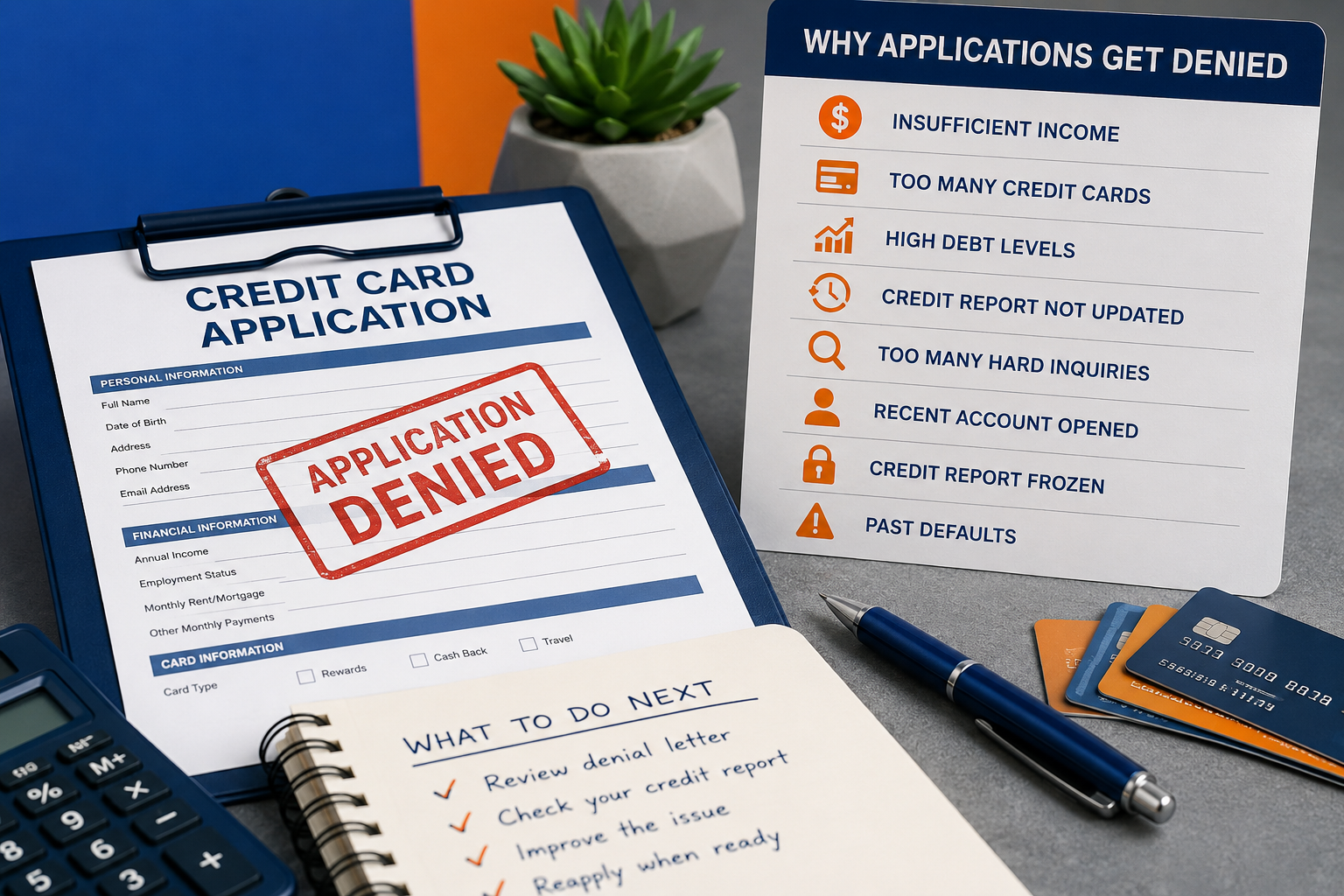
Credit Card Application Denied? Reasons Why
A high credit score signals responsible repayment. But credit card issuers evaluate far more than that. They look at your full financial profile before approving any new line.
Issuers check your income, your existing debt load, how many cards you already carry, and how recently you applied elsewhere. A single weak spot in any one of those areas can override an excellent credit score entirely.
The denial letter you receive must explain the specific reasons by law.
The Equal Credit Opportunity Act requires issuers to disclose the main factors behind every rejection. Read that letter carefully. It points directly to the area that needs work.
Your Income Does Not Meet the Card's Requirements
Income is the factor most applicants overlook. Credit card issuers set internal income thresholds for each card tier. Premium cards with high reward rates typically require a higher income to qualify.
A card that offers $500 in travel credits per year makes financial sense for the issuer only if the cardholder spends enough to generate interchange fees. Low-income applicants do not produce that volume, so issuers decline them regardless of credit score.
In our credit repair practice, income mismatches account for nearly 30% of the denial cases we handle each quarter. Most clients are surprised because no one told them the income bar existed. The issuer rarely advertises a minimum income requirement. It appears only after the denial.
Never misrepresent your income on a credit application. Lenders verify income through third-party data and IRS records. Inflating your income on a credit application is bank fraud and carries criminal penalties.
You Already Carry Too Many Credit Cards
Credit card issuers track how many open revolving accounts you hold. There is no published universal limit. Each issuer uses its own threshold based on your income and credit profile.
Some issuers apply formal rules. Chase is well known for its 5/24 policy, which declines applications from anyone who has opened five or more credit cards in the past 24 months. Other issuers use similar internal filters without publishing them.
The concern is credit exposure. An applicant with eight open credit cards and a $65,000 salary already carries significant potential debt. Adding a ninth card increases the issuer's risk. Even a flawless payment history does not always override that math.
Your Debt Load Is Too High
High debt affects your debt-to-income ratio. That ratio measures how much of your monthly gross income goes toward debt payments. Most issuers prefer a ratio below 36%.
Carrying high balances also raises your credit utilization rate. Utilization above 30% signals risk to issuers even when you make every payment on time. High utilization tells them you are already leaning heavily on available credit.
Adding a new card to a heavy debt load increases the issuer's exposure. They calculate the worst-case scenario, not the best one. If you defaulted tomorrow, how much would they lose? High existing debt makes that number larger.
Debt and income work together in an issuer's decision. A high income with high debt is manageable. A low income with high debt is a red flag. Both factors need to be in balance before you apply for a competitive card.
Your Credit Report Has Not Updated Yet
Credit reports do not update in real time. Creditors send new data to the three major bureaus on their own schedule, typically once per month. A balance you paid off last week may not appear as paid for another three to four weeks.
This lag creates a timing problem. You pay down a large balance to lower your utilization rate. You then apply for a new card. The bureau still shows the old, higher balance. The issuer sees elevated utilization and declines.
Wait 30 to 45 days after making major credit changes before submitting a new application. Pull your credit report at AnnualCreditReport.com to confirm the update is showing before you apply.
You Applied for Too Many Cards in a Short Period
Each credit card application triggers a hard inquiry on your credit report. A single hard inquiry lowers your score by a few points. Multiple inquiries in a short window signal financial instability to issuers.
Hard inquiries remain on your credit report for two years, according to the CFPB. The scoring impact fades after 12 months, but the inquiries themselves stay visible. Issuers see the full list and draw their own conclusions.
Spacing applications at least six months apart reduces this risk. If you are shopping for the best card, research options thoroughly before applying. Each application should be intentional, not exploratory.
You Just Opened a New Credit Account
A recently opened credit account triggers caution from issuers. It does not mean you are irresponsible. It means the issuer cannot yet measure how you handle that new account.
Issuers want to see a payment track record before extending more credit. Opening a card in January and applying for another in February gives them nothing to evaluate. They prefer at least six months of on-time payment history on new accounts before approving another.
New accounts also temporarily lower your average account age. A shorter account history is a minor negative signal in credit scoring models. Waiting allows your average account age to recover and gives your new account time to show a clean record.
Timing matters more than most applicants realize. The gap between opening a new account and applying for another one tells the issuer whether you are growing credit responsibly or chasing it.
Your Credit Report Is Frozen or Has a Fraud Alert
A security freeze blocks all access to your credit report. When an issuer cannot pull your report, they cannot approve your application. The denial is automatic.
A fraud alert does not block access completely. However, it requires the issuer to take extra verification steps before approving. Some issuers skip this additional work and decline instead.
Security freezes and temporary lifts are now free at all three major bureaus: Equifax, Experian, and TransUnion. If you applied while a freeze was active, lift it at the bureau the issuer uses, then reapply. Check your denial letter for which bureau the issuer accessed.
The steps to lift a freeze:
Go to the freeze management page of the relevant bureau.
Log in with the PIN or passcode you created when you froze the report.
Set the lift for a specific date range, not permanently.
Submit the application once the lift is confirmed.
A Past Default Still Affects Your Approval Odds
Negative marks stay on a credit report for up to seven years. But some issuers hold past defaults against applicants even after they drop off the report.
Issuers maintain internal records of past accounts. If you previously defaulted on a card with that same issuer, they may decline a new application even after your credit score has fully recovered. This is a business decision, not a credit bureau decision.
When this happens, call the issuer's reconsideration line directly. Resolving any remaining balance tied to the old default increases your chance of approval. Some issuers will reopen your eligibility once the balance is settled and your credit profile looks strong.
Credit Card Denied?
Find Out What’s Holding Your Credit Back
A denial does not always mean bad credit. High debt, reporting errors, old collections, or credit file issues can stop approvals. Let ASAP Credit Repair help you review what lenders may be seeing.
Get Your Credit Report ReviewSee what may be hurting your approval odds before you apply again.
What to Do After a Credit Card Denial
A denial is not permanent. It is information. Use it.
Read the denial letter in full. Federal law requires the issuer to list the specific reasons.
Pull your free credit report at AnnualCreditReport.com to verify the information the issuer saw.
Identify the one or two factors that caused the denial and address them before reapplying.
Call the issuer's reconsideration line. Many issuers allow you to speak with a human reviewer who can override an automated denial.
Wait at least three to six months before submitting a new application to the same issuer.
Most credit card applications run through automated systems. These systems apply rules mechanically without context. A phone call to the reconsideration line puts a human in the loop who can weigh your full situation.
Credit card denial is a feedback loop, not a dead end. Each denial points to a specific gap. Close that gap and the next application stands on stronger ground.