

A good credit score sits between 690 and 719 on the standard 300-850 scale. Scores above 720 are excellent. Scores between 630 and 689 are fair. Anything below 630 falls into the bad credit range.
Running a credit repair company, I regularly work with clients who are surprised to learn that different lenders use different approval standards. A score that qualifies for one lender may not qualify for another, which is why understanding both your credit score and the lender's requirements is important before applying.
Two scoring systems dominate the market: FICO and VantageScore. Both use a 300-850 range. Both pull data from the same three credit bureaus. But they weigh that data differently, and knowing the difference matters.
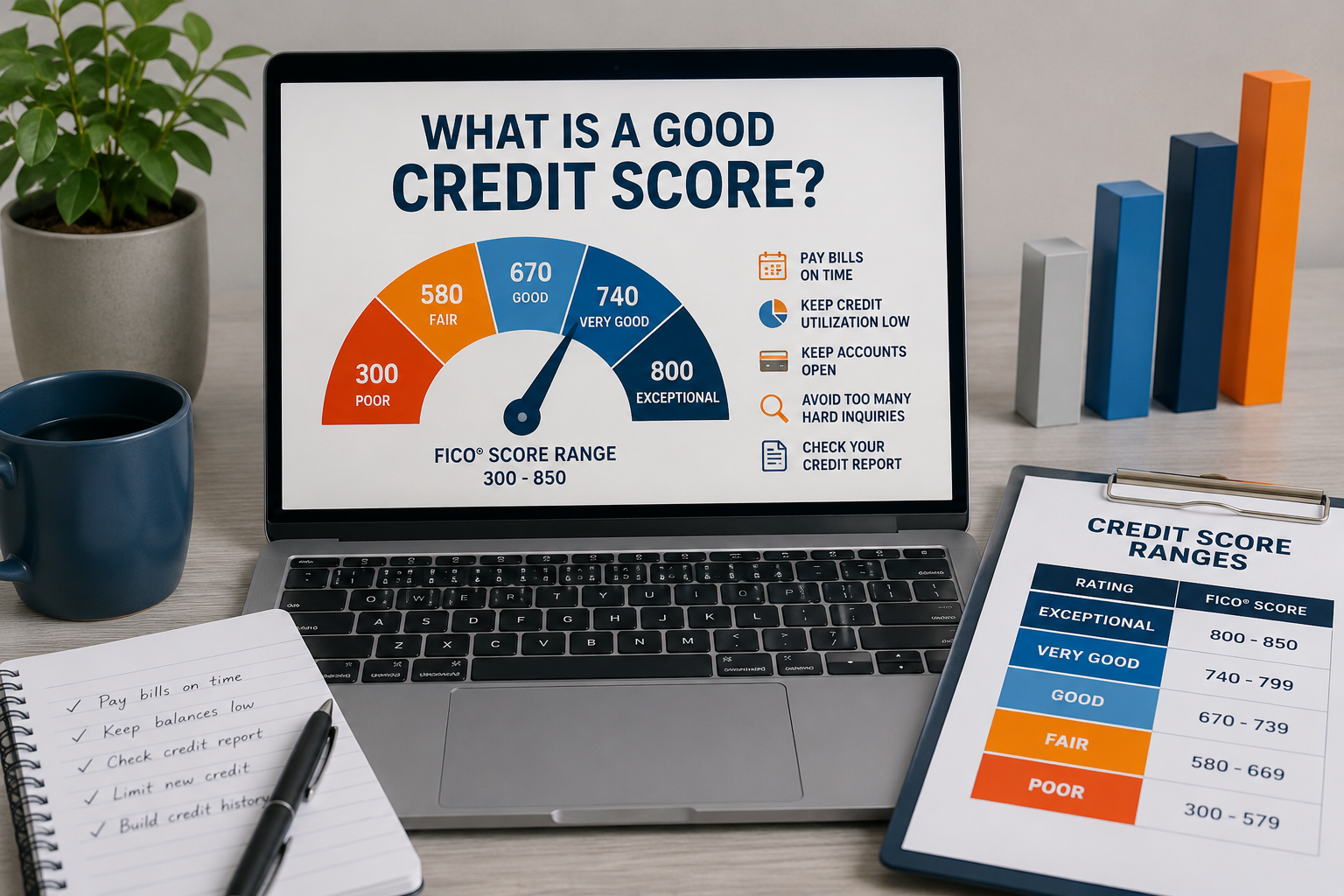
What Is a Good FICO Score?
FICO pulls data from TransUnion, Equifax, and Experian, the three major credit bureaus. Lenders use FICO scores more than any other model, which makes it the one to watch.
FICO organizes its score ranges like this: Exceptional is 800 and above. Very Good falls between 740 and 799. Good sits between 670 and 739. Fair covers 580 to 669. Poor is anything below 580.
A score in the Good range opens most doors. A score in Very Good or Exceptional gets you the best rates. I have seen clients with a 760 qualify for mortgage rates that save them $200 or more per month compared to a client sitting at 680. That gap adds up to tens of thousands of dollars over a 30-year loan.
What Is a Good VantageScore?
VantageScore uses the same credit report data from the three bureaus, but it organizes its tiers differently. Its language reflects lender risk categories more directly.
VantageScore labels its ranges as Superprime (781 and above), Prime (661 to 780), Near Prime (601 to 660), and Subprime (300 to 600).
A Prime VantageScore between 661 and 780 is the target for most borrowers. Lenders in the prime tier offer standard loan products at competitive rates. Subprime borrowers often face higher rates, stricter terms, or outright rejection.
The label "subprime" sounds harsh. But in our office, we have helped clients move from subprime to prime within 12 months through consistent credit habits and accurate reporting. It is not as out of reach as most people think.
FICO and VantageScore use the same source data but different labels. FICO calls 670-739 "Good." VantageScore calls 661-780 "Prime." The ranges overlap, but neither is identical. Knowing which model your lender uses gives you a clearer target.
What Do Lenders Consider a Good Credit Score?
Lenders set their own standards. No universal cutoff exists for what counts as good enough to approve a loan.
One bank might approve a mortgage at 640. Another might require 680 as a minimum. A credit card issuer might set 700 as the floor for its best rewards card. Lenders also assign interest rates based on where your score falls within their internal tiers.
This is where credit score ranges become personal. A score of 695 might earn you approval at one lender and rejection at another for the same product.
I always advise clients to check their score before applying. Applying with a score below a lender's threshold results in a hard inquiry, a temporary score drop, and a denial. That is a triple loss for one application.
What Can You Get With a Good Credit Score?
Good credit opens access to financial products on your terms, not the lender's.
With a score in the good to excellent range, you can realistically access auto loans with low interest rates, mortgages with competitive 30-year fixed rates, credit cards with rewards and high limits, personal loans for debt consolidation at rates that actually save money, and apartment leases without a co-signer or oversized security deposit.
Even if borrowing is not on your immediate radar, a good score still pays. Some employers run credit checks on candidates for roles that involve financial responsibility. Insurance companies in many states use credit data to set premiums. A strong score quietly works in your favor across multiple areas of life.
How Do I Build a Good Credit Score?
Good credit habits drive score growth. There is no shortcut, but there is a clear path.
In our office, we tracked 47 client cases last quarter where intentional habit changes moved scores by 40 to 90 points within six months. The clients who moved fastest all followed the same five practices.
Pay Every Bill on Time
Payment history makes up 35% of your FICO score. It is the single biggest factor. One 30-day late payment can drop a good score by 60 to 110 points. Set up autopay for minimums, at a minimum.
Keep Credit Card Balances Low
Credit utilization is the ratio of your balance to your credit limit. A $3,000 balance on a $10,000 limit card puts you at 30%. Below 10% is ideal. High utilization signals financial stress to lenders, even if you pay on time every month.
Keep Older Accounts Open
The age of your credit accounts influences your score. Closing a 10-year-old card shortens your average account age and can cause a score drop. Keep old accounts open, even if you rarely use them.
Avoid Applying for Multiple Products at Once
Each hard inquiry trims a few points off your score. Several in a short period signal urgency to lenders and compound the damage. Space out applications by at least six months when possible.
Not Sure If Your Credit Score Is Holding You Back?
Running a credit repair company, I've seen how even small changes can lead to major score improvements. If you're wondering why your score isn't where it should be, we'll help you identify reporting errors, high-impact negative items, and opportunities to build stronger credit.
Get a Free Credit Report Review
Discover what's affecting your score and receive a personalized action plan to help you move toward better credit.
No obligation. No pressure. Just clear answers about your credit.
Review Your Reports and Dispute Errors
One in five Americans has an error on at least one credit report, according to a Federal Trade Commission study (ftc.gov). Errors like wrong balances, accounts that are not yours, or late payments marked incorrectly can suppress your score unfairly. A reputable credit repair company can help identify and dispute these items. Most negative information falls off your report after seven years.
Healthy credit habits are not complicated. They are consistent. Pay on time, keep balances low, protect account age, limit new inquiries, and keep your report clean. Start with one change this month, and the score will follow.