

If you are looking for the best credit cards for rebuilding credit, start here. The top options are secured cards that report to all three major credit bureaus: Equifax, Experian, and TransUnion. The Discover it Secured, the Capital One Platinum Secured, and the Capital One Quicksilver Secured consistently rank at the top. Each one requires a refundable deposit, charges no or low annual fees, and gives you a real path to an unsecured card within 12 months.
I run a credit repair company. I see the same problem walk through my door every week. You come in with a score in the 480s and a stack of declined applications. The most unforgettable case I ever handled was a woman who had done everything right, 12 months of on-time payments, but her score had barely moved. The card she used ate $99 in fees and kept her utilization near 100%. She was not failing. The card was failing her. That case changed how I counsel every single client from that point on.
The numbers tell the same story. In the third quarter of 2024, credit card delinquency rates at large U.S. banks hit levels not seen since 2011, according to the New York Federal Reserve. All 50 states saw average credit scores decline in 2024. The national average currently sits at 715 per Experian, which means millions of Americans fall below that line and need a clear path back up. On Reddit's r/personalfinance, threads about secured cards show up constantly, with users reporting score jumps of 40 to 80 points within the first six months of responsible use.
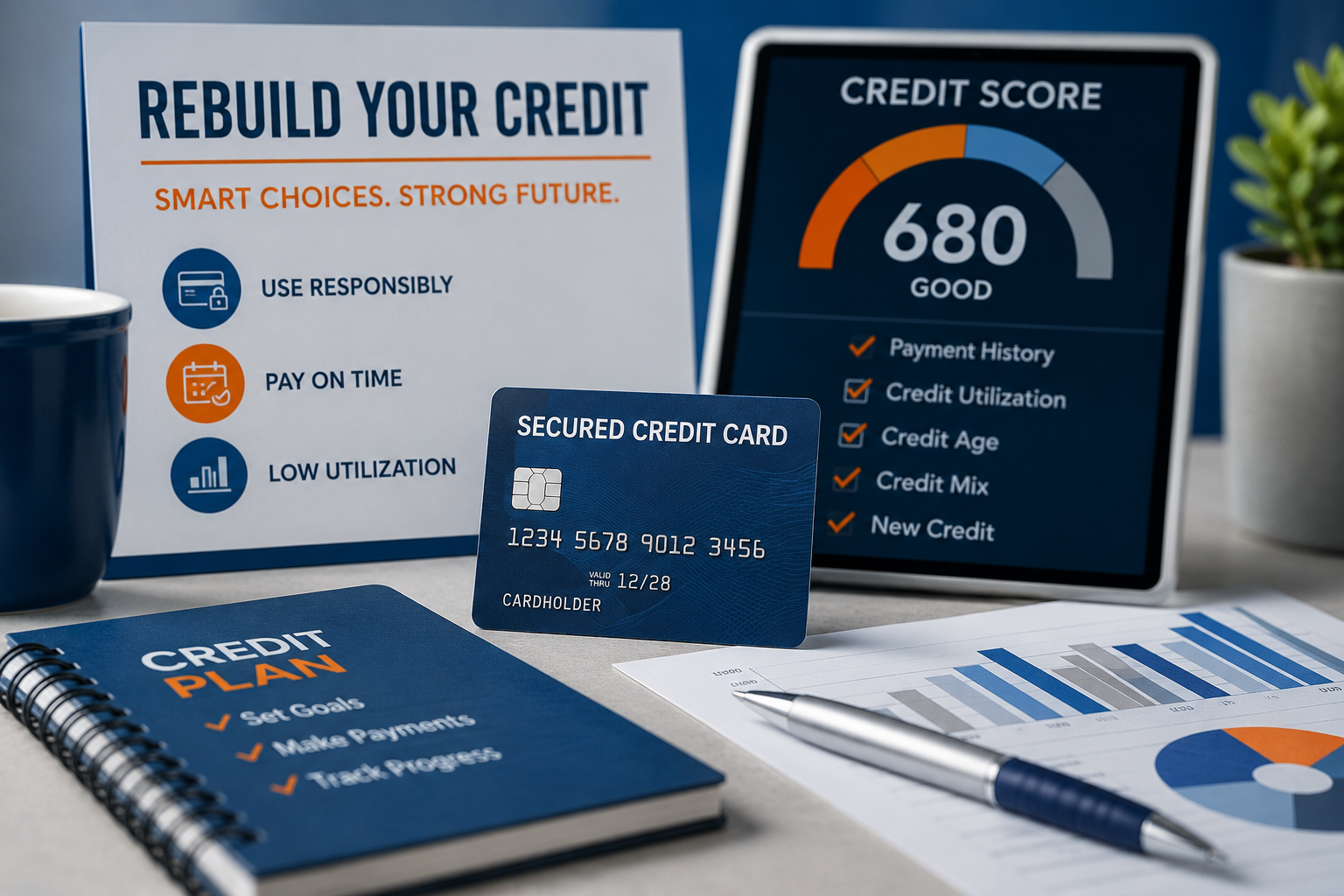
What Makes a Credit Card Good for Rebuilding Credit?
Not every card marketed to people with bad credit actually helps you. Some are designed to pull fees, not build scores. Before you apply for any card, you need to know what separates a real credit-building tool from a trap.
A good credit card for rebuilding credit does three things:
Reports to all three major credit bureaus every month.
Charges no more than a minimal annual fee, ideally zero.
Offers a clear upgrade path to an unsecured card.
Cards that skip bureau reporting do nothing for your score. Cards with high monthly maintenance fees inflate your credit utilization before you even make a purchase. Avoid both.
What Credit Score Do You Need to Start?
Most secured cards accept applicants with scores below 580, the range FICO classifies as poor. Some, like the OpenSky Secured Visa, require no credit check at all. Unsecured cards for bad credit typically require a score above 550, but they usually carry fees that cancel out the benefit of having the card.
Here is a simple starting point:
Score between 300 and 580: apply for a secured card.
Score between 580 and 640: You may qualify for an entry-level unsecured card, but compare the fee structure carefully before you apply.
The Best Credit Cards for Rebuilding Credit Right Now
These four cards show up in nearly every expert roundup for a reason. Each one fits a slightly different situation. Pick the one that matches where you are right now.
Discover it Secured Best Overall
The Discover it Secured starts with a $200 minimum deposit and earns 2% cash back at gas stations and restaurants up to $1,000 in combined purchases per quarter, plus 1% on everything else. Discover matches all the cash back you earn in your first year.
More importantly, Discover starts reviewing your account for upgrade eligibility at seven months. When you graduate, you move to an unsecured Discover card automatically, and your deposit comes back to you. No annual fee. Reports to all three bureaus. This card gives you the clearest timeline of any option in the best credit cards for rebuilding credit category.
Capital One Platinum Secured Best for Low Deposit
The Capital One Platinum Secured accepts deposits as low as $49 for a $200 credit line. That deposit tier depends on your creditworthiness, but it gives you a real entry point even if your cash is tight.
Capital One reviews your account for a credit line increase after six months, with no additional deposit required. No annual fee. Reports to all three bureaus.
Capital One Quicksilver Secured Best for Rewards While Rebuilding
The Quicksilver Secured earns 1.5% cash back on every purchase. It has no annual fee and follows the same upgrade review timeline as the Platinum Secured. If you want to build a habit around everyday spending and feel like the card is working for you, this one makes rebuilding feel rewarding instead of punishing.
OpenSky Secured Visa: Best if You Cannot Get Approved Anywhere Else
OpenSky requires no credit pull to apply. That matters if you have multiple recent hard inquiries or a very thin file and keep getting rejected. The minimum deposit is $200. OpenSky does charge a $35 annual fee, which is a real downside, but if no other card will approve you, this one gets you started. It reports to all three bureaus monthly.
Secured vs. Unsecured Cards: Which One Should You Choose for Rebuilding?
This is the question I hear most from clients. The answer is almost always the same: start with a secured card.
A secured card requires a cash deposit that becomes your credit line. That deposit protects the issuer, which is why approval rates are high even with a low score. Your deposit is fully refundable when you close or upgrade the account.
Unsecured cards for bad credit require no deposit, but you pay for that in fees. Last year alone, our office reviewed over 60 client accounts where so-called credit builder unsecured cards had charged between $75 and $125 in first-year fees on a $300 credit limit. That translates to 25% to 42% of available credit consumed by fees before a single purchase. That kind of utilization actively hurts the score you are trying to build.
The only time an unsecured card makes sense during rebuilding is when a secured card is genuinely out of reach financially, and the unsecured option has a low or no annual fee.
What About Becoming an Authorized User?
If a family member or partner adds you as an authorized user on their card, their positive payment history can appear on your report at no cost to you. This works best as a supplement to one of the best credit cards for rebuilding credit, not a replacement for it. You need your own account history to graduate to better products.
How Long Does It Take to Rebuild Credit with a Credit Card?
Most people see the first measurable score improvement within six to twelve months of responsible secured card use, according to Credit One Bank and WalletHub. But the exact timeline depends on what is dragging your score down right now.
Maxed-out card: recovery takes roughly three months after you pay the balance down.
Missed payment: recovery takes up to 18 months.
Bankruptcy: the negative mark stays for up to ten years, though its weight on your score decreases over time.
Rebuilding is not about erasing negative marks overnight. It is about layering new, positive payment history on top of old damage. Every on-time payment chips away at what is pulling you down.
The Habits That Actually Move Your Score
Choosing one of the best credit cards for rebuilding credit is only half the work. How you use it determines how fast you improve.
Keep Your Utilization Below 10%
Credit utilization makes up 30% of your FICO score. Most advice says stay below 30%, but clients who keep utilization under 10% see noticeably faster score movement. On a $200 credit line, that means spending no more than $20 per month on the card.
Charge one small, recurring expense, a streaming subscription, or a tank of gas, then pay it in full before the statement closes. That pattern builds a clean payment history without adding debt.
Pay Before the Statement Date, Not Just the Due Date
Most people pay by the due date. That is the right minimum. But if you pay before your statement closing date, your reported balance will be near zero. The bureaus see what the issuer reports, not what you pay after the fact. Earlier payment keeps your utilization low at the moment that counts.
Never Miss a Payment
Payment history makes up 35% of your FICO score, the single largest factor. One missed payment can drop your score by 50 to 100 points and take 12 to 18 months to recover from. Set up autopay for at least the minimum amount. Then, pay the full balance on top of that manually each month.
When Should You Upgrade from a Secured Card?
Most issuers begin reviewing accounts for upgrade eligibility between six and twelve months. Do not wait for them to contact you. Call your issuer directly and ask about your upgrade status. Many issuers will move you to an unsecured card and return your deposit without requiring you to open a brand-new account. Keeping the same account preserves your account age, which protects your credit score.
When you upgrade, ask for a credit limit increase at the same time. A higher limit with the same spending level drops your utilization ratio and gives your score another push upward.
Target a score of 640 to 680 before you start applying for unsecured cards with better terms. Once you cross 670, you begin qualifying for cards with real rewards and competitive interest rates.
Ready to Rebuild Your Credit Faster?
Choosing the right credit card is only the first step. Our credit specialists can help you identify errors, remove inaccurate negative items, and create a personalized plan to improve your credit score.
✓ Free Credit Analysis
✓ Personalized Credit Improvement Plan
✓ No Obligation Consultation
Discover what's holding your score back and get expert guidance on your next steps.
Mistakes That Slow Down Your Rebuilding Progress
Three patterns show up over and over in client files. Knowing them now saves you months of setbacks.
Applying for Too Many Cards at Once
Every new application triggers a hard inquiry, which drops your score slightly. Multiple inquiries in a short window signal risk to lenders. Wait at least six months between applications while you rebuild. Use pre-approval tools that run soft pulls so you can check your odds before committing to a hard inquiry.
Closing Old Accounts
Closing your oldest credit card shortens your average account age. Credit history length makes up 15% of your FICO score. Unless a card charges a fee you cannot justify keeping, leave it open. Charge something small on it every few months to keep it active.
Ignoring Your Credit Report
Errors on your credit report are more common than most people expect, and they pull your score down for no reason. Pull your report for free at AnnualCreditReport.com and look for accounts that are not yours, incorrect payment statuses, or duplicate collections. Dispute any error directly with the bureau reporting it.
Rebuilding your credit with the right card takes 12 to 24 months for most people. The best credit cards for rebuilding credit are the Discover it Secured and the Capital One Platinum Secured. They give you the strongest foundation in that window. Use your card for one small purchase each month, pay the full balance before the statement closes, and ask your issuer about an upgrade at the six-month mark. Those three steps alone have moved client scores by 60 to 100 points within a year in our office.