
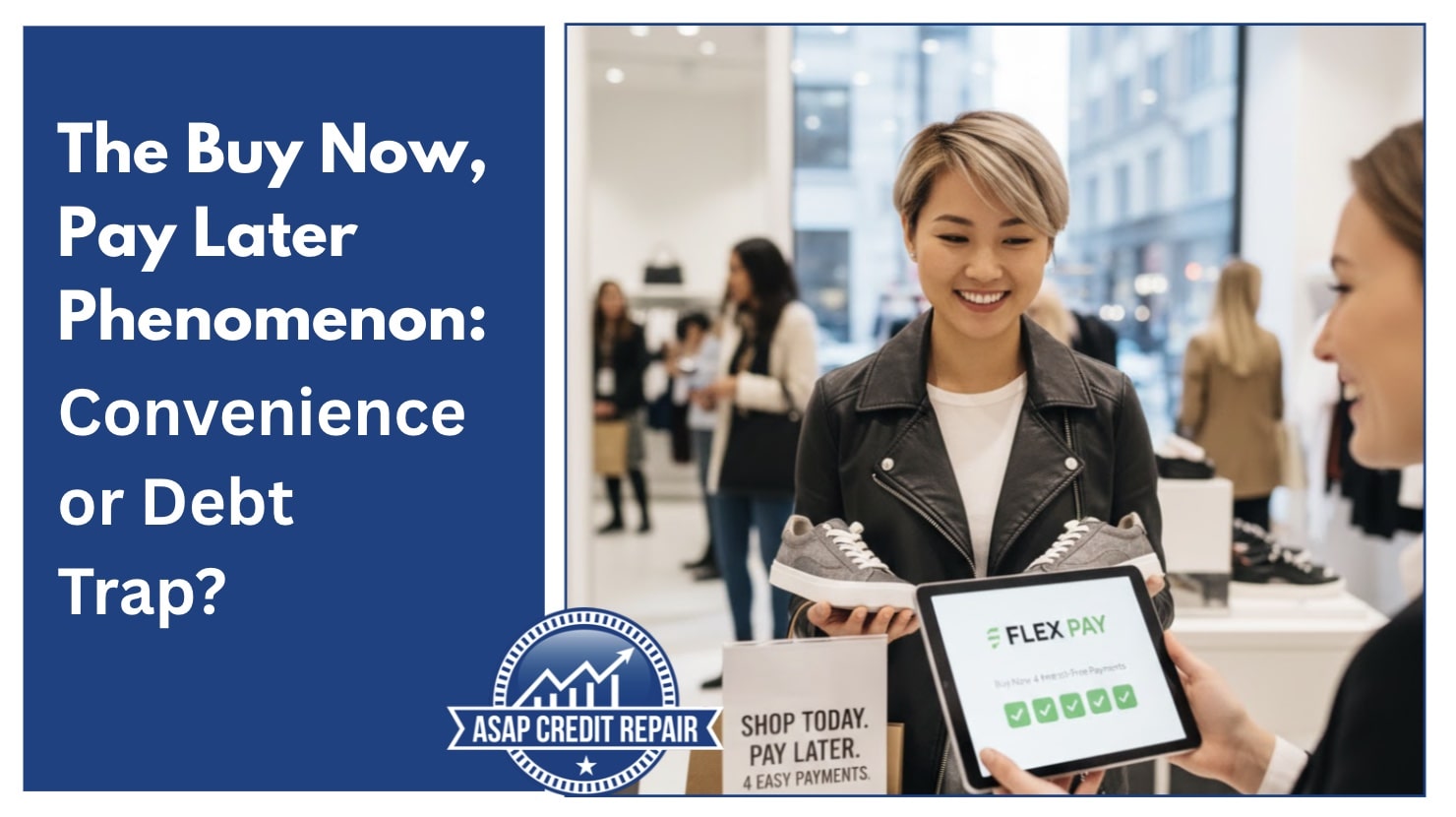
How a Popular Payment Method Is Reshaping Consumer Finance—And Leading Millions Into Financial Trouble
In the span of just a few years, "buy now, pay later" (BNPL) has transformed from a niche payment option into a financial juggernaut reshaping how Americans shop. The market reached $340 billion globally in 2024, with 86.5 million people in the U.S. using BNPL in 2024. During the 2024 holiday season alone, shoppers spent $18.2 billion using BNPL, including a record-breaking $993 million on Cyber Monday 2024.
The appeal is undeniable: split your purchase into four equal installments, often interest-free, with instant approval at checkout. No lengthy credit applications, no immediate financial pain. But beneath this veneer of convenience lurks a troubling reality: BNPL is quietly pushing millions of Americans deeper into debt, with consequences that economists are only beginning to understand.
How BNPL Works: The Basics
Buy now, pay later services fundamentally work as short-term loans designed to feel effortless. The period typically includes three to four payments, although operators have branched out to more regular 12 and 24-month options for certain purchases. The most common structure, known as "pay-in-four," requires 25% down at purchase, with the remaining balance split into three equal payments over six weeks.
Unlike traditional credit cards, BNPL arrangements typically don't charge interest if you pay on time. They also require minimal verification—BNPL requires a lot less authentication than conventional loans. Most providers don't conduct hard credit checks, making them accessible even to those with poor or limited credit history.
Major players dominate the space. Klarna has about 35% global market share in the BNPL market, followed by competitors like Affirm, Afterpay, PayPal's Pay in 4, Sezzle, and Zip. These services are embedded into checkout processes across thousands of retailers, from Amazon and Walmart to smaller boutiques.
The Explosive Growth: Why Everyone's Using It
The numbers tell a remarkable story of rapid adoption. 15% of U.S. adults used BNPL in 2024, up from 14% in 2023 and 12% in 2022, according to the Federal Reserve. Usage skews heavily toward younger consumers—nearly 1 in 5 Americans under 45 have used BNPL, compared with just 8% of those 60 and older.
The growth trajectory appears unstoppable. BNPL purchase volume is expected to total $122.3 billion in 2025, up 10.9% year-over-year, and projections indicate the market will be worth $80.15 billion by 2033, growing at a CAGR of 27.0%.
What's driving this surge? Convenience ranks high, but the data reveals something more troubling: financial necessity. 55% of users choose BNPL because it allows them to afford things they otherwise couldn't. For many Americans, BNPL isn't a choice—it's a lifeline.
The pandemic accelerated adoption as consumers sought flexibility for online purchases. Now, BNPL has moved beyond discretionary items. 42% of respondents used Buy Now, Pay Later payment services for clothing and fashion, followed by 32% for electronics and gadgets. Even more concerning, consumers increasingly use these services for essentials, with one in five customers using them to buy everyday necessities.
The Hidden Dangers: When Payments Pile Up
The promise of interest-free payments masks several serious risks that many consumers discover only after they're in too deep.
The Overspending Trap
Financial experts warn that BNPL's primary danger lies in how it reframes affordability. The smaller, interest-free installments may lead some consumers to perceive purchases as more affordable than they really are, increasing the risk of overspending, debt accumulation, and even default.
The statistics bear this out. According to a Bankrate survey, nearly half of BNPL users have experienced at least one financial problem with these services, with overspending being the most common.
Fumiko Hayashi, an economic research vice president at the Federal Reserve Bank of Kansas City, doesn't mince words: "As a consumer, you want to be careful when you use this product. You don't want to overspend or be over-indebted. It looks cheap, it looks easy, it looks convenient, but it may not be".
Mounting Late Payments
Perhaps most alarming is the growing inability of users to keep up with payments. Nearly one-quarter of BNPL users (24%) have made a late payment, up from 18% in 2023, according to the Federal Reserve. The problem is most acute among younger borrowers: 32% of 18- to 29-year-olds have missed a BNPL payment, compared with 12% of adults 60+.
A separate survey by The Motley Fool found even higher rates, with 29% of BNPL users having paid late—including 39% of Gen Z and 35% of millennials.
These missed payments trigger consequences that many users don't anticipate. While most BNPL loans are interest-free, late fees can quickly accumulate. 10.5% of BNPL borrowers were charged at least one late fee in 2021, up from 7.8% in 2020.
The "Phantom Debt" Problem
A massive blind spot complicates the BNPL landscape: most providers don't report loan activity to credit bureaus. Wells Fargo senior economist Tim Quinlan coined the term "phantom debt" to describe this $700 billion black hole in consumer credit data.
This creates dangerous invisibility. Consumers can accumulate multiple BNPL loans from different providers, with no single entity tracking their total exposure. Because BNPL providers typically do not share their customers' credit limits with credit bureaus or other BNPL providers, each BNPL user's summed credit limit across multiple providers could be more than their ability to repay.
The problem extends beyond individual finances. Economists and policymakers are essentially flying blind, unable to accurately assess consumer financial health because BNPL debt remains largely invisible in traditional metrics.
Who's Really Using BNPL—And Why That Matters
The demographic profile of BNPL users reveals an uncomfortable truth: these services disproportionately attract those who can least afford financial missteps.
Nearly 30% of adults with credit scores between 620 and 659 used BNPL—roughly three times the rate of those with scores above 720. This pattern holds across all age groups.
The financial vulnerability of BNPL users is striking. In 2024, 77.7% of BNPL users relied on at least one financial coping strategy, like working extra hours, borrowing money or using savings, compared to 66.1% of non-users. More concerning, 57.9% of BNPL users experienced a significant financial disruption, such as job loss, income reduction or unexpected expenses, compared to 47.9% of non-users.
When asked about emergency preparedness, the gap widens further: Just 37% of BNPL users could comfortably use cash or a credit card to pay in full for an emergency, compared to 53% of non-users who have that capability.
The Federal Bank of New York has warned that the people using BNPL services are "disproportionately" financially fragile—as measured by the average likelihood of being able to come up with $2,000 in the next month in case of an emergency.
Research from the Kansas City Fed found a troubling correlation: "Our results suggest a high correlation between BNPL users' late payments and their financial vulnerability or distress, potentially implying that BNPL users with late payments may have overspent or overextended their debt through BNPL. Some of these users may even have a heightened default risk".
The Debt Spiral: Multiple Loans and Compounding Problems
The ease of obtaining BNPL loans creates a particularly insidious risk: loan stacking. Consumers frequently juggle multiple BNPL accounts simultaneously, each with different payment schedules and due dates.
BNPL plans are so widespread that it can be easy to find yourself managing multiple payments for various companies and credit card lenders. Unlike a single credit card statement with one due date, BNPL requires managing loans from several providers, each demanding attention at different times.
Nineteen percent of BNPL users say they've lost track of upcoming payments, creating a cascade of missed deadlines and fees.
The problem compounds when users borrow to repay BNPL loans. Research from U.K. charity Citizens Advice found that nearly a third of BNPL customers who had paid an installment within a month of completing the survey had borrowed the money from another lender—compounding debt with yet more debt.
Default rates provide another warning sign. In 2022, 1.9% of BNPL loans defaulted. Borrowers with deep-subprime credit scores (below 580) had a 3.5% default rate and accounted for nearly half of BNPL originations.
Common Mistakes: How Consumers Get Trapped
Financial advisors identify several recurring mistakes that transform BNPL from a helpful tool into a debt trap.
Buying What You Can't Afford
Douglas Boneparth, a certified financial planner and founder of Bone Fide Wealth, pulls no punches: "Buy now, pay later programs are a scam. They encourage overspending, destroy credit, saddle you in debt, and target consumers who are most susceptible to borrowing when they shouldn't".
While Boneparth acknowledges being somewhat provocative, his core concern is valid. The problem with BNPL services is that they don't feel like debt. And if people use them routinely to fund purchases they couldn't otherwise afford, they could wind up in financial hot water.
Ted Rossman, senior industry analyst at Bankrate, emphasizes a critical principle: "It's really important to consider the total cost of ownership, not just the installments. Sometimes people are prone to impulse buying, and they end up getting overextended because they didn't think about that total cost".
Ignoring the Fine Print
Many users fail to understand the full terms of their agreements. Senator Richard Blumenthal of Connecticut has been vocal about this issue, noting that BNPL plans are not protected under the Truth in Lending Act, meaning companies are not required to disclose late fees and penalties in the same way credit card providers must.
"The risks, the fees, the late payments, all are concealed. And consumers have no warning", Blumenthal warned.
A 2022 research study found that when consumers navigated through simulated BNPL payment flows, most study participants were unable to understand some or all of the terms of the loans offered.
Overlapping Payment Schedules
Managing multiple BNPL accounts with staggered payment dates often proves more challenging than consumers anticipate. Unlike a single credit card statement, using BNPL may require managing loans from several providers, each with its own due dates, payment amounts and retailers. Missing even one can be a costly mistake.
Misunderstanding Returns and Refunds
BNPL returns can be complicated. You must wait for the retailer to process the return and then for the BNPL provider to issue the refund. In some cases, you may still be required to make installment payments on the item while your return is being processed.
Triggering Bank Fees
Many consumers don't realize that if the bank account does not have sufficient funds, the payment may trigger a negative balance and an overdraft fee or nonsufficient funds (NSF) fee as high as $35, negating the benefit of "no interest".
The Regulatory Gap: An Industry Operating in the Shadows
For years, BNPL operated in a regulatory gray area, exempt from many consumer protections that govern traditional credit. The Biden administration's Consumer Financial Protection Bureau attempted to address this, but those efforts have largely stalled under the current administration.
The Consumer Financial Protection Bureau, under the Trump administration, dropped planned enforcement of a Biden administration interpretive rule regulating BNPL transactions like credit card purchases.
This regulatory vacuum concerns state officials. Senators and attorneys general expressed concern over a lack of federal oversight of the buy now, pay later industry. Multiple state attorneys general have sent letters to major BNPL providers requesting information about their business practices, with one letter stating: "BNPL providers may not adequately assess borrowers' capacity to repay their loans".
Interestingly, some BNPL companies themselves are calling for regulation. Klarna has publicly stated it supports "the principle of sharing data with the bureaus for some time as a way to help providers make better lending decisions and to ensure the financial safety and protection of consumers".
Expert Perspectives: Warning Signs and Concerns
Financial professionals across the spectrum are sounding alarms about BNPL's trajectory.
Carolyn Campbell, Morgan Stanley's Asset-Backed Securities Strategist, sees potential storm clouds ahead: "If BNPL usage were to grow rapidly later this year, when we expect consumers to be more stretched due to elevated inflation from tariffs and slow income growth, we would potentially take that as a warning sign".
James Faucette, who leads Morgan Stanley's U.S. Fintech and Payments Research Team, worries about BNPL becoming a "masking force" of true consumer credit quality.
The Charles Schwab financial advisory team notes a fundamental concern: BNPL is especially appealing to people in financial distress who have little credit history or bad credit, adding that the easier it is to put off paying for things, the easier it is to end up in big debt trouble.
Research from the Federal Reserve Bank of Kansas City concludes: BNPL users tend to be more financially vulnerable relative to BNPL nonusers, consistent with previous studies, and there's a high correlation between consumers who make late payments on BNPL loans and those experiencing financial vulnerability or distress.
The Path Forward: Using BNPL Responsibly
Despite the risks, BNPL isn't inherently problematic for all users. Financial experts agree on several principles for responsible use:
Only buy what you can afford today. The golden rule, according to financial planners, is never purchasing anything via BNPL that you couldn't afford to pay for in cash if necessary. The best way to protect yourself is to avoid buying anything via BNPL that you couldn't afford, in cash, if push came to shove.
Understand the total cost. Look beyond the monthly payment to the full purchase price, and factor in how the payments fit into your overall budget over the next six weeks or months.
Track all your BNPL obligations. Keep a detailed record of every BNPL loan, including payment amounts, due dates, and providers. Set calendar reminders well before payments are due.
Read the fine print. Understand exactly what fees will be charged for late payments, how returns work, and whether payment activity will be reported to credit bureaus.
Limit the number of BNPL accounts. Resist the temptation to sign up for every provider. Multiple accounts increase the likelihood of missed payments and financial confusion.
Plan for the payments. Ensure you'll have sufficient funds in your account on each payment date. Remember that automatic payments can trigger costly overdraft fees if your balance runs low.
Don't use BNPL for essentials. If you need BNPL to afford groceries or other necessities, it's a red flag that you're overstretched financially.
Conclusion: Convenience Comes at a Cost
Buy now, pay later has fundamentally altered the consumer finance landscape, offering unprecedented payment flexibility while exposing millions to new forms of financial risk. The BNPL market reached $340 billion globally in 2024 and continues to grow year over year, with no signs of slowing.
For financially stable consumers who use BNPL strategically—spreading out payments on planned purchases they could afford outright—these services can provide useful cash flow management. But for the growing number of Americans using BNPL to afford things they otherwise couldn't, the convenience masks a debt trap.
The data paints a troubling picture: higher late payment rates, disproportionate use by financially vulnerable populations, and a massive blind spot in consumer credit reporting that prevents accurate assessment of household debt. Advocates have long warned that buy now, pay later encourages overspending and lets consumers pile on debt.
As the industry continues its rapid expansion, the question isn't whether BNPL will remain part of the consumer finance ecosystem—it almost certainly will. The real question is whether regulation, consumer education, and industry practices will evolve fast enough to protect the millions of Americans for whom that next "buy now" click could be the beginning of a long financial struggle.
Until then, consumers would do well to remember the old wisdom: if it sounds too good to be true, it probably is. Those four interest-free payments may not cost you anything upfront, but for many Americans, they're coming with a price tag that extends far beyond the checkout screen.