

If you want to build creditat 18, starting now gives you a major financial advantage. Most young adults have no credit history, which makes renting an apartment, qualifying for loans, or even passing some background checks harder than expected. The good news is that building strong credit early is simpler than most people think. With the right first account, low balances, and on-time payments, you can build a score lenders trust faster than you might expect.
I run a credit repair company, and one of the most common stories I hear is from young adults who waited until 22 or 23 to start, then spent years trying to undo the damage of that delay. One client told me she was denied her first apartment at 21 simply because she had no credit history. Not bad credit. No credit. The two are equally punishing to lenders.
Here is the hard data: according to Experian, the average credit score for Gen Z adults aged 18 to 24 sits at 680. That number is the lowest of any age group, not because young adults are irresponsible, but because credit scores reward time. A r/personalfinance thread with thousands of upvotes put it clearly: "The best time to start building credit was the day you turned 18. The second-best time is today." The CFPB echoes this and recommends checking your credit report at least once per year, starting at AnnualCreditReport.com.
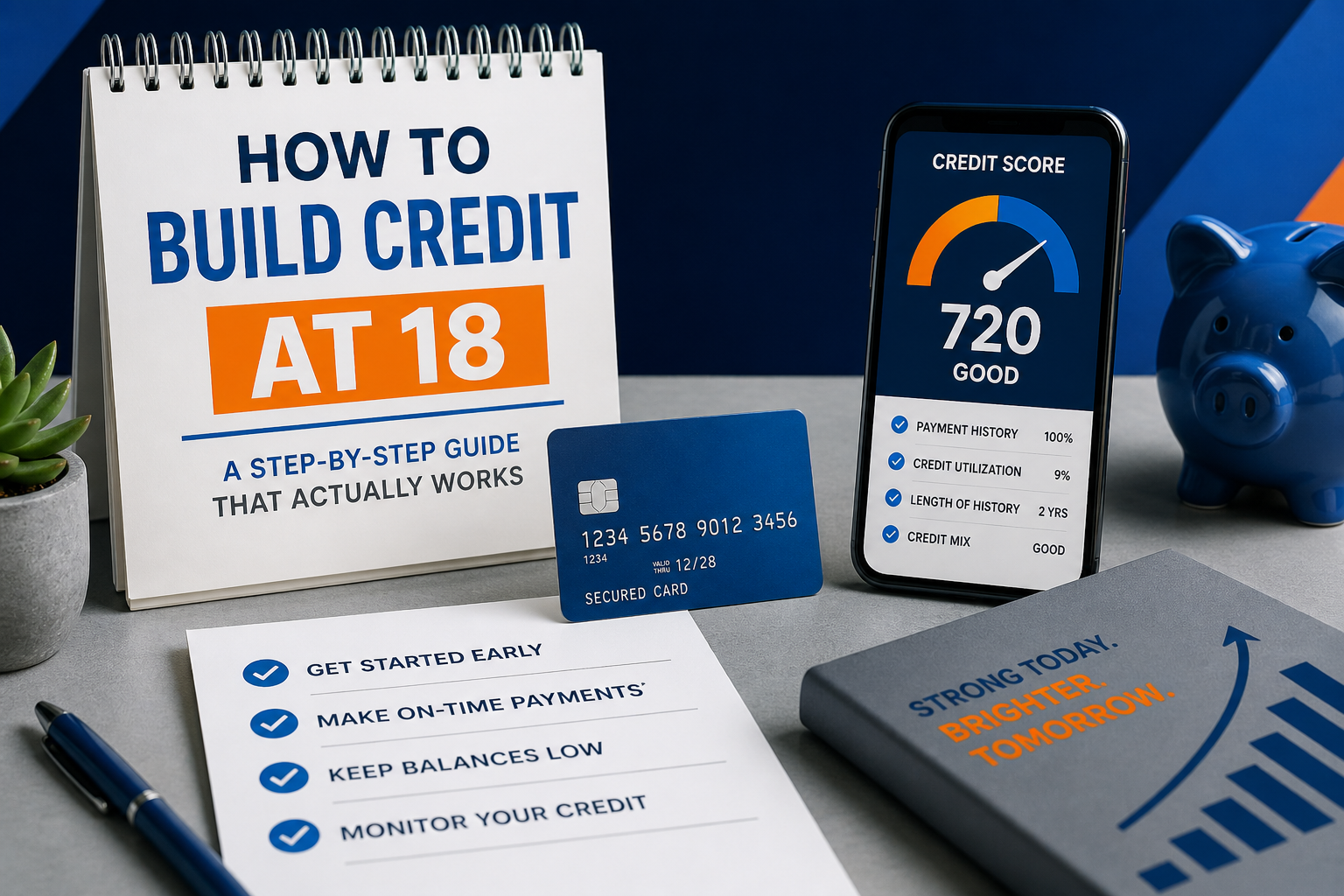
Can You Build Credit at 18?
Yes. At 18, you can legally sign a credit contract. That means you can open a secured credit card, apply for a credit builder loan, or become an authorized user on a parent's account, all of which report to the three major credit bureaus: Experian, Equifax, and TransUnion.
You do not need income to start. You do not need a co-signer for every product. A secured credit card with a $200 deposit is enough to begin building a real credit file within 30 to 60 days of your first statement.
The one thing you cannot do at 18 is apply for most unsecured credit cards without a co-signer or proof of independent income. The CARD Act of 2009 restricts card issuers from approving applicants under 21 unless they can show income or have a cosigner. But this rule has workarounds, and we cover them below.
Is Turning 18 a Good Time to Start Building Credit?
Turning 18 is the best time to start, full stop.
Credit scoring models reward one thing above almost everything else: length of credit history. That factor makes up 15% of your FICO score. A credit card you open at 18 will still be working in your favor at 38. Every month you wait is a month of history you can never recover.
Payment history carries the most weight at 35% of your FICO score. Amounts owed (credit utilization) come second at 30%. Together, those two factors make up 65% of your score, and both are completely within your control from day one.
At our firm, we regularly see clients in their mid-20s with scores below 600. In most of those cases, the problem is not a single bad event. It is years of no credit activity followed by one or two mistakes that left a permanent mark on a thin file.
Starting at 18 gives you a buffer. A missed payment at 22 hurts less when you already have four years of on-time payments behind you.
How to Establish Credit at 18
There are four proven ways to establish credit at 18. Each one requires a different amount of money, involvement, and risk.
1. Open a secured credit card. A secured card requires a refundable deposit, usually $200 to $500, which becomes your credit limit. The card issuer reports your activity to the credit bureaus each month. Use it for one small recurring purchase, like a streaming subscription, and pay the full balance every month. Within six months, you can have a scoreable credit file.
Make sure the card you choose reports to all three bureaus. Not all do. Cards from Capital One, Discover, and many credit unions are reliable options.
2. Become an authorized user. Ask a parent or trusted family member to add you to their credit card account as an authorized user. You do not need to use the card. Their payment history gets added to your credit report automatically. This is the fastest way to get a starting score, sometimes within 30 to 45 days.
One warning: if the primary cardholder carries a high balance or misses payments, that negative history hits your report too. Only choose someone with a clean payment record and low utilization.
3. Open a credit builder loan. Credit unions and online lenders like Self offer credit builder loans specifically for people with no credit. You make monthly payments into a locked savings account. At the end of the term (usually 12 to 24 months), you receive the money. The lender reports every payment to the bureaus. These loans typically range from $300 to $1,000 with APRs of 3% to 8%.
Last year alone, we saw over 40 new clients who used a credit builder loan as their first credit product. Their scores after 12 months averaged between 680 and 720, enough to qualify for an unsecured card.
4. Use Experian Boost or rent reporting. Experian Boost lets you add utility and phone payments to your Experian credit file. Rent reporting services like Rental Kharma or Boom report your rent payments to the bureaus. Neither requires a new credit account. Both add positive payment history to a thin file.
How Can I Build a Good Credit Score at 18?
Building a good credit score, meaning above 700 at 18, takes two things: the right habits and enough time. Here is what the habits look like in practice.
Pay on time, every time. Payment history is 35% of your FICO score. One missed payment can drop a young person's score by 60 to 110 points because thin files have no buffer. Set up automatic payments for at least the minimum due. Never rely on memory.
Keep your credit utilization below 10%. Most advice says stay below 30%. But to reach a score above 700, aim for below 10%. If your secured card has a $300 limit, keep your balance under $30 when your statement closes. Pay the rest before the due date.
Do not open too many accounts at once. Each new credit application triggers a hard inquiry, which drops your score by 5 to 10 points. More importantly, new accounts lower your average account age. Open one account, build history on it for six months, then consider adding a second.
Check your credit report for errors. According to a Federal Trade Commission study, 1 in 5 consumers has an error on at least one credit report. Errors on a thin file hurt more than errors on an established file. Check all three reports for free at AnnualCreditReport.com. Dispute anything inaccurate directly with the bureau.
Mix your credit types when ready. FICO rewards having both revolving credit (credit cards) and installment credit (loans). A student loan or credit builder loan alongside a secured card gives you a stronger credit mix worth 10% of your score.
What Credit Score Should an 18-Year-Old Have?
There is no required score at 18. Most 18-year-olds have no score at all. But if you have been an authorized user or have had a student loan, you may already have a file.
Here is a realistic timeline based on the strategies above:
After 3 to 6 months: First scoreable file appears, likely in the 630 to 660 range.
After 12 months: Score can reach 680 to 700 with on-time payments and low utilization.
After 24 months: Score can reach 720 or higher with consistent habits and no negative marks.
The national average FICO score as of early 2026 is 714, according to FICO's Credit Insights Report. Reaching that number within two years of starting at 18 is achievable with the right approach.
How Fast Can You Build Credit at 18?
You can get a scoreable credit file within 30 to 60 days of opening your first account, as long as the issuer reports to the credit bureaus and your statement has closed.
Getting from no score to a good score (670+) typically takes six to twelve months with consistent on-time payments and low utilization. Getting to a very good score (740+) usually takes one to two years.
Speed depends on a few key variables:
How quickly will you open your first account
Whether you keep utilization low on your statement's close date
Whether you avoid hard inquiries from multiple applications
Becoming an authorized user accelerates this timeline. Some users report a scoreable file appearing within two weeks of being added to an account with a long history.
Common Mistakes That Kill a Young Credit Score
Applying for too many cards at once. Each application is a hard inquiry. Three applications in 90 days can drop a new score by 20 to 30 points and signal risk to lenders.
Maxing out a secured card. A $200 limit with a $180 balance is 90% utilization. That single factor can keep a new score below 650 for months.
Closing your first account too soon. Closing a credit card removes its history from your average account age. Keep your first card open, even if you upgrade to a better one later.
Missing a payment by even one day. Many issuers report late payments after 30 days, but some report at 29. Set your autopay for the minimum at least two days before the due date.
Ignoring your credit report. Almost half, 47% of young adults aged 18 to 25, did not check their credit score in the past year, according to the Financial Health Network. Errors, fraudulent accounts, and identity theft go unnoticed and unchallenged.
What Happens If You Start Late?
Starting at 21 instead of 18 does not ruin your credit. But the gap matters.
A person who starts at 18 and reaches a 730 score by 20 can qualify for a car loan at a prime interest rate. A person who starts at 21 with no history pays subprime rates for the same car, often 5 to 8 percentage points higher. On a $20,000 loan over 60 months, that difference costs over $5,000 in extra interest.
Credit repair is possible at any age. But building credit correctly at 18 is far cheaper than fixing damaged or absent credit at 25.
Your First 90 Days: A Practical Starting Plan
Days 1 to 30: Apply for a secured credit card. Choose one that reports to all three bureaus and has no annual fee or a low one. Deposit $200 to $500. Make one small purchase.
Days 30 to 60: Pay the full balance before the due date. Set up autopay for the minimum as a safety net. Check that the account now appears on your credit report.
Days 60 to 90: Review your credit report at AnnualCreditReport.com. Dispute any errors. Consider asking a family member to add you as an authorized user to boost your file.
After 90 days, you will have the foundation. After 12 months, you will have a real credit history. After 24 months, you will have options most 20-year-olds do not.
The CFPB recommends reviewing your full credit report at least once a year. Make it a habit to do it every six months. Your score is a financial tool; the earlier you pick it up, the more you can build with it.