
Can Canceling a Credit Card Help Your Credit Score? In rare situations, it hurts most people's scores. The decision depends on two things: what's on the card, and what your credit profile looks like without it.
Running a credit repair company, I've seen this question come up more than almost any other. One of the most unforgettable accounts I ever worked on was a client who canceled three cards in one month, thinking it would clean up his file. His score dropped 47 points in 30 days. The cards had zero balances and were his oldest accounts. He had no idea.
Real data backs this up. A Bankrate survey of 2,582 adults found that 61% of American cardholders have canceled at least one card, yet 29% admitted they had no idea what the credit impact would be (source: Bankrate). That knowledge gap is exactly where scores get damaged.
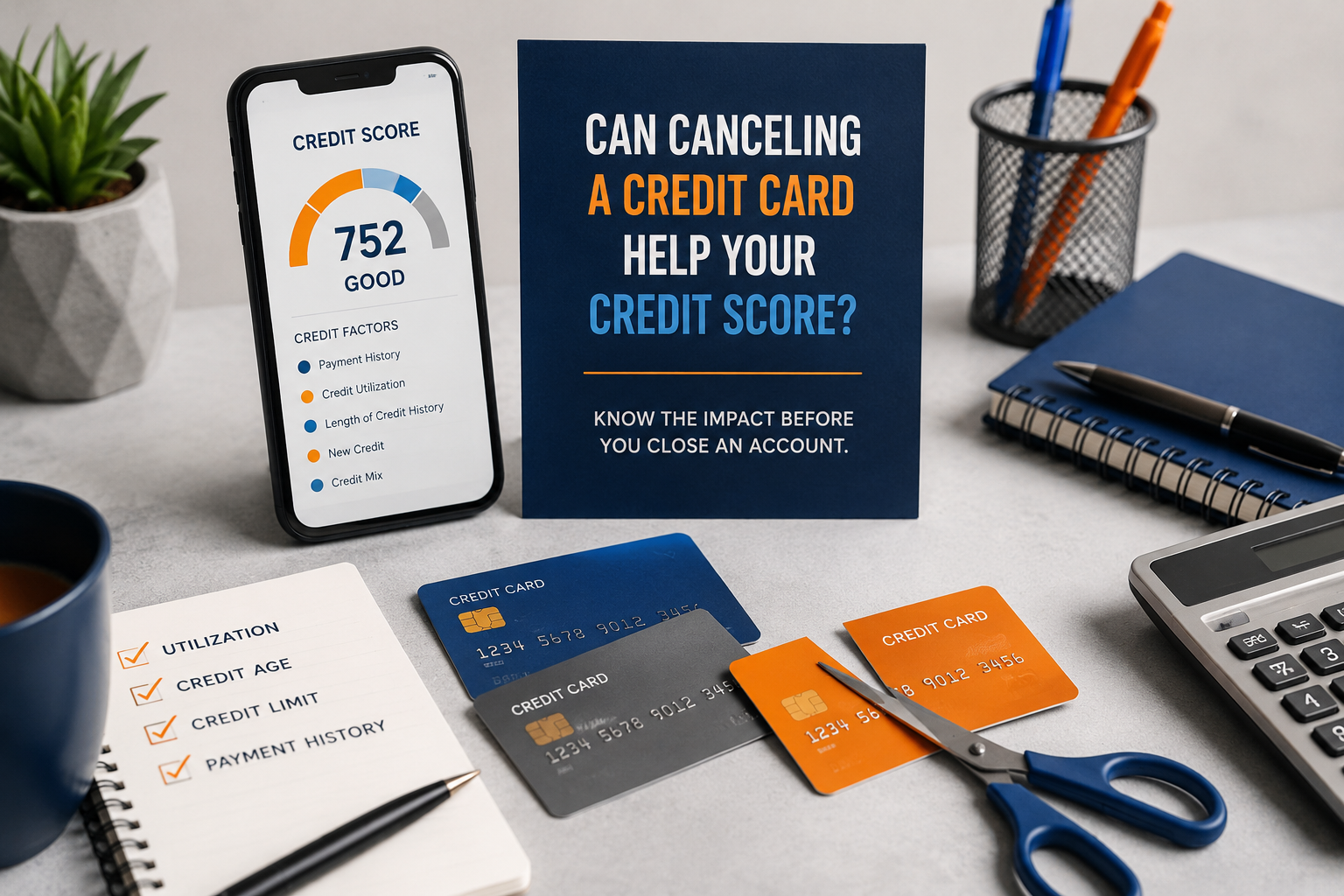
Does Canceling a Credit Card Hurt Your Credit Score?
Canceling a credit card hurts your credit score in most cases. The damage comes from two places: your credit utilization ratio and your average account age.
Credit utilization is how much of your available credit you use. It makes up 30% of your FICO score. When you cancel a card, your total credit limit drops. Your balances stay the same. So your utilization percentage goes up.
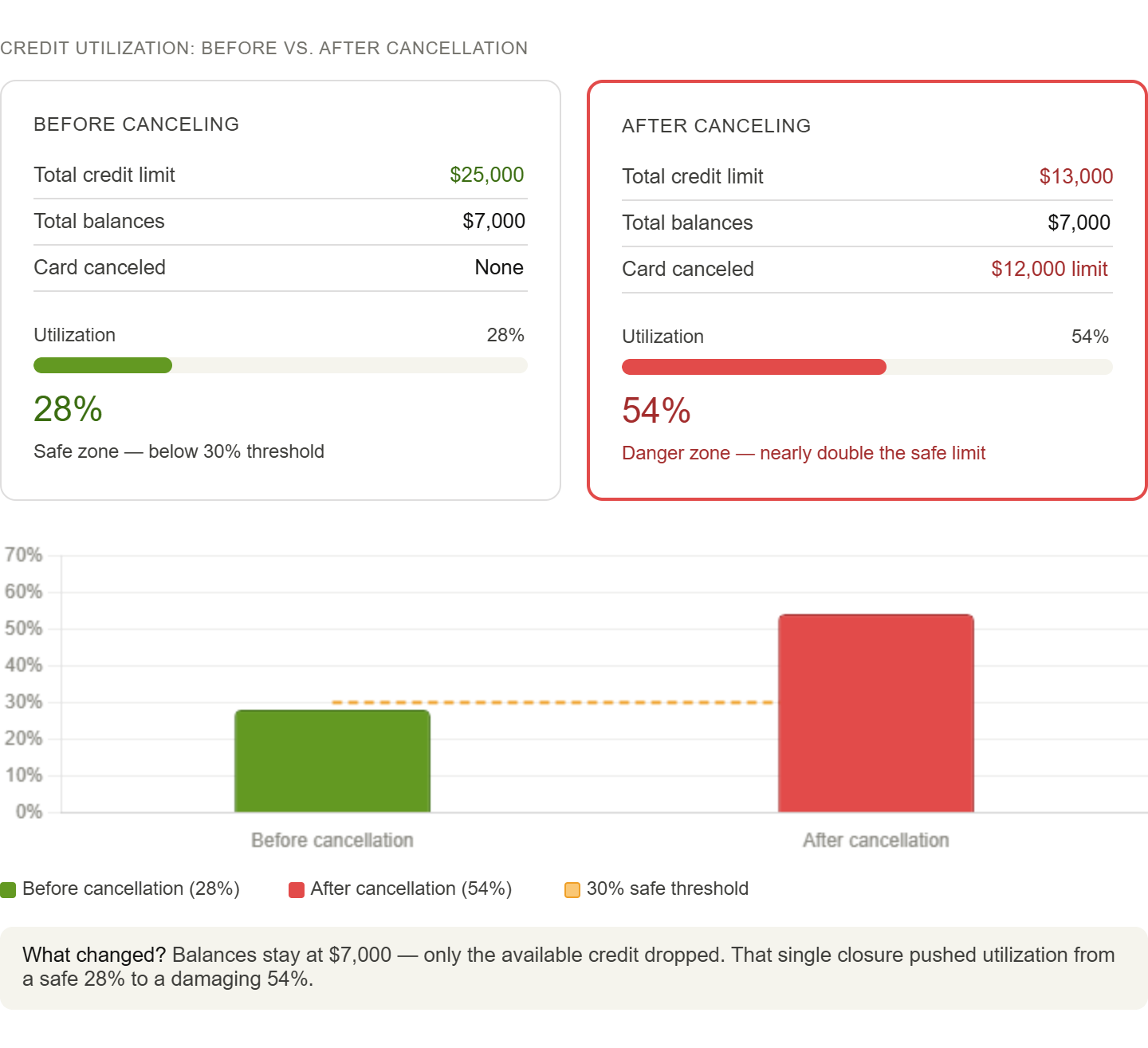
Average account age is the other problem. Length of credit history makes up 15% of your FICO score. Closing an old card shortens that average. Lenders want to see long track records of responsible use. A shorter average age signals more risk.
Can Closing a Credit Card Affect Your Credit Score?
Yes, closing a credit card affects your credit score. But the size of the impact depends on three things.
1. The card's credit limit. Closing a card with a $500 limit barely moves your utilization. Closing one with a $15,000 limit can spike it significantly.
2. The card's age. Closing your newest card hurts less than closing the one you've had for 12 years. The Consumer Financial Protection Bureau (CFPB) confirms this directly: closing an older account with a positive payment history is one of the riskier moves you can make (source: CFPB).
3. Your overall credit profile. A person with 8 open accounts loses less from one closure than someone with only 2.
One more thing worth knowing: a closed account in good standing stays on your credit report for up to 10 years. It does not disappear right away. But once it falls off, you lose that account's contribution to your score entirely.
Should I Cancel a Credit Card?
Most financial experts say no, but there are exceptions. Keep this framework in mind before deciding.
Cancel if all of these apply:
The card charges an annual fee that exceeds the value you get from it.
You carry zero balance on all other cards, so utilization will stay low.
The card is not your oldest account.
You are not planning to apply for a mortgage, car loan, or any new credit within the next 12 months.
Do not cancel if any of these apply:
The card is your oldest account.
Closing it would push your utilization above 30%.
It has a high credit limit relative to your total available credit.
You are actively shopping for a loan or a new card.
The CFPB puts it plainly: closing a credit card might be a good decision if it helps you avoid accumulating debt you cannot pay off, or if the card has fees that outweigh its benefits. Otherwise, the change to your score may be temporary or minor or, in some cases, lasting (source: CFPB).
A practical alternative: store the card somewhere safe and make one small purchase every few months to keep it active. This keeps the limit and account age working in your favor without any temptation to overspend.
So, When Can Canceling a Credit Card Help Your Credit Score?
Canceling a credit card can help your credit score indirectly in a narrow set of cases.
If overspending on a card keeps your balances high and your utilization above 50%, and you cannot control that behavior, closing the card may help in the long run. Lower balances over time will reduce utilization and gradually improve your score even after the short-term hit from losing the available credit.
In our credit repair practice, last quarter alone, we received 34 cases where clients had high-interest cards with chronic balances they could not pay down. In those cases, canceling was the right call. The short-term score drop was 15 to 30 points. Within 6 to 9 months of paying down the other balances, their scores recovered and then exceeded where they started.
The key condition: you must have no balance on the card you are canceling, and you must have a plan to reduce balances on the remaining accounts.
Will Canceling Old Credit Cards Help or Hinder My Credit?
Canceling old credit cards almost always hinders your credit. Age of accounts is one of the most underestimated factors in FICO scoring.
Amy Thomann, head of consumer credit education at TransUnion, states it directly: closing a card that has been open a long time shortens the average age of your credit history once it comes off your report (source: Bankrate).
Here is the specific risk: that old card will stay visible on your credit report for up to 10 years after closing. But the moment it drops off, you lose all the aging benefit it carried. For someone with a thin credit file, that can be a major hit.
The only scenario where canceling an old card makes sense is if it carries a high annual fee AND you have multiple other long-standing accounts that provide strong average account age on their own.
What Happens to Your Credit Mix When You Cancel?
Credit mix makes up 10% of your FICO score. It reflects the variety of credit types you manage, including credit cards, installment loans, and mortgages.
Canceling a credit card only affects your credit mix if it removes your last revolving credit account. If you still have other credit cards open, the impact on your credit mix is minimal.
The bigger concern remains utilization and account age. Focus there first.
How to Cancel a Credit Card Without Damaging Your Score
If you decide the cancellation is worth it, follow these steps to reduce the damage.
Pay off the balance in full before closing.
Redeem any rewards points or cashback before you call.
Request a credit limit increase on another card before canceling, to offset the utilization hit.
Call the card issuer and confirm the account will be reported as "closed at customer request."
Check your credit reports at AnnualCreditReport.com 30 days later to confirm the closure is recorded correctly.
Do not cancel multiple cards in the same month.
In our practice, we've seen a single error where an account is reported as "closed by lender" instead of "closed by consumer" cause unnecessary red flags on a credit file. Always verify the reporting after closure.
What Credit Score Factors Does Cancellation Actually Touch?
To bring this full picture together: canceling a credit card directly touches three of the five FICO score factors.
Credit utilization (part of the 30% "amounts owed" category) goes up when you lose available credit.
Length of credit history (15% of your score): can be shortened if the closed account was old.
Credit mix (10% of your score): affected only if you cancel your last revolving account.
Payment history (35%) and new credit inquiries (10%) stay untouched by a card cancellation.
That means up to 55% of your total score could be affected, depending on which card you close and what else is on your credit profile. That is not a small number.
Thinking About Closing a Credit Card?
One wrong move could lower your credit score by increasing your utilization ratio or reducing your credit history length. Before you cancel a card, get a professional review of your credit profile and understand the potential impact.
Get Your Free Credit AnalysisDiscover opportunities to improve your score and avoid costly credit mistakes.
The One Question to Ask Before You Cancel
Before closing any card, run this calculation: take your total current balances across all cards, divide by your total credit limit after the cancellation, and multiply by 100. If that number is above 30%, do not cancel yet.
Bring your balances down first. Once your utilization stays below 30% with the card removed, closing it becomes a much safer decision.
Credit repair is not about removing accounts. It is about managing the relationship between what you owe and what you have available. Keep that ratio low, keep your oldest accounts open, and your score will reflect it.