
Does breaking a lease affect your credit? Yes, but not in the way most people expect. The act of leaving early does not show up on your credit report. What does show up is the unpaid debt it leaves behind. Unpaid rent, early termination fees, and collection accounts tied to a broken lease can all damage your score. They can stay on your report for up to seven years.
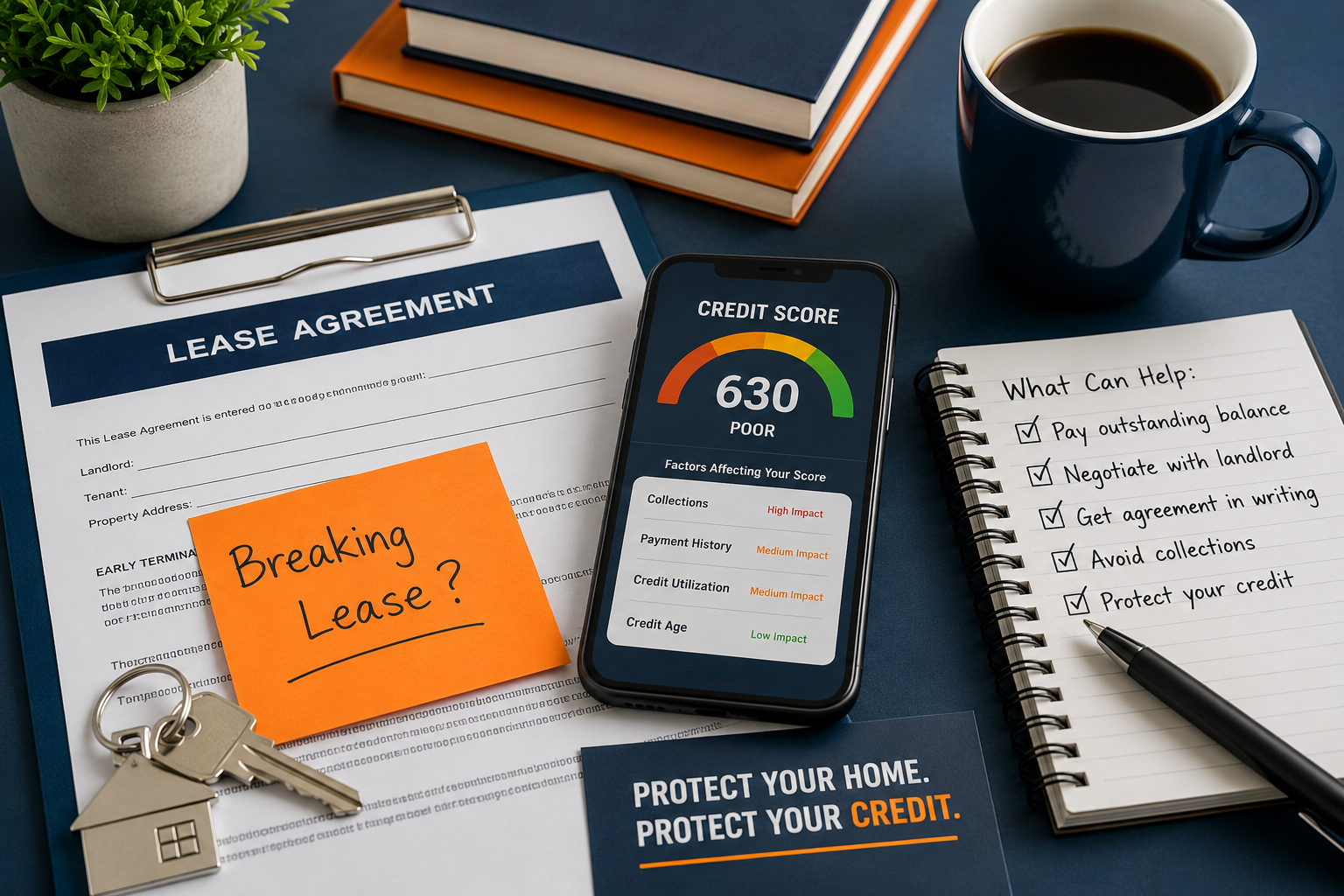
Running a credit repair company, I see this pattern every week. Last year alone, we handled over 40 cases where clients asked, "Does breaking a lease affect your credit?" only to find a collection account dragging their score down months later. One case is hard to forget. A client gave proper notice, moved out cleanly, and still watched his 815 credit score collapse to 630 after his landlord sent a $4,500 balance to collections.
This is not rare. A thread in r/personalfinance on Reddit shows the same story over and over: renters leave without clearing their balance, assume the issue is done, and get blindsided by a collections notice later. The Consumer Financial Protection Bureau confirms that rental debt sent to collections follows the same rules as any other debt; it shows up on your report and cuts your score (consumerfinance.gov).
Does Breaking a Lease Affect Your Credit Score Directly?
Breaking a lease does not directly affect your credit score. Landlords do not report lease terminations to Equifax, Experian, or TransUnion. No credit bureau tracks the act of leaving a rental early.
What hurts your score is what comes next. If you leave unpaid rent or fees behind, your landlord can hand that balance to a collection agency. Once a collector picks it up, it gets reported to all three bureaus. That one collection account can drop your score by 50 to 100 points, sometimes more.
Collection accounts stay on your credit report for seven years. During that time, they block new apartment approvals, raise your loan rates, and limit your financial options.
So the short answer: does breaking a lease affect your credit? Only when it leaves unpaid debt behind.
What Happens If You Break a Lease Before Moving?
Renters who ask, "Does breaking a lease affect your credit before I even move in?" often assume early exits carry lighter consequences. They do not. Breaking a lease before you ever move in is still a legal breach of contract. Most leases hold you to the same penalties as any mid-tenancy exit. Read your agreement first. It will typically spell out one of three outcomes:
You owe a flat early termination fee, often one to two months of rent.
You owe rent for the remaining months until the landlord re-rents the unit.
You forfeit your security deposit plus extra fees.
Some states require landlords to make a reasonable effort to re-rent. In those states, you only owe rent for the period the unit sat empty. This limits your cost but does not erase it.
The most important move: call your landlord early, explain the situation, and get every agreement in writing. A verbal deal protects no one.
What Happens If You Break an Apartment Lease?
When you break an apartment lease mid-tenancy, a specific chain of events begins. Knowing each step helps you stop the damage before it reaches your credit.
First, your landlord calculates what you owe: remaining rent, early exit penalties, and any fees your lease spells out. Second, your landlord contacts you to collect. Third, if those efforts fail, the debt goes to a third-party collection agency.
That third step is where the credit damage starts.
Collection agencies report the debt to all three major credit bureaus. The account appears as a "collection" on your report. FICO treats collections as a serious negative item. The damage goes beyond your score, too. Future landlords run credit checks during applications. A collection account from a prior landlord is a red flag most property managers will not ignore.
Beyond collections, your landlord can file a lawsuit. Court judgments no longer appear on credit reports as of 2017. But a judgment still lets a landlord garnish your wages, so part of your paycheck goes to them before you see it.
Will a Broken Apartment Lease Appear on My Credit Report?
A broken apartment lease appears on your credit report only when unpaid debt is involved. The termination itself is not reported. But these three things will show up:
A collection account for unpaid rent or fees.
A judgment from a landlord lawsuit is visible in public records and used by some lenders.
Entries in tenant-screening databases like Experian RentBureau or LexisNexis are separate from credit bureaus but reviewed by future landlords.
Point 3 is what most renters miss. Tenant-screening reports are not credit reports. A broken lease can appear in a screening database even when your credit score looks healthy. This is why some renters with strong scores still get rejected for new apartments.
Pull your credit reports from all three bureaus at AnnualCreditReport.com after any lease exit. Look for collection accounts or any entry tied to your old address. If you find an error or a paid account that still shows as open, dispute it with the bureau directly.
So when people ask "does breaking a lease affect your credit report?" the honest answer is: not the lease itself, but the debt trail it leaves behind.
How to Break a Lease Without Hurting Your Credit
Breaking a lease cleanly follows one rule: leave no unpaid balance behind. Here is how to do that:
Read your lease first. Your agreement defines what you owe. Know the number before you talk to your landlord.
Talk to your landlord early. Give as much notice as possible. Landlords who have time to find a replacement often reduce or drop termination fees. Get everything in writing and signed by both sides.
Find a replacement tenant. Some leases allow subletting. Even when they do not, bringing a qualified tenant to your landlord can cut your costs fast.
Pay your full balance before you leave. Once you clear the balance, there is nothing to send to collections. Ask for written proof that your account sits at zero.
Keep every record. Save receipts, emails, and signed agreements. If a collection account appears despite a zero balance, those records are your evidence for a dispute.
When You Can Break a Lease Without Owing Penalties
Some situations allow you to exit a lease without any penalties. Each state handles these differently, but most recognize these five:
Uninhabitable conditions, mold, broken plumbing, vermin, or any health violation your landlord refuses to fix.
Active military deployment, the Servicemembers Civil Relief Act (SCRA) lets active-duty members exit leases early with written notice.
Domestic violence, stalking, or sexual assault most states let survivors break a lease with a police report or protection order as documentation.
Landlord harassment or illegal entry, repeated violations of your right to quiet enjoyment, can give you legal grounds for exit.
A buyout clause in your lease, some agreements include a termination option that lets you leave early by paying a fixed fee.
If your situation fits any of these, document everything before you move out. Written records protect you if the landlord disputes the termination later.
How to Repair Your Credit After a Broken Lease
If a collection account from a broken lease already sits on your report, you have real options. The process takes time, but it works.
Clients who come to us still unsure whether breaking a lease affect your credit in the long run often have one thing in common: they never checked their report after moving out. Start by pulling your credit reports from all three bureaus. Confirm the account details: the balance owed, the date of first delinquency, and the collection agency's name. If any detail is wrong, file a dispute with the bureau. The bureau must investigate within 30 days under the Fair Credit Reporting Act.
If the debt is valid, contact the collection agency about a pay-for-delete agreement. Some agencies will remove the account from your report once you pay the balance in full. Get that agreement in writing before you pay anything.
If the agency refuses, paying still helps. A paid collection looks better to lenders than an unpaid one. Newer scoring models, FICO 9 and VantageScore 4.0, ignore paid collections entirely. That means your score can recover faster than older models allowed.
Collection accounts drop off your report after seven years from the date of first delinquency. But waiting seven years is not the right call when your rental and lending options are already limited.
A credit repair professional can speed up this process. They review your reports, send dispute letters, and negotiate with collection agencies. These are steps that take most renters several months to handle on their own.
Worried a Broken Lease Hurt Your Credit?
A broken lease collection can drop your credit score fast and make it harder to rent, finance a car, or qualify for a mortgage. Our credit experts help remove inaccurate collections and rebuild your score.
- ✔ Free Credit Analysis
- ✔ Review Apartment Collection Accounts
- ✔ Dispute Inaccurate Rental Debt
- ✔ Improve Your Credit Score Faster
See what is hurting your credit and discover actionable steps to improve your score after a broken lease or apartment collection.
Does a Broken Lease Show on a Background Check?
A broken lease does not appear on a standard credit check. But tenant-screening reports are different. Services like Experian RentBureau, TransUnion SmartMove, and LexisNexis pull rental history separately. A prior eviction, a broken lease with outstanding debt, or a landlord judgment can all appear in these reports even years after the fact.
Many landlords run both a credit check and a screening report at the same time. Your credit score can be strong while your rental history still blocks approval.
If a prior broken lease shows in a screening report, request your own copy from that service. The Fair Credit Reporting Act gives you the right to dispute inaccurate entries just as you would with a standard credit report.
Does breaking a lease affect your credit in every case? No. Understanding exactly why breaking a lease affects your credit or not puts you in control of the outcome. But leaving unpaid balances behind turns a lease problem into a credit problem fast. Pay what you owe, get written confirmation, and check your reports after the move. That is the only sequence that keeps your score protected.