
A fair credit score is a FICO score between 580 and 669. It sits above poor credit but below the national average. Borrowers with a fair credit score face higher interest rates, fewer loan choices, and stricter terms. Credit access still exists at this level. But staying here costs real money every month.
I run a credit repair company. One of the most unforgettable accounts I have heard came from a client who paid nearly $9,000 more in interest over five years. Her score was 624. The difference between her rate and a better rate? Less than 60 points.
A 2022 CFPB report (consumerfinance.gov) found that subprime cardholders face repeat late fees far more often. Those fees add a 24 percent annualized surcharge on top of already high interest. The fair credit score range overlaps directly with the subprime tier. That overlap is why this range is so costly to stay in.
What Is a Fair Credit Score?
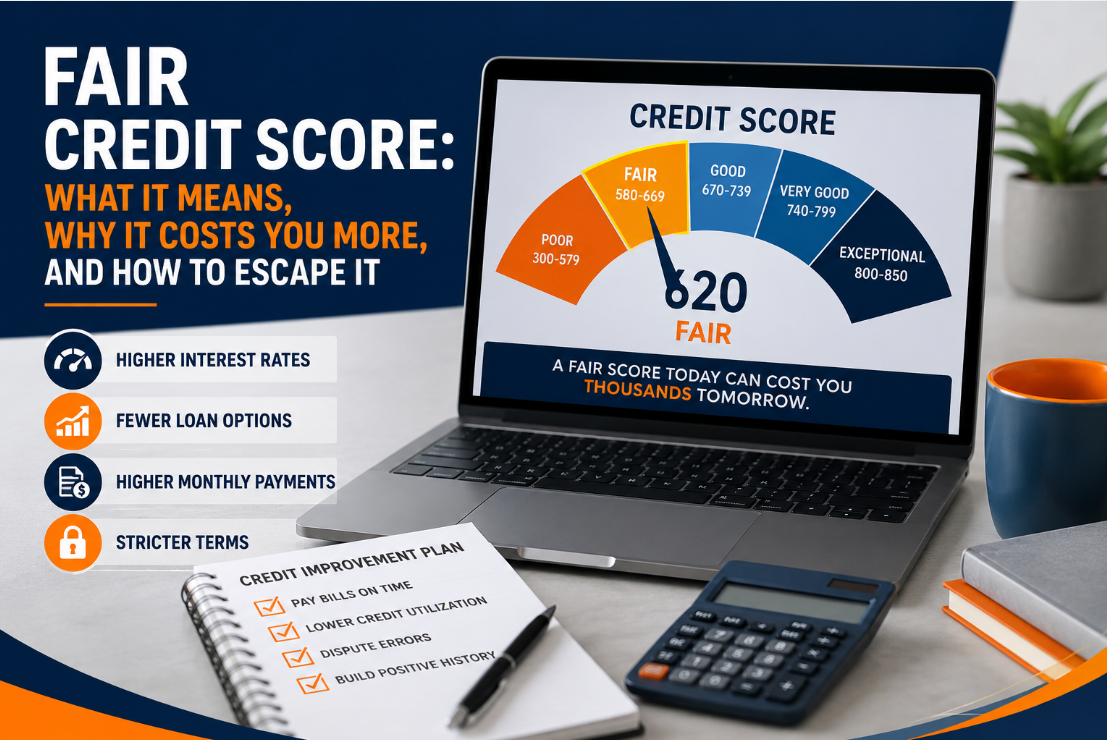
A fair credit score is a FICO score between 580 and 669. On the VantageScore model, the fair range runs from 601 to 660.
FICO scores go from 300 to 850. The fair credit score range is the second-lowest tier. Poor credit runs from 300 to 579. Good credit starts at 670. Very good runs from 740 to 799. Exceptional tops out at 800 to 850.
About 17% of Americans have a fair credit score, according to Experian. The national average FICO score was 714 in 2022. A fair credit score puts you well below the typical American borrower.
VantageScore uses the same 300 to 850 scale. Its fair range runs 601 to 660. Lenders who pull VantageScore may view your standing a bit differently than those who use FICO. Always ask which model a lender uses before you apply.
Is a Fair Credit Score Good or Bad?
A fair credit score is not catastrophic. But it is not healthy either. It is the gray zone.
Most lenders will approve you at this level. But the terms reflect the risk they see. Expect higher rates, lower limits, and sometimes a required security deposit. The CFPB's interest rate tool (consumerfinance.gov/owning-a-home/explore-rates) shows a higher score can save a borrower up to $264,523 over the life of a mortgage. That is real data from real lenders across the US.
To answer directly: a fair credit score is bad because you pay more. It is workable because credit is still available. The real problem is that most people stay here longer than they need to. They do not know what keeps them stuck.
What Does a Fair Credit Score Mean to Lenders?
Lenders classify borrowers with a fair credit score as subprime. That label affects every financial decision they make about you.
How a Fair Credit Score Affects Mortgage Options
FHA loans accept scores as low as 580 with a 10% down payment. But most conventional mortgages require 620 or higher. Nearly 77% of FHA borrowers with scores below 640 paid discount points at closing, per CFPB data. They paid extra fees upfront just to qualify.
How a Fair Credit Score Affects Auto Loans
Non-prime auto rates apply to fair credit borrowers. Those rates run 5 to 10 percentage points above what a borrower with a 720 score gets on the same car.
How a Fair Credit Score Affects Cards and Renting
Cards for fair credit borrowers carry higher APRs, lower limits, and no rewards perks. Premium travel and cashback cards require good to excellent scores. Some landlords also require bigger deposits or a co-signer from applicants with a fair credit score. Large property management companies often set hard cutoffs at 650 or 670.
In our office last quarter alone, we handled over 40 cases where clients were denied conventional mortgages. Their scores sat between 600 and 619. That is the fair credit score range, but just below most lender cutoffs.
What Percentage of Americans Have a Fair Credit Score?
About 17% of Americans hold a fair credit score of 580 to 669, according to Experian.
Exceptional credit holders make up 21%. Very good accounts for 25%. Good covers 21%. Fair and poor each hold roughly 16 to 17%.
Most lending products are built for the majority. Borrowers in this range sit in a smaller tier. They pay a premium that reflects how far they sit from the norm.
To recap: a fair credit score is 580 to 669 on FICO. It affects 17% of Americans. It puts borrowers in subprime territory. The causes are findable. The cost shows up in higher rates and fewer options.
What Causes a Fair Credit Score?
Most fair credit scores come from a small set of problems. Find the cause, and you can target the fix.
Payment History Issues
Payment history makes up 35% of your FICO score. One missed payment can drop a near-perfect score by 100 points or more. For borrowers already in the fair credit score range, missed payments are usually the starting point.
High Credit Utilization
Credit utilization is 30% of your score. Using more than 30% of your available credit signals risk. Many borrowers in the fair credit score range carry balances above 50% utilization and do not realize it.
Other Common Triggers
Unpaid collections from medical bills or utilities keep scores low. A short credit history limits the data lenders can use. Too many hard inquiries from frequent applications signal financial stress. A thin credit mix, only cards and no installment loans, also caps your score potential.
The FTC found that 5% of consumers have errors on at least one of their three credit reports. Those errors can hold a fair credit score in place for years without the borrower knowing why.
What Credit Cards Can You Get With a Fair Credit Score?
Card options exist for borrowers with a fair credit score. But the terms reflect the risk tier.
Secured cards require a cash deposit. That deposit equals your credit limit. They report to all three bureaus and build payment history over time. Store cards approve lower scores but charge high interest. Some issuers offer starter unsecured cards for the fair credit score range, with APRs between 25% and 35%.
Premium travel cards, 0% APR offers, and high-limit cashback cards are off the table at this level. Those require scores above 670 to 700 depending on the issuer.
The best move is to keep utilization below 10% and pay the full balance each month. That habit raises your score faster than almost anything else.
Can You Get a Loan With a Fair Credit Score?
Yes. Most lenders approve personal loans for borrowers with a fair credit score. But the cost is higher.
Fair credit score borrowers typically pay 18% to 30% APR on personal loans. Borrowers with good credit pay 10% to 17% on the same loan. That gap compounds over the full term.
FHA mortgages start at 580 with a 3.5% down payment. VA loans have no VA-set minimum, but most VA lenders want 580 to 620. Auto approval at 580 is common, but non-prime rates run 7 to 12 points above prime.
Credit unions are the best starting point for borrowers with fair credit scores. CFPB data shows credit unions charge 8 to 10 percentage points less than the 25 largest credit card companies. Apply there before anywhere else.
How to Raise a Fair Credit Score to Good
Moving from a fair credit score to good credit, from below 669 to above 670, takes 6 to 12 months with the right steps.
Pay Down Balances First
Utilization updates within one billing cycle. Drop balances below 30%, then aim for below 10%. Your score can move in 30 to 60 days. This is the fastest lever for any fair credit score borrower.
Pay Every Account on Time
Set autopay for the minimum on every account. Payment history is 35% of your score. Consistency beats any single large payment.
Dispute Errors on Your Reports
Pull all three reports at annualcreditreport.com. Dispute anything incorrect or unrecognized. This step costs nothing and can raise your score faster than almost any other action.
Get Added as an Authorized User
Ask a family member with good credit to add you to their oldest card. Their history shows up on your report within 30 to 60 days. This works best for borrowers with thin files.
Stop Applying for New Credit
Each application drops your score and signals risk. Wait until your fair credit score clears 670 before adding new accounts. Keep old accounts open too. Closing them reduces available credit and shortens your credit age.
I have seen clients gain 50 to 80 points in 60 days. The two moves that drove it: paying down utilization and removing errors. Every case is different, but those two steps work most often.
How Long Does It Take to Fix a Fair Credit Score?
The timeline depends on the cause.
Utilization issues are resolved in 30 to 60 days after you pay down balances. Lenders report to the bureaus once a month. Changes show up fast.
Late payments take longer. One 30-day late payment stays on your report for seven years under the Fair Credit Reporting Act. But its pull on your score fades in the first one to two years as you build new positive history.
Collections and charge-offs also stay for seven years. FICO 9 and VantageScore 4.0 ignore paid collections. Paying a collection may not help under older models. But newer scoring models used by more lenders will reflect the payoff.
A realistic timeline: 1 to 3 months for gains from utilization and error fixes. 3 to 6 months for continued growth from on-time payments. 6 to 12 months for the fair credit score to cross into good territory.
Fair Credit Score and Renting: What to Expect
Landlords pull credit through the major bureaus or third-party screening services. Most weigh score, rental history, and income together.
A fair credit score does not automatically disqualify you. But some landlords require a bigger deposit or a co-signer for applicants below 650 or 670. Large property managers often have strict cutoffs. Individual landlords have more flexibility and may care more about income and references than the score.
If your fair credit score is holding back a rental application, offer a larger deposit upfront. Bring references from past landlords. Show proof of steady income. These factors can offset the risk a landlord sees in your score.
Stuck With a Fair Credit Score?
A fair credit score can cost you thousands in higher interest rates, loan denials, and expensive monthly payments. Our credit specialists help remove inaccurate negative items and build a strategy to help you move toward good credit faster.
✔ Free Credit Analysis
✔ Personalized Credit Repair Plan
✔ Dispute Inaccurate Negative Accounts
✔ Improve Your Approval Odds
Start understanding what is holding your score back today.
A Fair Credit Score Is a Starting Point, Not a Sentence
A fair credit score between 580 and 669 means you are in transition. Credit is available. You are not at the bottom. But every product costs more than it should.
The CFPB data is clear: subprime borrowers pay more in fees and interest and have fewer choices. The gap between a fair credit score and a good one represents thousands of dollars over time.
The steps are not complicated. Pay on time, lower utilization. Remove errors. Avoid new hard inquiries. Each step targets a specific part of your score. Each one closes the gap between a fair credit score and the range where lenders compete for your business.