
Credit card hopping means switching between credit cards to take advantage of offers such as low introductory interest rates or sign-up rewards. If interest charges keep eating into your monthly payments, moving a balance to a 0% APR card may give you room to pay down debt. But fees, repayment deadlines, and new credit applications can affect whether the move is worth it.
The key question is simple: Will switching cards reduce your total costs and help you repay what you owe? A new offer can create savings, but moving debt does not erase it. This guide explains how credit card hopping works, its potential benefits, and the risks to check before applying.
Must Know...
A 0% introductory rate lasts for a limited time.
Balance transfer fees can reduce your savings.
Opening new accounts may affect your credit score.
New purchases may have different interest terms from transferred debt.
A payoff plan should work without relying on approval for another card.
How Does Credit Card Hopping Work?
For balance transfers, the process starts with comparing your current debt costs against a new offer.
You apply for a card, receive a credit limit if approved, and request an eligible transfer. The new account then holds the transferred balance, plus any applicable fee.
The Consumer Financial Protection Bureau explains balance transfers as moving an outstanding balance from one card to another. Promotional rates last for a limited period, so the payoff deadline matters as much as the advertised rate.
Before applying, check:
The introductory annual percentage rate, or APR.
How long that rate lasts.
The balance transfer fee.
The deadline for requesting a qualifying transfer.
The APR after the promotion ends.
Whether the offer also covers new purchases.
Any annual fee or transfer restrictions.
Continue making required payments on your original account until the transfer is confirmed.
Can Credit Card Hopping Save You Money?
Credit card hopping can save money when the interest avoided exceeds the fees and other costs. Your repayment pace plays a major role.
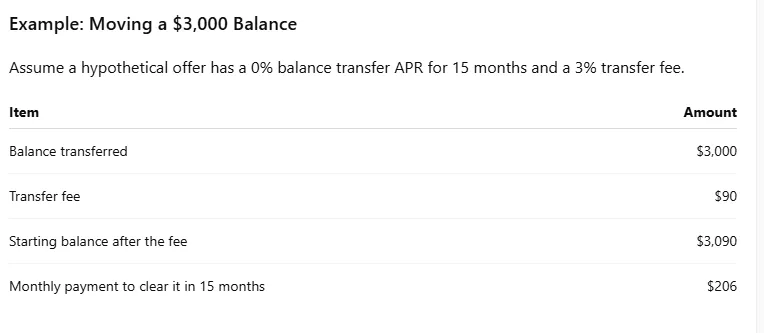
This example assumes the fee is added to the promotional balance, with no new purchases or other charges.
The transfer would need to save more than $90 in interest to outweigh the transfer fee alone. If the card also charges an annual fee, include that in the comparison.
Zero interest does not mean zero cost. The CFPB confirms that issuers may charge a balance transfer fee on a 0% offer.
Are you looking for a way to make your money work harder? Wondering if there's a strategy that can help you save on interest and maybe even fund that dream vacation? If so, you've likely come across credit card hopping. But what is it exactly, and can it truly be the financial hack you've been looking for? This article dives into the real mechanics of credit card hopping, answering the questions people search for most, and laying out the pros, cons, and credit score impact so you can make a smart call.
What Is Credit Card Hopping?
Credit card hopping is a financial move that works like a game of musical chairs. You have a seat — a credit card with a tempting offer, usually a zero-percent interest rate or a big sign-up bonus. Instead of staying in that chair until the promotional period ends, you hop to a new one: a fresh credit card with another attractive opening offer.
This hopping happens at strategic times, typically just before an introductory rate expires. For example, imagine you have a card with zero-percent interest for 15 months. You make purchases or transfer balances without paying any interest. When that period ends, you move to a new card with a fresh zero-percent offer and repeat the process.
Why Do People Do It?
Credit card hopping appeals to people for a few clear reasons:
- Zero-percent interest periods. These introductory offers let you carry a balance or finance a large purchase without paying interest, sometimes for up to 21 months.
- Sign-up bonuses. Welcome offers on travel cards currently average 60,000 to 100,000 points, which converts to $600 to $1,500 in travel value depending on how you redeem.
- Rewards on everyday spending. Cashback, airline miles, and hotel points stack up on normal purchases like groceries and gas.
- Debt consolidation. Balance transfer offers let you move high-interest debt onto a zero-percent card, buying time to pay the principal without interest piling up.
The strategy sounds simple on paper. In practice, it requires discipline, organization, and a credit profile that can absorb the side effects.
The Advantages of Credit Card Hopping
1. Zero-Percent Interest Savings Are Real
The most appealing part of credit card hopping is the interest savings. When you carry a balance on a standard credit card at today's average APR of 22.8 percent, a $5,000 balance costs you roughly $1,140 in interest over 12 months if you only make minimum payments. A zero-percent introductory card on that same balance costs you zero in interest during the promotional window.
For people managing a large one-time expense — a home repair, medical bill, or car purchase — a 0% card can act as an interest-free loan. The key is clearing the balance before the promotional period ends.
2. Sign-Up Bonuses Add Up Fast
Welcome bonuses on premium travel cards have grown significantly. A 100,000-point bonus is now common among top-tier airline and hotel cards. Redeem those points strategically and you can book a round-trip flight to Europe or several nights at a luxury hotel without spending extra money on travel. For people who travel regularly, this makes credit card hopping genuinely profitable when managed well.
3. A New Card Can Lower Your Utilization Ratio
Here is the credit score benefit most people overlook. Credit utilization — the percentage of your available credit you are currently using — drives 30 percent of your FICO score. Add a new card with a high limit and keep the balance at zero, and your overall utilization drops. A person carrying $3,000 across $10,000 in total credit sits at 30 percent utilization. Add a new card with an $8,000 limit and that same $3,000 balance drops to 16.7 percent utilization immediately.
The Disadvantages of Credit Card Hopping
1. Hard Inquiries Stack Up
Every credit card application triggers a hard inquiry on your credit report. Each inquiry can drop your FICO score by up to 5 points. That might sound small, but open three cards in six months and you lose up to 15 points before you spend a dollar. Hard inquiries stay on your report for two years, though they only count toward your score for the first 12 months.
Unlike mortgage or auto loan inquiries — where FICO clusters multiple pulls within 45 days and counts them as one — credit card inquiries are counted separately every single time. There is no rate-shopping protection for credit card applications.
2. Average Account Age Takes a Hit
Think of your credit history as a book. Each account is a chapter. The longer and more consistent your chapters, the stronger your story looks to lenders. When you open several new accounts in a short period, you add short, new chapters that pull down your average account age. Account age drives 15 percent of your FICO score.
A person with a 10-year average account age who opens five new cards in one year can see that average fall to 5 or 6 years within a month. That shift alone can cost 20 or more FICO points depending on the rest of the profile.
3. Closing Cards Backfires More Than People Expect
This is the part of credit card hopping that quietly causes the most damage. When someone closes a card after collecting its bonus, that card's credit limit disappears from the utilization calculation immediately. If there are balances anywhere else, the ratio jumps the same day.
Last quarter, we reviewed over 25 files where clients had done exactly this. They opened cards, hit the bonuses, closed the accounts, and then could not understand why their scores had dropped. The answer was almost always utilization spiking after closures.
4. Issuer Restrictions Can Lock You Out of the Best Offers
Aggressive hopping triggers internal restrictions at major issuers. Chase's 5/24 rule automatically denies any application from someone who has opened five or more new credit accounts in the past 24 months — regardless of credit score. American Express limits welcome bonus eligibility to once per card family, often for life. Citi blocks new card approvals within the same card family if you opened one in the last 24 to 48 months.
| Issuer | Key Restriction | Duration |
|---|---|---|
| Chase | Denied if 5+ new accounts opened in past 24 months (5/24 rule) | 24 months |
| American Express | Lifetime welcome bonus limit per card family | Lifetime |
| Citi | No bonus if same card family opened within 24–48 months | 24–48 months |
| Capital One | Max 2 personal cards; 6-month gap required between applications | 6 months |
| Barclays | Denies applications with too many recent inquiries | Varies |
5. Overspending Risk Is Real
Zero-percent interest removes the immediate sting of carrying a balance. That is exactly why it creates a spending risk. When the cost of borrowing feels invisible, it becomes easier to justify purchases that stretch beyond your budget. Minimum spend requirements on sign-up bonuses — often $3,000 to $5,000 within the first three months — push some people to spend more than they normally would just to capture the bonus.
Credit Score Impact: What the Numbers Actually Show
Your FICO score is built from five factors. Credit card hopping touches three of them directly.
- Payment history (35 percent). Missing a payment on any card creates a derogatory mark that can drop your score by 60 to 110 points. More cards mean more accounts to track and more chances for a payment to slip.
- Credit utilization (30 percent). New cards lower utilization if kept at zero. Closing cards raises utilization immediately. This factor moves fastest and most visibly with credit card hopping.
- Length of credit history (15 percent). Opening multiple new accounts shortens your average account age. The damage is gradual but compounds over multiple rounds of hopping.
The net effect depends entirely on your starting profile. A person with a score above 750, a 10-year credit history, and zero balances can absorb the inquiries and benefit from new credit limits. A person with a score below 680, a history under four years, or existing balances can see the opposite result: inquiries compound the damage while new accounts cut the average account age further.
To Hop or Not to Hop: Making the Right Call
Who Benefits from Credit Card Hopping
Credit card hopping works well for people who already have a solid financial foundation. Specifically, it suits someone with a FICO score above 720, a credit history of at least five years, no current balances, strong organizational habits to track multiple due dates, and a specific goal — travel rewards, a large purchase financed at zero percent, or a balance transfer to escape high interest.
Who Should Avoid It
Credit card hopping creates more problems than it solves for people who carry existing balances on current cards, have a credit history under four years, have already applied for two or more cards in the past six months, or struggle to track multiple accounts and payment dates.
If any of those apply to your situation, the smarter move is to stabilize your current accounts first. Pay down balances, let your average account age grow, and let any existing inquiries age off your report before considering new applications.
Alternatives Worth Considering
Credit card hopping is not the only path to the same goals. A personal loan with a lower fixed APR can consolidate existing credit card debt without the complexity of managing multiple cards. A single balance transfer card with a long 0% period accomplishes the interest-saving goal with one application and one account. For travel rewards, one premium card with broad earning categories often outperforms chasing multiple sign-up bonuses when you factor in the credit score cost of multiple applications.
What is credit card hopping?
Credit card hopping is opening new credit cards to capture sign-up bonuses, introductory 0% APR periods, or rewards points, then repeating the process with the next card offer. Each application creates a hard inquiry on your credit report and lowers your average account age, both of which affect your FICO score.
Does credit card hopping hurt your credit score?
It can. Each application creates a hard inquiry worth up to 5 FICO points. Multiple new accounts lower your average account age, which drives 15 percent of your score. The damage is temporary for people with long credit histories, but stacks fast when applications pile up within 12 months. New cards can also lower utilization, which partially offsets the hit for people who keep balances at zero.
What are the advantages of credit card hopping?
The main advantages are zero-percent introductory APR periods that let you carry a balance interest-free, sign-up bonuses worth $500 to $1,500 in travel or cash value, rewards accumulation on everyday spending, and the potential to lower your credit utilization ratio when a new high-limit card is added and kept at zero balance.
What is the 5/24 rule?
The 5/24 rule is Chase Bank's policy that automatically denies any credit card application from someone who has opened five or more new credit accounts in the past 24 months, regardless of credit score. American Express, Citi, and Barclays have similar restrictions that can lock frequent hoppers out of the highest-value card offers.
Does closing a credit card hurt your credit?
Yes. Closing a card removes its credit limit from your available credit immediately, raising your utilization ratio if you carry balances anywhere else. It also shortens your average account age over time. A closed account in good standing stays on your report for up to 10 years, but its credit limit disappears from the utilization calculation the day it closes.
Not Sure If Your Credit Profile Can Handle a New Card?
A free 3-bureau audit shows your current utilization ratio, average account age, and any inquiries already on file. Know your numbers before you apply for anything.
Get My Free 3-Bureau Audit → Secure · 2 minutes · No credit card required-
Why Credit Is Important: What Your Score Really Controls Breaks down what a stronger score unlocks in practice, from mortgage rates to rental approvals and job screening.
-
Empower Your Wallet: Overcome Credit Card Debt Covers how balances on multiple cards compound through interest and what the fastest payoff strategies look like in practice.
-
Credit Utilization: The 30% Rule and What It Really Means Explains how FICO calculates utilization per card and across all cards, and where the real scoring threshold sits.
Make Your Next Credit Move With a Clear Plan
Before applying for another card, review what you owe, what the offer costs, and how much you can repay each month. Credit card hopping is most useful when it supports measurable progress toward a lower balance.
Not sure where your credit stands? Get your credit report through ASAP Credit Repair and use it as a starting point to review your accounts before your next application.
This article provides general educational information. Card terms, eligibility, and credit score effects vary.