
Credit report dispute denied? That might be the reason you are on this specific page currently and you are on the right spot.
If your credit report is wrong but your dispute keeps getting denied, stop sending the same dispute again. A repeated dispute with the same explanation and documents may produce the same result. Your next step is to find out what the credit bureau reviewed, identify who supplied the incorrect information, and build a more specific dispute supported by records.
A denied credit report dispute does not always mean the account is accurate. The bureau may say the information was “verified” because the creditor, lender, or collector confirmed that it matched its system. That response does not explain whether the company reviewed your bank statements, payment records, identity documents, court files, or other evidence.
This problem is not rare. The CFPB received more than 5.8 million credit and consumer reporting complaints last year. These complaints represented 88% of all complaints received by the agency that year, according to its 2025 Consumer Response Annual Report. Many consumers reported problems involving inaccurate information and the way credit reporting disputes were handled.
I ownASAP Credit Repair, and I have spent more than 15 years reviewing credit reports and dispute results. One pattern appears often: the consumer identifies a real error, but the dispute only says the account is “not mine” or “incorrect.” It does not identify the exact balance, payment status, delinquency date, ownership record, or document that proves the reporting is wrong.
A stronger dispute creates a direct chain of evidence. It identifies the precise error, shows the correct information, attaches proof, and sends the dispute to both the credit bureau and the company that furnished the account. The CFPB recommends disputing errors with both organizations, since each has responsibilities under the Fair Credit Reporting Act.
If the error remains after a documented reinvestigation, you still have options. You may request more information about the verification process, submit new evidence, file a CFPB complaint after completing the required dispute, add a brief statement to your credit file, or speak with a consumer-law attorney.
The right response depends on why the dispute was denied and what your documents can prove.
My Credit Report Is Wrong, but My Dispute Was Denied
A credit report dispute often gets denied when it is too general, lacks supporting documents, or does not identify the exact information that is wrong.
The process below shows why repeating the same dispute may fail and how clearer evidence can help support a stronger reinvestigation.
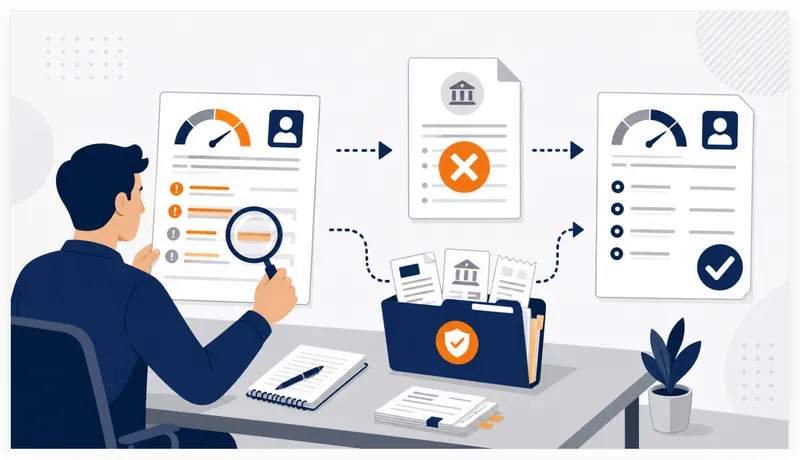
Credit Report Dispute Denied: Reasons Behind
My Credit Report Is Wrong but My Dispute Keeps Getting Denied. What Can I Do?
Move past the standard bureau dispute and use tools most people never touch: request a Method of Verification letter, dispute directly with the furnisher instead of the bureau, file a CFPB complaint, or add a 100-word consumer statement while you escalate. A denied dispute is not the end of the process, it is usually the point where the real leverage starts.
Most people stop at the first "verified" response because they assume the system already did its job. It rarely did. Almost every DIY dispute uses the same channel: the bureau's online portal, which funnels into an automated pipeline built for speed, not scrutiny. Getting past a denial is less about writing an angrier letter and more about switching to a channel that legally cannot be answered with a checkbox.
The rest of this article walks through exactly why the standard dispute stalls out, and then the four specific tools that move a case forward once it does: the Method of Verification request, the direct furnisher dispute, the CFPB complaint, and, when the pattern is bad enough, an attorney.
Already Disputed and Still Denied?
A repeated "verified" result usually means the wrong tool was used, not that the item is actually accurate. A free credit analysis shows which escalation path fits your specific case.
Unlock My Free Credit Analysis → Secure · 2 minutes · No credit card requiredWhy Do Credit Bureau Disputes Get Denied So Often?
Most disputes are processed through an automated system called e-OSCAR, which reduces your dispute to a short code sent to the furnisher. The furnisher often checks a box confirming their own data matches, without pulling the underlying documents. The bureau then largely accepts that response rather than independently verifying it, a pattern the CFPB has formally investigated and sued Experian over in 2025.
Here's the part almost nobody explains clearly: when you submit a dispute, a human being does not read your letter and go pull the file. The dispute gets converted into an Automated Consumer Dispute Verification form, sent through a shared industry system called e-OSCAR, and the furnisher responds using a short dropdown code rather than a written explanation. The structural weakness here has drawn attention from consumer attorneys directly: the system reduces complex, document-backed disputes to a few characters in a menu, regardless of what evidence you attached.
That is exactly the pattern the CFPB says it caught at Experian. In its January 2025 lawsuit, the agency alleges Experian used faulty intake procedures, failed to pass along consumer documentation to furnishers, and routinely accepted furnisher responses "even when that response was improbable or illogical on its face." That case was still active as of mid-2026, which tells you this is not a rare glitch. It is a documented business practice at one of the three major bureaus.
What Does "Verified as Accurate" Actually Mean?
It means the furnisher's internal records matched what the bureau already had on file, nothing more. It does not mean a person reviewed your documents, and it does not mean the underlying information is actually correct. A furnisher can verify inaccurate data simply because their own system is also wrong.
This is the single most misunderstood phrase in the entire dispute process, and it explains why a second identical dispute usually produces the same identical answer. Verification is a data match, not a fact-check. If the furnisher's own system already contains the error, checking that system again just confirms the error a second time. Nothing new happened. Nothing new will happen until you force a different kind of check.
The word implies someone looked into it thoroughly and confirmed the facts are correct.
The furnisher's system returned the same data it already had. No documents were necessarily reviewed.
Why Do Generic Dispute Letters Get Rejected as Frivolous?
The FCRA allows a bureau to decline investigating a dispute it reasonably determines is frivolous or irrelevant, including disputes that repeat a prior claim with no new information. Template letters that say only "this is not accurate" without a specific factual reason are the most common trigger for this kind of rejection.
Most people's first dispute letter says some version of "this account is not mine" or "this information is inaccurate," with no further detail. That is exactly the pattern the law allows a bureau to wave off. A vague claim, resubmitted a second time with the same wording, gives the bureau legal cover to decide nothing new is being alleged. Real leverage comes from specificity: the exact date that's wrong, the exact balance that doesn't match your records, the exact reason the account isn't yours.
What Is a Method of Verification Letter, and Why Does It Work Better?
Under FCRA Section 611(a)(6) and (7), you can demand the bureau disclose exactly how an item was verified: who was contacted, what records were reviewed, and their business address. Many verifications cannot survive this request because no real investigation happened, which forces either a real answer or a deletion.
This is the tool almost nobody uses, and it is the one that changes outcomes most often. The statute itself gives you the right to request the specific business name, address, and telephone number of anyone the bureau contacted, and a description of the procedure used to verify your dispute. A Method of Verification letter forces the bureau to answer a question the automated system was never built to answer in the first place: what, specifically, did you actually check?
| Escalation Tool | Legal Basis | What It Forces |
|---|---|---|
| Standard bureau dispute | FCRA Section 611(a) | 30-day investigation via e-OSCAR |
| Method of Verification letter | FCRA Section 611(a)(6) and (7) | Disclosure of who was contacted and how |
| Direct furnisher dispute | FCRA Section 623(a)(8) | The furnisher's own independent investigation |
| CFPB complaint | Consumer Financial Protection Act | A company response within roughly 15 days |
Should You Dispute With the Bureau or the Furnisher Directly?
Try both, but understand they are legally different paths. A bureau dispute goes through the automated e-OSCAR system. A direct furnisher dispute, filed under FCRA Section 623(a)(8) for certain furnishers, requires the company itself to conduct its own reasonable investigation, which sometimes surfaces a different result than the bureau's automated process.
Filing directly with the furnisher, rather than routing everything through the bureau, sidesteps the e-OSCAR bottleneck entirely. Instead of a bureau asking a furnisher to check a box, you are putting the furnisher on direct legal notice and requiring them to investigate their own records. This does not always produce a different answer, but it removes one layer of the automated pipeline that keeps generating the same denial.
When Should You File a CFPB Complaint Instead of Disputing Again?
File a CFPB complaint once a dispute has already been denied without a real explanation, or after a Method of Verification request goes unanswered. Most complaint types require a company response within 15 days, and CFPB complaints create a federal record that later supports a lawsuit if the problem continues.
Credit reporting was the single most complained-about financial product to the CFPB for the fifth consecutive year in 2025, pulling in roughly 5.8 million complaints. The agency itself has acknowledged the underlying problem in writing: a 2023 circular states plainly that consumer reporting companies and furnishers have failed to conduct reasonable investigations and have not spent the time necessary to get to the bottom of inaccuracies. A CFPB complaint is not a magic deletion button, but it puts your case in front of a regulator who has already documented this exact pattern of behavior at the industry level.
When Does It Make Sense to Get a Consumer Attorney Involved?
Once you have a documented pattern, a denied dispute, an ignored Method of Verification request, or a CFPB complaint that produced no real change, you are no longer dealing with a data entry problem. You are dealing with a potential willful FCRA violation, and that is exactly the category of case consumer protection attorneys take on contingency. You typically pay nothing upfront, and statutory damages plus attorney's fees are built into the law specifically to make these cases worth taking.
A denied dispute means the automated system did its automated job, nothing more. It does not mean your case is closed, it means you've reached the point where the tools most people never use actually start to matter.
Standard bureau disputes run through an automated system that reduces complex, document-backed claims to a short code and a checkbox response, which is why a second identical dispute usually produces the same denial. Method of Verification letters, direct furnisher disputes, and CFPB complaints each force a different kind of scrutiny the automated process was never built to survive. When a documented pattern remains after all three, a consumer attorney working on contingency is the natural next step.
My credit report is wrong but my dispute keeps getting denied. What can I do?
Move past the standard bureau dispute and use tools most people never touch: request a Method of Verification letter, dispute directly with the furnisher instead of the bureau, file a CFPB complaint, or add a 100-word consumer statement while you escalate. A denied dispute is not the end of the process, it is usually the point where the real leverage starts.
Why do credit bureau disputes get denied so often?
Most disputes are processed through an automated system called e-OSCAR, which reduces your dispute to a short code sent to the furnisher. The furnisher often checks a box confirming their own data matches, without pulling the underlying documents. The bureau then largely accepts that response rather than independently verifying it, a pattern the CFPB has formally investigated and sued Experian over in 2025.
What does "verified as accurate" actually mean?
It means the furnisher's internal records matched what the bureau already had on file, nothing more. It does not mean a person reviewed your documents, and it does not mean the underlying information is actually correct. A furnisher can verify inaccurate data simply because their own system is also wrong.
Why do generic dispute letters get rejected as frivolous?
The FCRA allows a bureau to decline investigating a dispute it reasonably determines is frivolous or irrelevant, including disputes that repeat a prior claim with no new information. Template letters that say only "this is not accurate" without a specific factual reason are the most common trigger for this kind of rejection.
What is a Method of Verification letter, and why does it work better?
Under FCRA Section 611(a)(6) and (7), you can demand the bureau disclose exactly how an item was verified: who was contacted, what records were reviewed, and their business address. Many verifications cannot survive this request because no real investigation happened, which forces either a real answer or a deletion.
Should you dispute with the bureau or the furnisher directly?
Try both, but understand they are legally different paths. A bureau dispute goes through the automated e-OSCAR system. A direct furnisher dispute, filed under FCRA Section 623(a)(8) for certain furnishers, requires the company itself to conduct its own reasonable investigation, which sometimes surfaces a different result than the bureau's automated process.
When should you file a CFPB complaint instead of disputing again?
File a CFPB complaint once a dispute has already been denied without a real explanation, or after a Method of Verification request goes unanswered. Most complaint types require a company response within 15 days, and CFPB complaints create a federal record that later supports a lawsuit if the problem continues.
Tired of Sending the Same Dispute and Getting the Same Denial?
You've done the DIY part. What's usually missing isn't effort, it's the right escalation path for your specific denial. Get your free credit analysis and find out exactly what to try next.
Get My Free Credit Analysis Now → Secure · 2 minutes · No credit card required-
How to Dispute Credit Report Errors (Step-by-Step Guide) The foundational dispute process this article assumes you've already tried, covering the initial filing steps in full.
-
TransUnion Dispute Address and Dispute Instructions Covers what to do after a TransUnion denial specifically, including the Executive Complaint office and CFPB filing steps.
-
Affirm Charge-Off Showing Twice on Credit Report: How to Fix It A real example of escalating past a "verified" result using a direct furnisher dispute under FCRA Section 623(a)(8).