
The most common mistake after a credit score drop is reacting fast instead of reacting right.
A sudden drop triggers panic. Panic pushes people toward closing cards, applying for new credit, or ignoring the report entirely. All three moves usually make the score fall even further. Credit score drops, utilization spikes, and report errors all feed into the same cycle of bad reactions.
I own ASAP Credit Repair. I have spent over 15 years pulling credit reports for over 22,000 clients. This same pattern repeats constantly. This is one of the most common calls I get, since people usually make their situation worse in the first 48 hours after they see the drop, not because of the original cause.
Credit report errors sit at the center of this problem more than most people realize. The CFPB received close to 5.8 million credit or consumer reporting complaints in 2025. This one category made up 88% of every complaint the agency received that year, according to the CFPB's own Consumer Response Annual Report. That volume shows how often a credit score drop traces back to a mistake on the report, not a mistake the consumer made.
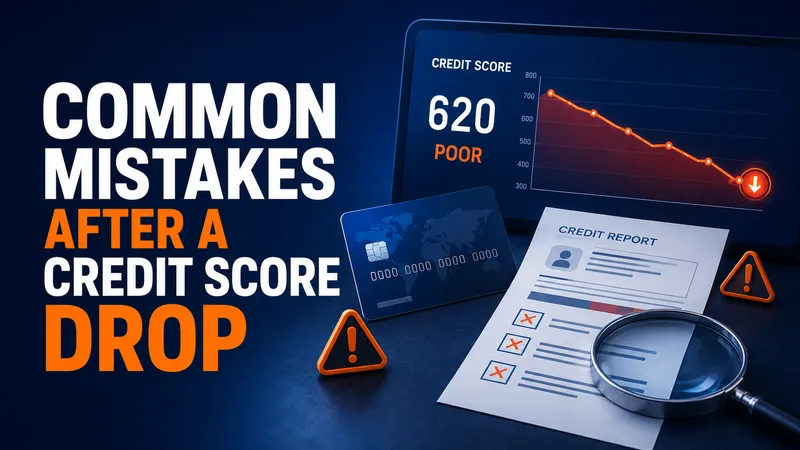
Closing a Credit Card Right After the Drop
Closing a credit card feels like a natural response to a falling score. This move usually lowers your score even further, though. Your total available credit shrinks the moment you close a card. That shrinkage raises your credit utilization ratio, even if your spending never changed.
Say you carry $2,000 in balances across $10,000 in total credit. That works out to 20% utilization. Now close a card with a $3,000 limit. Your total credit drops to $7,000. That same $2,000 balance now reads as almost 29% utilization. This jump can cost you real points within one billing cycle.
Closing Your Oldest Card Hurts the Most
Length of credit history makes up 15% of your FICO score. Closing your oldest account shortens that history the fastest. If you must close a card, close a newer one instead. That choice protects your average account age.
Applying for New Credit Too Quickly
Applying for a new loan or credit card right after a score drop feels like a fix. A hard inquiry actually lowers your score further in the short term, though. Lenders also view a flurry of new applications as a red flag. People who open several accounts at once default more often than people who add credit slowly.
A single hard inquiry usually costs only a few points. Mortgage or auto loan inquiries made within 45 days of each other count as one inquiry under most FICO models. Stacking several unrelated applications in the same week causes real trouble, since each one adds a separate inquiry on top of the original drop.
A credit score drop responds worst to fast, reactive decisions. Closing cards and chasing new credit both attack the same two factors: utilization and account age. Both moves usually leave your score lower than where it started.
Ignoring the Credit Report Itself
Skipping a review of your credit report after a drop is one of the costliest mistakes on this list. Most people assume the drop reflects their own behavior. They never check whether an error caused it instead.
Common credit report errors include a payment marked late when it was paid on time. Errors also include an account listed as open years after you closed it. A balance can also report at the wrong amount. The same debt can even show up twice under two different collection agencies. Any one of these can drag your score down without a single real mistake on your part.
How to Check for Errors the Right Way
Pull your report from all three bureaus, since Equifax, Experian, and TransUnion do not always receive identical data from the same lender.
Compare the report against your own records for balances, credit limits, and payment dates.
Flag every account you do not recognize, since an unfamiliar account can signal identity theft rather than a simple clerical error.
File a written dispute with each bureau reporting the error, and keep a copy of every document you send.
Paying Off Random Old Debts Without a Plan
Paying down debt sounds like the obvious fix. Paying the wrong debt first can waste money without moving your score, though. Many people pay off a collection account in full. They assume the account disappears from the report right away. It often stays.
A paid collection still shows on your report. It now reads as paid instead of unpaid, but that status alone helps less than most people expect. The original late payment or collection mark stays part of your payment history either way. A smarter approach targets the accounts driving your utilization ratio first. Lower balances on open revolving accounts move your score faster than a single paid collection does.
Out of the payoff plans ASAP Credit Repair built for clients this year, the ones who paid down revolving balances before touching old collections recovered points noticeably faster than clients who paid old debts first.
Random payoffs and unchecked reports share the same flaw. Both skip the step of finding out exactly what is dragging the score down before spending money or time on a fix.
Missing Additional Payments While Stressed
A credit score drop often triggers a stress response that leads to missing more payments, not fewer. People fixate on the collection account or the closed card. They lose track of their regular bills in the process.
Payment history makes up 35% of your FICO score, more than any other factor. A second missed payment on top of the original drop compounds the damage. Scoring models weigh recent negative marks more heavily than older ones. A person with a 780 score can lose 90 to 110 points from one 30-day late payment. Stacking a second late payment on an already-damaged file makes recovery take even longer.
Set up autopay on every account for at least the minimum payment while you work through a recovery plan. This one step prevents the single most damaging mistake on this list: a second late payment layered on top of the first.
Assuming the Drop Is Permanent
Giving up on a credit score after a drop is a mental mistake, not a technical one. It still leads to real financial damage, though. People who assume their score cannot recover often stop monitoring their credit altogether. That means they miss new errors, new fraud, or new chances to dispute old marks.
Negative information falls off a credit report after seven years in most cases. The scoring impact of any single event fades well before that deadline arrives, too. Utilization changes can lift a score within one to two billing cycles once balances drop. Even a late payment or a collection account loses its weight gradually as the account ages, as long as no new negative marks join it.
A credit score drop is a data point, not a life sentence. The habits you build right after a drop matter more than the original event itself. Check your report. Pay down utilization. Protect your payment history.
Your Score Dropped. Now What?
Find Out What Is Hurting Your Credit
Do not let one credit score drop lead to more costly mistakes. ASAP Credit Repair can review your credit reports, identify questionable negative items, and help you build a clear plan for moving forward.
Get Your Free Credit ReviewTrusted credit guidance backed by 15 years of experience and more than 22,000 client credit files reviewed.
Turning to a Quick-Fix Credit Repair Scam
A credit score drop makes people vulnerable to bad advice, and scammers know it. Some companies promise to erase accurate negative marks for a fee, or offer to build you a new credit identity using a different Social Security number. Both of these offers are illegal, and both can leave you in worse legal and financial trouble than the original score drop.
A real credit repair process only removes information that is inaccurate, outdated, or unverifiable. No legitimate company can delete an accurate late payment or a real collection account just because you paid a fee. Watch for any company that asks you to pay before doing any work, or that pressures you to stop contacting the credit bureaus directly.
Out of the new client calls ASAP Credit Repair handles each month, a fair share come from people who already lost money to one of these offers before calling us. Verifying a company's track record first saves both time and money.
How Do You Recover From a Credit Score Drop the Right Way?
Pull your credit report from all three bureaus before making any other move, so you know exactly what caused the drop.
Dispute any error you find in writing, and keep records of every submission and response.
Pay down revolving balances before paying off old collections, since utilization moves your score faster than a paid collection status does.
Keep every card open unless a card carries a fee you no longer want to pay.
Space out any new credit applications by several months, and avoid applying for more than one account at a time.
Set up autopay on every account so a second late payment never compounds the first.