

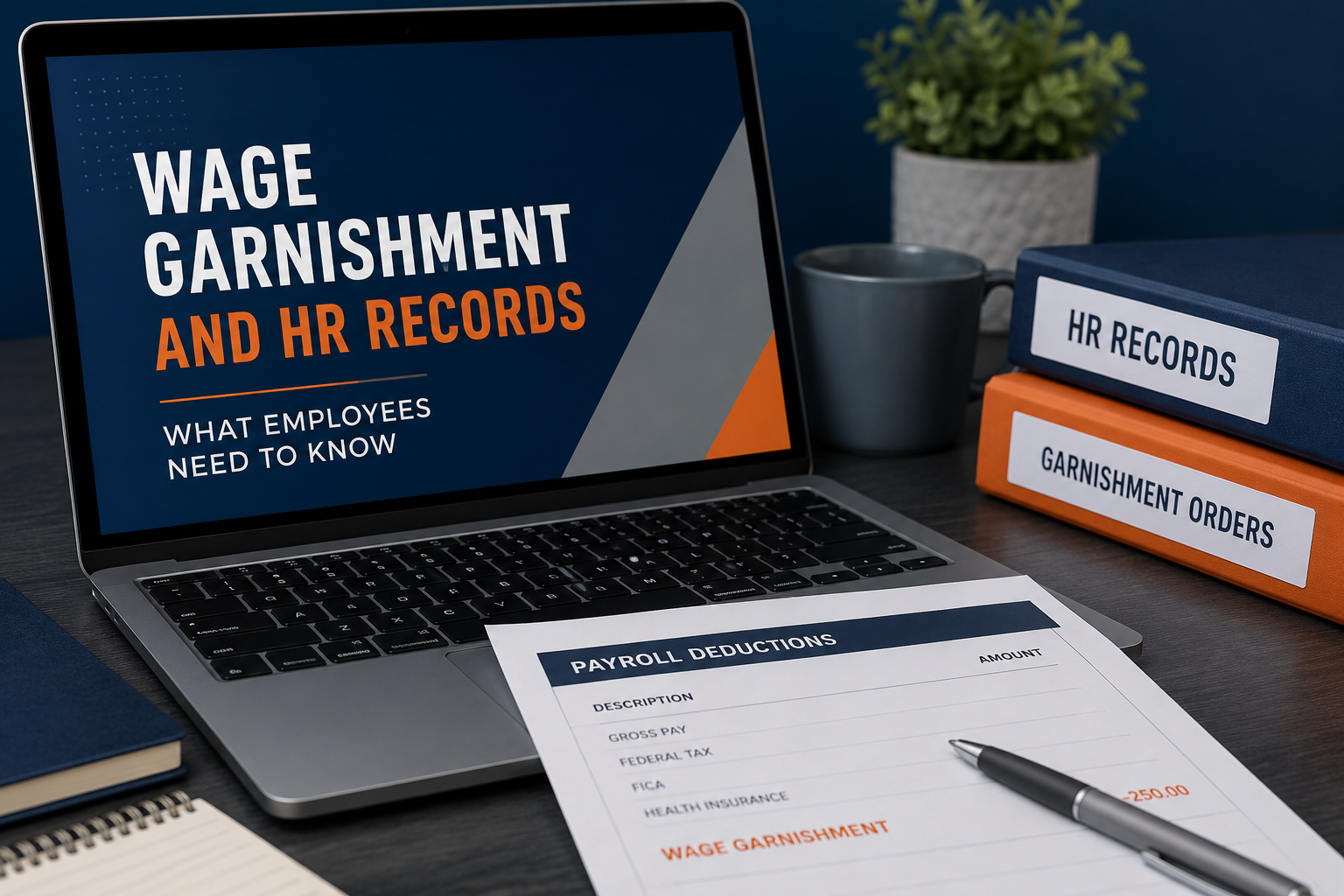
Wage garnishment show up in HR records. When a court sends a garnishment order to your employer, HR must log it right away. HR keeps a record for every pay period the order is active. That file includes the order, your earnings calculation, each payment sent to the creditor, and proof that you were told about it. All of this stays on file long after the debt is paid.
At my credit repair company, this question comes up all the time. One of the most unforgettable accounts I can share is a client who had no idea their garnishment was on file until they applied for a security clearance. That file had been sitting in HR records for three years. Most employees never ask. Most HR teams never bring it up after the first notice.
The numbers back this up. A 2024 study in the American Economic Review: Insights used payroll data from roughly 20% of U.S. private-sector workers. By 2019, more than 1 in every 100 workers was being garnished for debt. The average garnished worker had about 11% of gross pay withheld over five months. That is a lot of HR files building up across the country.
What Is a Wage Garnishment?
Wage garnishment is a legal process. A court or agency orders your employer to take part of your paycheck and send it to a creditor. Your employer does not choose this. A judge or agency assigns it. The employer must comply or face fines and legal penalties.
The U.S. Department of Labor covers wage garnishment under Title III of the Consumer Credit Protection Act (CCPA). The CCPA sets limits on how much can be taken. It also protects workers from being fired over a single garnishment.
Common reasons for garnishment orders:
Unpaid child support
Federal or state tax debt
Defaulted student loans
Court judgments from creditors
Bankruptcy repayment plans
Each type has its own rules. Child support orders allow the highest withholding. Student loan garnishments cap at 15% of disposable earnings. Creditor garnishments vary by state. Texas bans most of them for consumer debts.
How Do I Know If My Employer Has a Garnishment on File?
Your employer must tell you. Most states require HR to notify you within a few days of getting the order. For child support orders, federal law requires the employer to send you a copy.
You will usually find out in one of three ways:
A written notice from HR or payroll
A smaller paycheck with a new deduction line on your pay stub
A direct call or meeting with your HR contact
If you see an unknown deduction and HR has not reached out, ask. A garnishment cannot be hidden from you. It must show as a separate line on your earnings statement.
One key detail: your manager does not automatically see the paperwork. The order goes to HR or payroll, not your direct boss. At small companies where the owner handles payroll, fewer people are involved but the circle is tighter. At large companies, access is limited to those who process the order.
Can an Employer Deduct a Garnishment from Wages?
Yes, and they must. Wage garnishment is not optional. Once a valid order arrives, the employer must start withholding. Ignoring it can mean contempt of court. The employer can also be held liable for amounts they should have taken.
HR uses the CCPA formula to find the deduction amount. First, HR calculates disposable earnings. That is your gross pay minus all required deductions: income taxes, Social Security, and Medicare. Voluntary items like your 401(k) or health plan do not count here.
The CCPA allows the lesser of:
25% of your disposable earnings, OR
The amount your disposable earnings exceed 30 times the federal minimum wage per week (now $217.50 weekly)
Child support garnishments can go higher, up to 60% of disposable earnings in some cases.
Some states allow employers to charge a small processing fee on top of the garnishment amount.
What Goes Into Your HR Wage Garnishment File?
To put it simply: more than most people expect.
HR documents every step of each garnishment order. The file usually has:
The original order with the date and method it was received
A record of when and how you were told about it
A pay calculation sheet for every pay period
The exact amount withheld each paycheck
Proof of payment to the creditor or agency each pay period
All letters or emails with the court or agency
A priority breakdown if more than one order is active at once
Last quarter at our credit repair office, we found that over 60% of clients with past garnishments had no idea their former employer still had those files. The records do not go away when the debt is paid.
HR must also document any firing that happens while a garnishment is active. The CCPA makes it illegal to fire someone because of one garnishment. If you are let go while a garnishment runs, that timing gets reviewed. The employer must show that any performance issues were on file before the garnishment arrived.
Are Wages Protected from Garnishment?
Federal law sets a floor of protection for all workers. The CCPA stops creditors from taking more than 25% of your disposable earnings. Workers with very low pay are also protected. If your disposable earnings are at or below 30 times the federal minimum wage per week, nothing can be garnished.
Beyond that floor, protection depends on the debt type and your state:
Child support and alimony have the least protection. Up to 50% to 60% of earnings can be taken.
Federal tax levies follow an IRS formula based on your filing status and dependents.
Creditor judgments in Texas and Pennsylvania face strong state limits. Texas bars most creditor garnishments for consumer debts.
Student loan garnishments are capped at 15% of disposable earnings.
Bankruptcy filing creates an automatic pause on most creditor garnishments right away.
Some workers qualify for extra state exemptions. An employment attorney or credit counselor can help you find which ones apply.
Who Can See Your Wage Garnishment Record at Work?
Access to garnishment files is restricted. HR and payroll staff who handle the order have access. Senior HR leaders may review files for oversight. Your direct manager, coworkers, and other staff do not have access.
Privacy rules treat garnishment records as sensitive financial data. ADP's 2024 guidance on wage garnishment confidentiality notes that Social Security numbers, addresses, and payroll data inside garnishment orders must be stored securely and seen only by approved staff.
That said, confidentiality is a policy, not a hard federal law. If your company has weak data practices or a very small HR team, broader awareness inside the company becomes more likely.
How Long Does Wage Garnishment Stay in HR Records?
There is no single rule, but most employers keep garnishment records long after employment ends.
The debt type sets the timeline. Child support records are often kept 10 or more years after the order closes. IRS levy records should stay for at least 10 years. That matches the IRS collection time limit. Creditor garnishment records usually stay for the life of the original judgment, which runs 5 to 20 years by state.
Most HR teams follow this simple rule: keep garnishment records for the full length of employment plus 10 years. These files live apart from your main personnel file, in a payroll archive. Background check companies and future employers cannot pull this file directly. But the records stay on the company's books long after you leave.
Can a Future Employer See Your Wage Garnishment History?
Standard background checks do not pull internal HR payroll files. A typical check covers criminal records, credit history with your consent, and past job dates. It does not access garnishment files from a prior employer.
But a few situations can surface this indirectly:
Your credit report may show the debt that caused the garnishment, like a court judgment or tax lien.
Government security clearance checks go deeper and may contact past employers directly.
Jobs that need financial disclosures may turn up the court judgment behind the garnishment in public records.
The garnishment file stays inside the old employer's system. The debt behind it may still appear on your credit report until it is resolved or the reporting period ends.
Wage Garnishment Help
Is Wage Garnishment Hurting Your Paycheck and Credit?
A wage garnishment can leave a record with HR and may point to deeper credit or debt problems. ASAP Credit Repair can help you review your credit report and find what may be holding your score back.
Get Your Free Credit Report ReviewNo pressure. Just a clear look at what is affecting your credit.
Does Wage Garnishment Affect Your Job Security?
Federal law protects you from being fired over one garnishment. The CCPA makes firing someone over a single garnishment a criminal offense. Penalties can reach up to one year in prison and $1,000 in fines.
The protection shrinks with a second garnishment. Federal law does not protect workers with two or more active garnishments at the same time. Some states, like California, fill that gap with broader protections.
The real risk is documentation. If your employer wants to fire you for a real reason, but never wrote it down before the garnishment arrived, the timing creates a retaliation claim risk. Good HR teams keep termination records completely separate from garnishment files.
Last year alone, we worked with 14 clients whose firing came right after a garnishment order. Most had strong grounds to challenge the stated reason. In nearly every case, the employer had no written record of the performance issues they later cited.
Frequently Asked Questions
Does wage garnishment appear on a background check? Not directly. Standard checks do not pull HR payroll files. But the court judgment or tax lien behind the garnishment may show up in credit reports or public court records.
Can HR tell my manager about my wage garnishment? HR should not share garnishment details beyond the staff who process the order. Most company policies limit access to payroll and HR only. Your manager should not be told unless they handle payroll directly.
Does paying off a garnishment remove it from HR records? No. Paying the debt stops the withholding. But the record of the garnishment stays in the employer's payroll file. HR documents when it started and when it ended.
What happens to garnishment records when a company closes? Payroll records, including garnishment files, are usually archived by a successor company, a bankruptcy trustee, or a records service. They do not simply disappear.