

Most people think a credit score only matters when they apply for a credit card. That assumption costs them. Your credit score affects your daily life in ways most people never see coming until it's too late to act.
I run a credit repair company. Every week, someone calls me after getting hit by a bad score in an area they never expected. Not just loans. Not just credit cards. Think rent applications, car insurance, and even the gas bill.
According to the CFPB's Consumer Credit Panel, tens of millions of Americans carry subprime or near-prime scores. Many of them pay more than they should across multiple areas of their lives, every single month.
Here is exactly what changes when your credit score is low, and what gets better when you fix it.
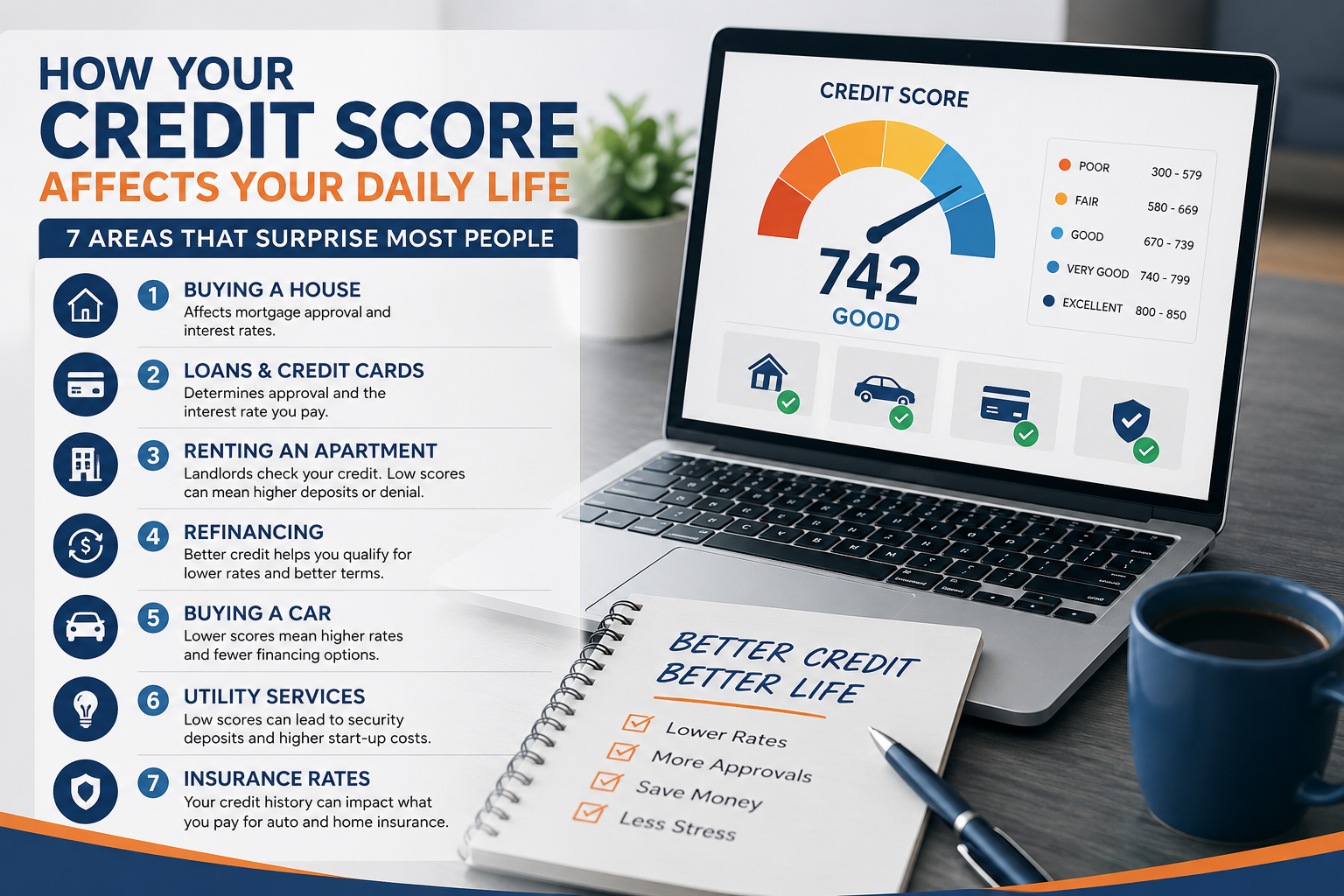
Buying a House Gets Harder With a Low Score
Mortgage lenders check your credit score before they approve your application. Most use an older version of the FICO Score, not the latest model. The ranges still run from poor to exceptional, and where you land changes everything.
A low score can block you from qualifying at all. But even if you do qualify, your interest rate will be higher. On a 30-year mortgage, a rate difference of even 1% adds up to tens of thousands of dollars over the life of the loan.
The minimum credit score for a conventional loan is typically 620. FHA loans accept scores as low as 580 with a 3.5% down payment. Below 580, most standard loan options close.
Your Interest Rate on Loans and Credit Cards Ties Directly to Your Score
Every loan and credit card application you submit goes through a credit check. Lenders use that score to decide two things: whether to approve you, and what rate to charge you.
Higher scores get lower rates. Lower scores get higher rates, if they get approved at all. This applies to personal loans, auto loans, student loan refinancing, and credit cards.
Last quarter, our team worked with 40 clients who were paying interest rates between 24% and 29% on credit cards. In almost every case, those rates dropped significantly within 12 months of improving their scores. The savings were not small.
Other factors like income and debt-to-income ratio also play a role. But your credit score remains the first filter lenders apply.
A Quick Note Before We Go Further
Bad credit doesn't just block you from big purchases. It quietly raises the price of things you already pay for. The next four areas on this list are ones most people overlook completely.
Renting an Apartment Often Requires a Credit Check
Landlords and property management companies pull credit reports before they sign a lease. A low score can get your application rejected outright. It can also trigger a requirement for a larger security deposit.
Strong credit makes the process faster and cheaper. Some landlords will waive the deposit entirely for applicants with scores above 700. In competitive rental markets, a good score gives you an edge over other applicants.
If your score is low and you need to rent now, ask the landlord if you can provide proof of income or a co-signer instead. Not all landlords agree, but many will consider it.
Refinancing Depends Heavily on Your Credit Score
Refinancing means replacing your current loan with a new one at better terms. You can refinance a mortgage, an auto loan, or consolidate credit card debt into a personal loan.
The goal is usually a lower interest rate or lower monthly payment. But lenders only offer those better terms to borrowers with strong credit. A low score can disqualify you from refinancing entirely or result in a rate that makes the switch pointless.
Improving your score before you apply for a refinance is often the most valuable step you can take. Even a 30-point score increase can move you into a better rate tier.
Buying a Car Costs More When Your Credit Is Low
Auto loans are secured by the vehicle. The lender can repossess it if you stop paying. Even so, lenders still check your credit to set your rate.
Good to excellent credit can qualify you for the lowest rates a dealer offers. It can also unlock promotional financing deals, such as 0% interest for a set number of months. Poor credit pushes you toward higher rates and shorter terms.
According to Experian's State of the Automotive Finance Market report, borrowers with deep subprime scores (below 500) paid average interest rates above 14% on new car loans in recent data. Prime borrowers paid under 6%. That gap matters on a $30,000 purchase.
Utility Companies May Ask for a Deposit If Your Score Is Low
Gas, water, and electric providers can check your credit before turning on service. If your score is low, some will require a security deposit before they activate your account.
That deposit can range from $100 to several hundred dollars depending on the provider and your score. You get it back eventually, but it's money tied up until you close the account.
Good or excellent credit usually means no deposit required. The process is faster and you keep that cash in your pocket from the start.
Your Credit History Can Affect What You Pay for Insurance
Many insurance companies use a credit-based insurance score to help calculate your premiums. This score is different from your standard FICO score, but it draws from the same credit history data.
A long record of on-time payments and responsible credit use can qualify you for lower premiums on auto and homeowners insurance. A troubled credit history can push those premiums higher.
Not every state allows this practice. California, Hawaii, and Massachusetts prohibit insurers from using credit scores in auto insurance pricing. But in most states, your credit history plays a role in what you pay each month.
Where to Start If Your Score Is Holding You Back
The seven areas above share one common thread. A low credit score costs you money in each of them, often without you realizing it.
The good news is that credit scores are not fixed. Negative items fall off over time, errors can be disputed, and consistent positive behavior builds your score back up. The process takes time, but the financial impact of improving your score reaches every area of this list.
If you're not sure where your score stands or what's dragging it down, start by pulling your free report at AnnualCreditReport.com. That first step costs nothing and tells you exactly what you're working with.
At ASAP Credit Repair, we review your report, identify what's hurting your score, and build a clear plan to fix it. Give us a call and we'll walk you through where to start.