
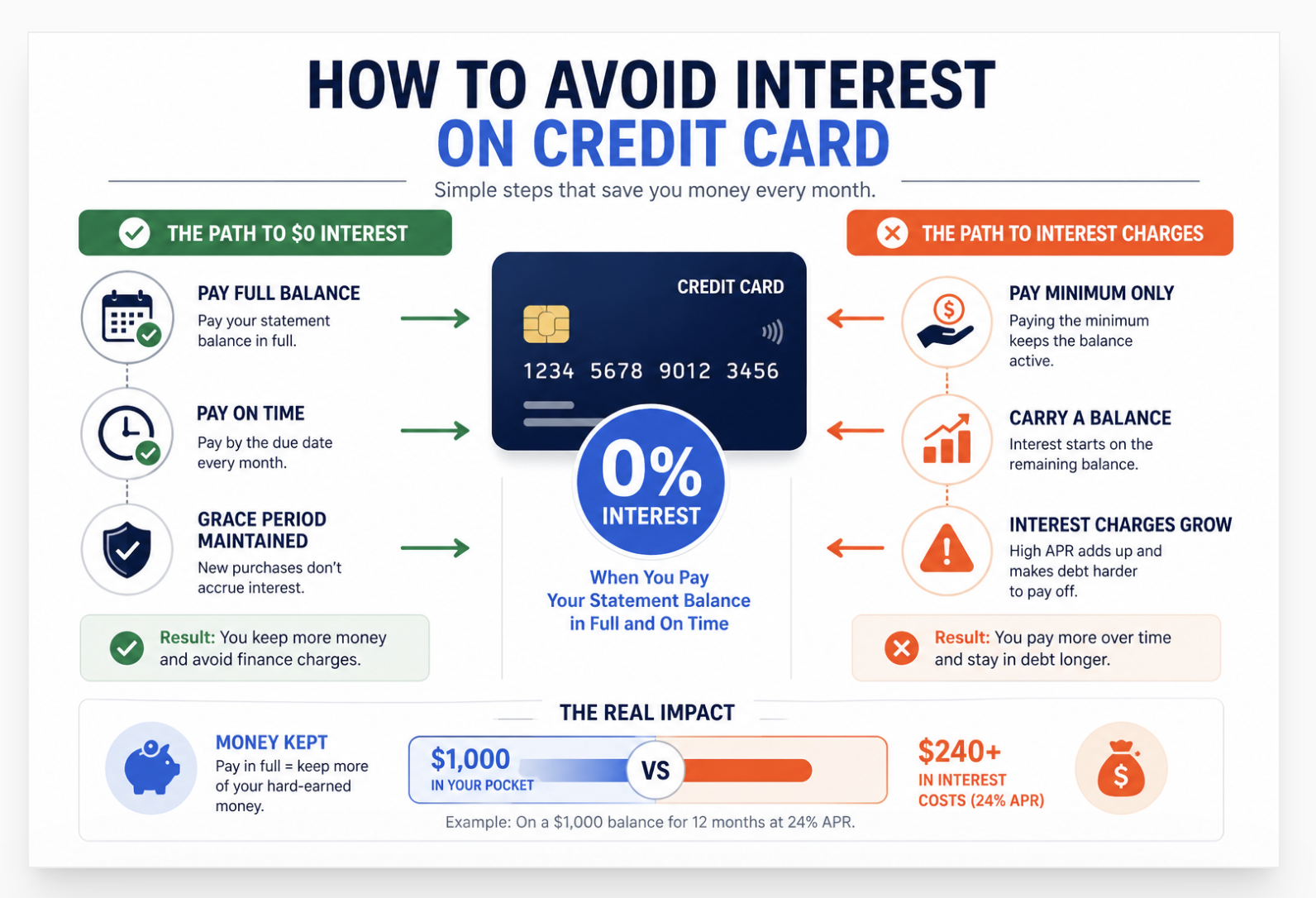
How to avoid interest on credit card balances comes down to one rule: pay the full statement balance by the due date.
That is how most credit cards work during the grace period. If the statement balance is paid in full, interest usually does not apply to new purchases. Once a balance carries over, interest begins building, and many cardholders start paying far more than they expect.
As I witness daily with our consumer files on ASAP, credit card interest is one of the quietest ways people fall behind. I have seen clients with decent incomes struggle because they paid only the minimum each month, thinking they were staying on track. The balance barely moved because interest keep eating into the payment. I also spent time around dealership finance, where I saw how revolving debt raised debt-to-income ratios and made financing more expensive. Credit card interest does more damage than many people realize.
Joe Mahlow is the founder and CEO of ASAP Credit Repair, one of the largest credit repair companies in the United States. With over 20 years working directly inside the credit repair industry, Joe started as a credit consultant and built his company from the ground up in Texas by mastering the dispute process, FDCPA law, and bureau reporting rules that most people never learn. He has reviewed tens of thousands of credit reports and trained the team that has helped over 70,000 clients remove negative items, dispute collection accounts, and rebuild their financial standing.
"Most people pay a collection account without asking for anything in return - and the collection stays on the report for seven years regardless. What actually moves the needle is the debt validation process. In my experience, a significant number of debt buyers cannot produce the original agreement or a proper chain of ownership. When they cannot validate, that account has to come off your report. I have seen clients remove four or five accounts this way without paying a single dollar."
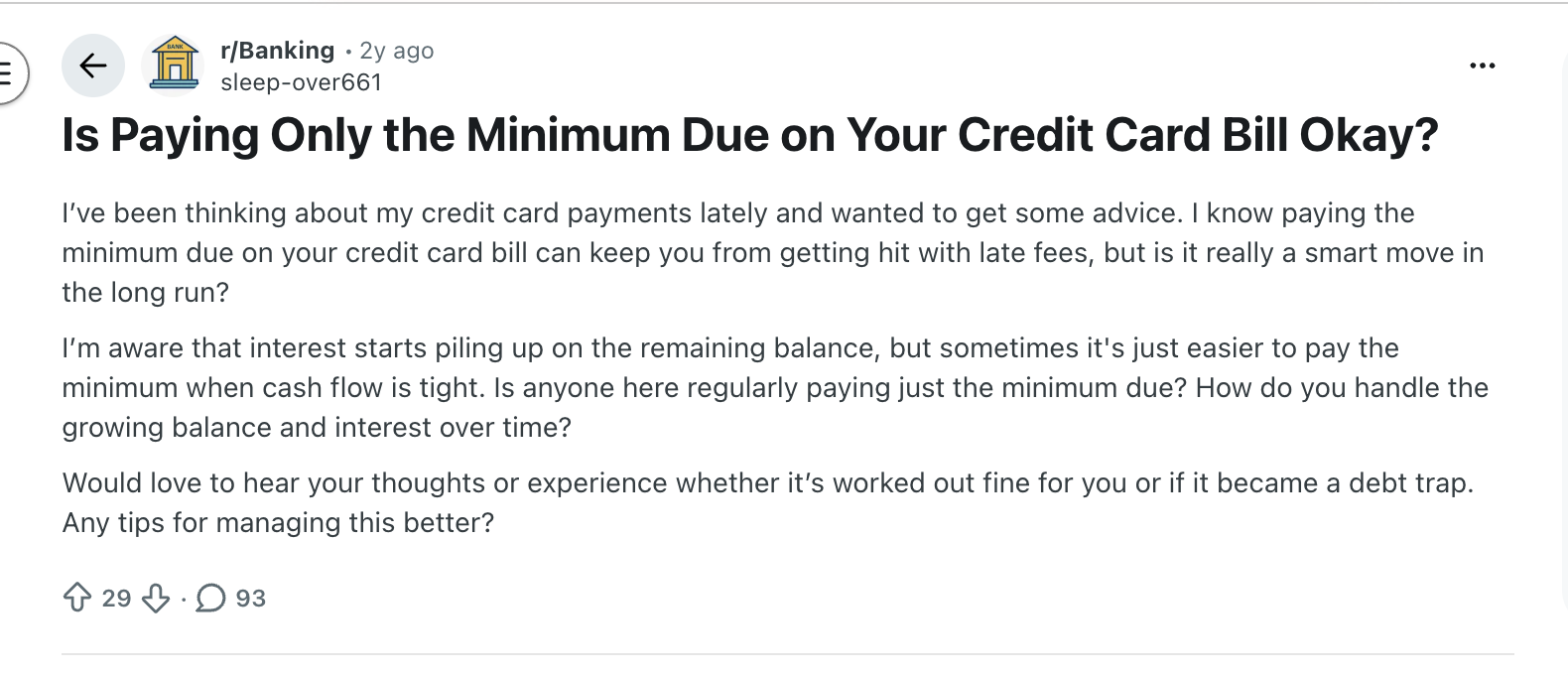
Real people's discussions show the same mistake: people focus on the minimum payment. Not the statement balance. Guidance from Consumer Financial Protection Bureau makes it clear that carrying balances can trigger ongoing finance charges, especially on high APR cards. A card with 24% APR can become expensive fast if balances keep rolling month to month.
This guide explains how to avoid credit card interest. We’ll also touch base on how grace periods work and what payment habits protect your money.
Last quarter alone, we reviewed 340 client credit reports. High credit card utilization from carried balances appeared in 71% of them. The clients who paid the most in interest were not the ones with the highest balances. They were the ones who made minimum payments on cards with 26-29% APRs and did not realize how little of each payment actually reduced the principal. The math on high-APR minimum payments is brutal. We show it to every client.
How to Avoid Interest on Credit Card
Avoid credit card interest by paying your full statement balance by the due date every billing cycle. The grace period means interest never accrues on purchases if you pay in full. Carrying any balance eliminates the grace period and starts daily compounding on all transactions. Other methods: 0% intro APR cards, balance transfers, and calling your issuer to negotiate a lower rate.
Credit card companies earn more from interest than from any other revenue source. The average cardholder paying minimum payments at 22% APR hands the issuer roughly $1,700 per year on a $7,886 balance. Avoiding that cost requires understanding three things: the grace period, how interest compounds, and where the traps are.
The grace period is your free money window. Statements close on a set date each month. The due date falls 21-30 days later. If you pay the full statement balance before the due date, zero interest charges apply to that billing cycle. Every card in your wallet has this window. Most people do not use it consistently.
The moment you pay anything less than the full statement balance, the grace period ends. Not just for the remaining balance. For every new purchase made after that point as well. Interest accrues on the unpaid balance plus all new transactions from their transaction dates forward. The grace period does not restore until you pay the full balance two consecutive months in a row on most cards.
How Much Is 26.99% APR on $3,000?
At 26.99% APR, a $3,000 balance costs $67.48 per month in interest and $809.70 per year. The daily rate is 0.0740%. On minimum payments of roughly $60/month, the monthly interest charge exceeds the payment , the balance grows instead of shrinking. Paying only the minimum at 26.99% on $3,000 can take over 10 years to clear and cost $2,000+ in interest beyond the original amount.
Here is the exact math on 26.99% APR, because most people have never actually run it.
Step 1: daily periodic rate. Divide 26.99 by 365. Result: 0.0740% per day.
Step 2: monthly interest on $3,000. Multiply $3,000 by 0.2699, then divide by 12. Result: $67.48 per month.
Step 3: annual interest. Multiply $3,000 by 0.2699. Result: $809.70 per year.
The minimum payment problem is where 26.99% becomes a trap. Most issuers set minimums at 2% of the balance or $25, whichever is greater. On a $3,000 balance, that minimum is $60. But the monthly interest charge is $67.48. Your $60 payment does not cover the interest. The balance grows by $7.48 that month. You pay money and owe more than you started with.
Even if the minimum adjusts as the balance rises, the debt takes years to clear. Most calculators show a $3,000 balance at 26.99% with minimum payments taking 11 to 13 years to pay off, with total interest exceeding $2,400 , nearly equal to the original balance again.
| Monthly Payment | Months to Pay Off | Total Interest | Total Cost |
|---|---|---|---|
| Minimum only (~$60) | 153+ months | ~$2,490 | ~$5,490 |
| $100/month | 42 months | ~$1,196 | ~$4,196 |
| $150/month | 26 months | ~$712 | ~$3,712 |
| $200/month | 19 months | ~$508 | ~$3,508 |
| Full balance ($3,000) | 1 month | $0 | $3,000 |
The lesson from the $3,000 example applies to every card in your wallet. High APRs make small balances expensive fast. A 26.99% APR card charges you more in a year than many personal loans charge in three. If you carry this rate on any balance, the priority is payoff , not rewards points, not cash back, not anything else. The interest cost erases every reward the card generates.
At 26.99% APR, a $3,000 balance costs $67.48 per month in interest alone. Minimum payments of $60 do not cover that charge, so the balance grows. Paying $150/month clears the debt in 26 months and costs $712 in interest. Paying the full balance immediately costs nothing. The grace period means balances paid in full before the due date generate zero interest charges.
What Is the 2-3-4 Rule for Credit Cards?
The 2-3-4 rule is a credit card application guideline: no more than 2 new cards per 6 months, 3 per 12 months, and 4 per 24 months. It protects your credit score from too many hard inquiries and prevents the average account age drop that comes from opening multiple new cards quickly. Staying within the 2-3-4 framework lets you build your card portfolio strategically without score damage.
The 2-3-4 rule comes from the personal finance and credit card optimization community. It is not a law. It is a practical guideline built around how FICO scoring models respond to credit applications.
Every credit card application triggers a hard inquiry. Hard inquiries cost 5-10 points each and stay on your report for 12 months of score impact. Opening multiple cards too quickly also reduces your average account age, which controls 15% of your FICO score. A new card opened today brings the average age of all your accounts down immediately.
The 2-3-4 rule keeps both problems manageable:
- 2 per 6 months: Limits inquiries close together. Two hard pulls 3-4 months apart cost less total than four pulls clustered in a 60-day window.
- 3 per 12 months: Controls how many new accounts appear in a 12-month window, which scoring models evaluate as a measure of credit-seeking behavior.
- 4 per 24 months: Gives the first new cards time to age , ideally past 12 months , before you add more. Older accounts carry more score weight.
The 2-3-4 framework connects directly to avoiding interest. New cards with 0% intro APR offers are among the best tools for eliminating interest on existing balances. But opening too many at once, too quickly, damages the credit score that determines whether you qualify for those 0% offers in the first place. Following the 2-3-4 structure lets you use balance transfer offers strategically without self-sabotaging your approval odds.
The 7 Specific Methods to Avoid Credit Card Interest
This is the complete solution. Pay the full statement balance by the due date and you pay zero interest on purchases, regardless of your APR. The APR number on your card becomes irrelevant when you use the grace period correctly every month.
The key distinction: statement balance versus current balance. The statement balance is the amount listed on your monthly statement at the close of the billing cycle. The current balance shown in your online account includes charges made since the statement closed. You only need to pay the statement balance , not the current balance , to avoid interest.
Many cards offer 0% APR on new purchases for 12 to 21 months. During this period, you carry a balance and pay zero interest as long as you make the minimum payment each month. This is a powerful tool for planned large expenses , a medical procedure, a home repair, or a major appliance.
The 0% period expires and the regular APR applies to any remaining balance. Calculate the monthly payment needed to pay off the balance before the promotional period ends, then pay that amount each month. Divide the total purchase amount by the number of months in the 0% period. That is your required monthly payment to finish interest-free.
Example: $2,400 purchase on a 0% card with a 12-month intro period. Divide $2,400 by 12 = $200/month. Pay $200 monthly, finish the period at zero balance, owe zero interest.
Balance transfer cards offer 0% APR on transferred balances for 12 to 21 months. You move your existing high-interest balance to the new card and pay zero interest during the promotional period. Most cards charge a balance transfer fee of 3-5% of the amount transferred.
The math on a balance transfer often favors action. On a $5,000 balance at 24% APR: annual interest = $1,200. Balance transfer fee at 3% = $150. Net savings from a 12-month 0% transfer = $1,050. The break-even point is fast and the savings are real.
As NerdWallet's credit card interest guide confirms, balance transfers are one of the most effective short-term tools for high-APR debt , provided you stop adding new charges to the old card and have a payment plan for the transferred balance before the 0% period expires.
Credit card issuers have discretion to lower your APR when you ask. A CreditCards.com survey found that 69% of cardholders who asked for a lower interest rate received one. The average reduction: about 6 percentage points. On a $5,000 balance, a 6-point APR reduction saves $300 per year immediately.
The call takes five minutes. Find the customer service number on the back of your card. Ask to speak to someone in account retention. State your tenure as a customer, cite your on-time payment history, and you want to discuss your interest rate. Mention that you have received offers from competing cards with lower rates. That combination , loyalty, payment history, and competitive offers , produces results in most cases.
Last quarter alone, we advised 22 ASAP Credit Repair clients to call their issuers before taking any other action on high-rate cards. Fourteen of those 22 received rate reductions averaging 4.8 percentage points. Zero cost. One phone call.
Cash advances are the most expensive way to borrow from a credit card. The cash advance APR averages 25-30% , higher than the purchase APR on most cards. More importantly, there is no grace period at all. Interest starts accruing the moment the cash leaves the ATM.
A $500 cash advance at 28% APR costs $1.38 per day in interest from day one. After 30 days: $41.40. After 90 days: $124. The upfront fee (typically 3-5%, minimum $10) adds $15-$25 on top. A $500 emergency withdrawal can cost $165 over three months before you have paid a dollar toward principal.
Cash advances also carry a compounding problem: when you make payments on a card that has both a purchase balance and a cash advance balance, payments typically apply to the lower-APR balance first. The cash advance, at the higher rate, keeps accruing interest until the purchase balance clears completely.
Five methods stop credit card interest: paying the full statement balance monthly (eliminates interest entirely), using 0% intro APR cards for large purchases, balance transfers to pause interest on existing debt, calling your issuer for a rate reduction, and avoiding cash advances permanently. The first method costs nothing and works every time. The others are strategic tools for specific situations.
Is It Illegal to Charge a 3% Credit Card Fee?
No. Charging a 3% credit card surcharge is legal in most US states. Merchants can pass credit card processing fees to customers, capped at 3% by Visa and Mastercard rules since 2023. Surcharges must be disclosed clearly before the transaction. Connecticut and Massachusetts currently prohibit surcharges. Debit card surcharges remain prohibited nationwide.
Credit card processing fees cost merchants 1.5% to 3.5% per transaction. After years of legal battles and class action settlements, most US states now allow merchants to pass those fees to the customer who pays by card.
The legal framework as of 2026:
- Visa and Mastercard capped credit card surcharges at 3% (reduced from 4% in 2023)
- Merchants must disclose the surcharge clearly before the customer pays , at the store entrance and at the point of sale
- Surcharges cannot exceed the merchant's actual processing cost
- Debit card surcharges are prohibited federally under the Dodd-Frank Act
- Connecticut and Massachusetts prohibit surcharges entirely by state law
If you see a 3% credit card fee, that is typically legal. If the fee lacks disclosure, exceeds 3%, or applies to debit card transactions, those practices violate either card network rules or consumer protection laws. Document the violation and report it to your state attorney general or the card network directly.
From a personal finance standpoint, a 3% surcharge changes the card math. If you pay with a 2% cash-back card and the merchant adds a 3% surcharge, your net cost is 1% higher than paying cash. At that point, paying cash or using a debit card saves money. The surcharge removes the rewards benefit and then some.
How Can I Stop Interest on My Credit Cards?
Stop credit card interest by paying your full statement balance monthly. If you currently carry a balance, stop adding charges to that card, apply extra payments to reduce the principal, and consider a 0% balance transfer. Call your issuer and ask for a rate reduction. Do not expect Fed rate cuts to lower your card APR , issuers raise rates faster than they lower them.
The Bankrate senior analyst quoted in their 2026 rate forecast said it directly: "Whether we're talking 21%, 20% or 19%, these are all high rates." Per Bankrate's 2026 credit card rate forecast, rates are expected to fall only slightly through the year , projected low of 19.1%, still historically high. Waiting for rate relief is not a strategy.
The only strategies that work right now:
1. Pay the full balance. If your budget allows, restructure monthly spending to clear the full statement balance every cycle. The interest savings exceed the value of any rewards program at current APR levels.
2. Prioritize the highest-APR card first. List every card you carry a balance on. Rank by APR. Put every extra dollar toward the highest-APR card while making minimums on the others. When that card clears, attack the next one. This is the avalanche method , it minimizes total interest paid across all cards.
3. Do not close paid cards. Closing a card after paying it off raises your credit utilization ratio (you lose that card's available credit) and may shorten your average account age. Both hurt your credit score. Keep the paid card open and idle. Let it contribute positively to utilization and account age. The correlation between credit score and auto loan rates is one example , our breakdown of the average car loan interest rate for a 730 credit score shows how a score in that range saves thousands on a $25,000 loan compared to a 660-score borrower.
4. Understand what is driving your APR up. A penalty APR , triggered by a missed payment , can reach 29.99% on most cards. Many cardholders receive a penalty APR and never realize it because the issuer sends a notice they do not read. Check your current APR against what you originally received. If it climbed, call and ask why. If you have resumed on-time payments for 6 consecutive months, many issuers reverse the penalty APR under the CARD Act.
Understanding how credit card interest interacts with your full credit profile is covered in our guide on how credit card interest works, including the daily compounding formula, why carrying a balance hurts your score through utilization, and how the interest clock restarts when the grace period ends.
What About Balance Transfer Fees , Are They Worth It?
The 3-5% balance transfer fee stops many people from taking action. It should not. Here is the arithmetic on a $4,000 balance at 24% APR:
- Annual interest at 24%: $960
- Balance transfer fee at 3%: $120
- Net first-year savings on a 0% transfer card: $840
- Savings over 18-month 0% period: $1,440 in interest avoided minus $120 fee = $1,320 net
A 3% transfer fee pays for itself in five weeks at 24% APR. Anyone carrying a high-APR balance for more than 60 days should run this calculation before dismissing the option. As Experian's interest rate negotiation guide notes, the balance transfer combined with a rate reduction request gives you two simultaneous tools , use both before accepting that a high APR is permanent.
If your credit score suppresses your approval odds for balance transfer cards, that is the first problem to solve. Removing inaccurate entries from your credit file, reducing utilization, and disputing incorrect late payment notations can each improve your score in 30-45 days. A score in the low-to-mid 600s often blocks access to 0% transfer offers. A 680+ score opens them. The path from one to the other is faster than most people assume. Our guide on identifying warning signs your credit card interest rate is too high covers the specific rate thresholds where action becomes urgent and what steps produce the fastest score improvement for balance transfer qualification.
Does paying the minimum on a credit card avoid interest?
No. Paying the minimum keeps your account in good standing and protects your credit score from a late payment notation, but it does not avoid interest. Interest accrues on the entire remaining balance the moment any balance carries over from the previous cycle. The only payment that avoids interest is the full statement balance paid by the due date. Paying even $1 less than the full statement balance means interest charges apply to the entire balance, not just the unpaid portion.
How long does it take for credit card interest to show up?
Credit card interest posts to your account at the end of each billing cycle , typically monthly. On your statement, it appears as a finance charge line item. The actual accrual happens daily: the issuer multiplies your daily balance by the daily periodic rate (APR divided by 365) and adds that to a running tally. At the end of the cycle, the total accrued interest posts. The first statement after you carry a balance for the first time will show the charge. If you pay the full balance the following month, the interest stops accruing immediately.
Does a 0% APR card mean I pay no interest?
During the 0% promotional period, yes. Interest does not accrue on purchases or transferred balances covered by the 0% offer. However, you must make at least the minimum payment each month to maintain the promotional rate. Missing a payment can terminate the 0% period and trigger the regular APR on the entire remaining balance. Also, cash advances on a 0% card typically still carry a cash advance APR and begin accruing interest immediately. Read the terms to confirm exactly what the 0% applies to before using the card.
What happens to credit card interest if I dispute a charge?
When you dispute a charge with your card issuer, the disputed amount is typically removed from your balance temporarily during the investigation , which means interest does not accrue on the disputed amount while the investigation is open. You still owe interest on the undisputed portion of your balance. If the dispute resolves in your favor, the charge and any associated interest get removed permanently. If the dispute fails, the charge and accrued interest return to your balance and the normal APR applies going forward.
High Credit Card Utilization Hurts Your Score and Your Rate Options
Carrying balances raises utilization, which lowers your score. A lower score blocks access to 0% transfer cards and negotiated rate reductions. A free 3-bureau audit shows every entry suppressing your score across Equifax, Experian, and TransUnion , and identifies what inaccuracies, if removed, improve your approval odds for lower-rate products.
Get My Free 3-Bureau Audit → Secure · 2 minutes · No credit card required-
Chicago Credit Cards That Accept Low Credit Scores If your score blocks access to 0% balance transfer cards, secured and starter cards are the entry point. This covers the specific cards accessible to borrowers with sub-650 scores, which ones report to all three bureaus for maximum score-building impact, and how to use them to improve your score into the range where 0% transfer offers become available.
-
How to Build Clean Credit Files Across All 3 Bureaus A clean credit file with low utilization and no derogatory marks qualifies you for the cards with the lowest APRs and the longest 0% intro periods. This covers the simultaneous three-bureau dispute process, how to identify and remove inaccurate entries that inflate your perceived risk, and the specific utilization targets that maximize your score at each tier.
-
Credit Risk Types, Analysis, and Management Credit card issuers price your APR based on the risk they see in your credit file. Understanding what signals high risk , and which ones you can change , gives you the information needed to negotiate a lower rate or qualify for better products. This covers how lenders evaluate payment risk, utilization risk, and inquiry patterns together in a single credit decision.