
Knowing how to cancel a credit card sounds simple, but the wrong move can cost you credit score points you worked hard to build. The process takes four steps: pay your balance to zero, call your issuer, get written confirmation, then destroy the card and watch your credit report.
I run a credit repair company, and one account I will never forget is a client who closed three cards in one month to "clean up" his credit. His score dropped 61 points. He lost a mortgage pre-approval because of it. That story is not rare. It shows up in our office more than most people expect.
A thread in the r/personalfinance community on Reddit mirrors what we see constantly. Users report score drops anywhere from 5 to 40 points after closing a card, mostly because of one factor: credit utilization. The Consumer Financial Protection Bureau (CFPB) confirms this, too. They state that closing a credit card account is your right, but you must still pay off any remaining balance on schedule. Most people skip the research and go straight to the call. That mistake costs them.
What Happens If You Cancel a Credit Card?
Canceling a credit card triggers three credit score changes, and all three can move in the wrong direction.
First, your credit utilization ratio rises. Credit utilization measures how much of your available credit you are using. FICO weighs it at 30% of your total score. When you cancel a card, you lose that card's credit limit. If you carry balances on other cards, your utilization jumps immediately.
Here is an example. You have two cards: one with a $10,000 limit and no balance, one with a $5,000 limit and a $2,000 balance. Your utilization is 13%. Cancel the first card, and your utilization jumps to 40%. That single move can drop your score by 20 to 50 points, depending on your overall profile.
Second, your credit mix can weaken. Lenders like to see a mix of revolving credit (cards) and installment loans (car loans, mortgages). Cancel your only credit card, and you remove all revolving credit from your report.
Third, your average account age may shorten. FICO and VantageScore both factor in how old your accounts are. Closing an older card removes that age from your active account average.
A key fact most people miss: closed accounts stay on your credit report for up to 10 years. So the length-of-credit impact is slower than most fear. The utilization hit is the immediate danger.
Should You Cancel a Credit Card or Let It Close?
Most of the time, letting a card sit open with a zero balance beats closing it. Issuers can close cards for inactivity, so use them for a small purchase every few months to keep them active.
But some situations make canceling the right choice.
You pay an annual fee and receive no benefits. Annual fees on premium cards range from $95 to $695 per year. If you get nothing back in rewards or perks, that fee is a pure loss. Cancel the card. Before you do, call and ask if the issuer will waive the fee or downgrade you to a no-fee version of the same card.
You overspend and carry a balance. Carrying a high balance at a 25% to 30% interest rate costs far more than a few credit score points. In those cases, the financial damage of keeping the card open outweighs the credit score risk of canceling it.
You share a joint account and need to separate finances. You cannot remove a joint account holder the way you remove an authorized user. Closing the account is often the only clean option.
How to Cancel a Credit Card
Here is the exact process to close a credit card account the right way.
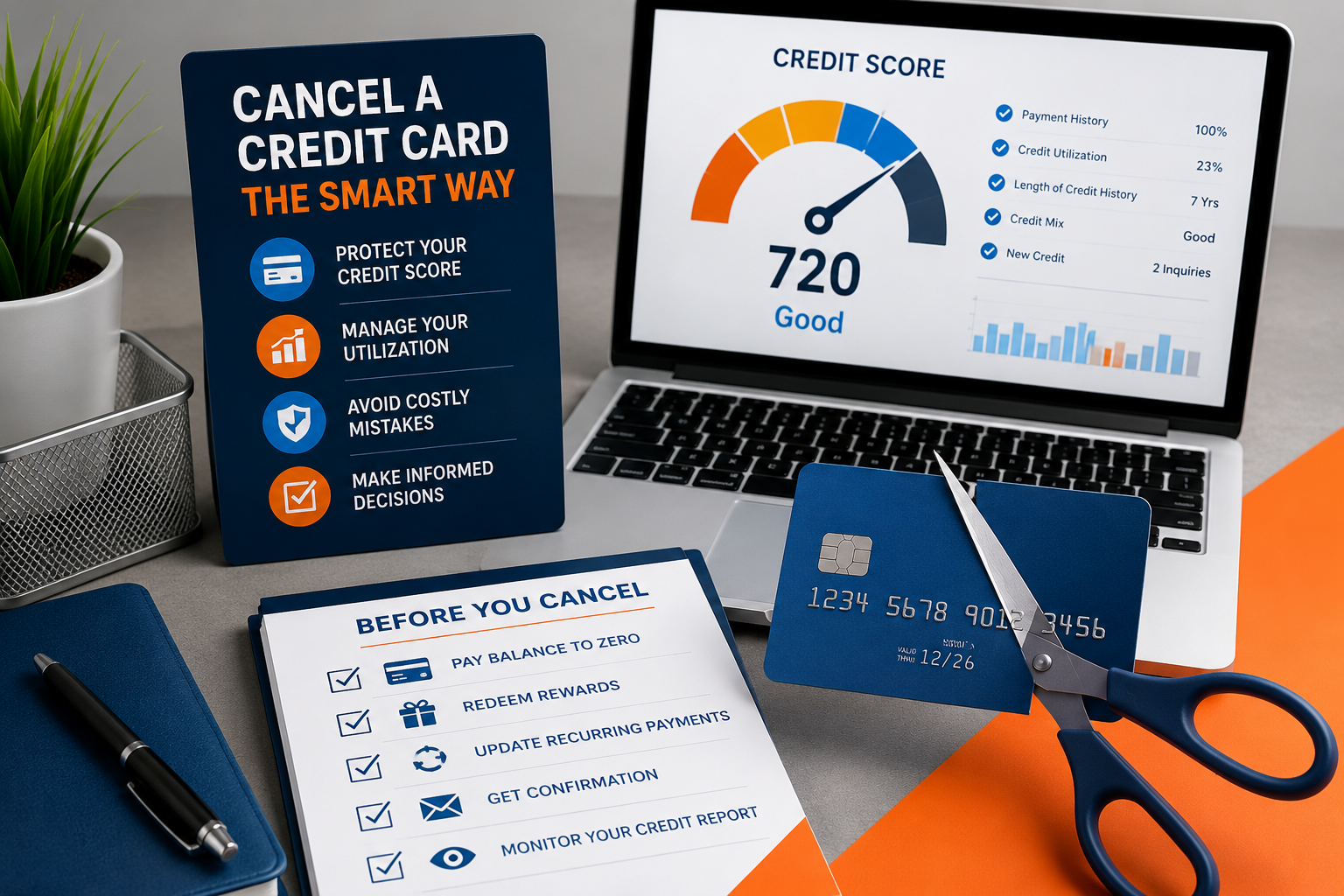
1. Pay your balance to zero. Call your issuer or check your app to confirm the exact payoff amount, including any pending interest or fees. Do not rely on your last statement balance. Interest accrues daily on most cards.
2. Redeem all rewards. Points, miles, and cash back often disappear the moment you close the account. Transfer them to a loyalty program if possible, or spend them before you call.
3. Update any recurring payments linked to the card. Subscription services, utilities, and automatic payments tied to this card will fail after you close the account. Move them to another card before you make the cancellation call.
4. Call your card issuer. Find the number on the back of the card or on the issuer's website. Tell the representative you want to close the account. They will try to keep you with retention offers. Listen if you want, but stay firm if your mind is made up. Note the date, time, and the representative's name.
5. Request written confirmation. Ask for a confirmation letter or email that states the account is closed and carries a zero balance. Send a follow-up letter by certified mail to the issuer if you want a paper trail. The letter should include your name, account number, the date of the call, and a request that your credit report show "closed by consumer."
6. Destroy the card. Cut it into pieces with scissors. For metal cards, most issuers will mail you a prepaid envelope to return them. Some bank branches will destroy it in person.
7. Check your credit report within 30 to 60 days. Confirm the account shows as closed and reflects a zero balance. Pull your free report at AnnualCreditReport.com. If errors appear, file a dispute directly with the credit bureau.
Does Canceling a Credit Card Hurt Your Credit Score?
Yes, in most cases, canceling a credit card lowers your score, at least temporarily. But the size of that drop varies.
In our office alone, last year, we reviewed over 120 cases where clients experienced score drops tied to voluntary card closures. The average drop was 18 points. The worst cases saw drops above 50 points, all linked to a spike in credit utilization.
The FICO score breakdown makes the risk clear:
Payment history: 35%
Credit utilization: 30%
Length of credit history: 15%
Credit mix: 10%
New credit: 10%
Credit utilization at 30% of your score is the biggest immediate threat. Length of history matters less in the short term because closed accounts stay on your report for years.
Experian's Senior Director of Consumer Education, Rod Griffin, puts it plainly: closing a card reduces your available credit limit, which raises your utilization rate, and that is the most important thing to watch. He also notes that scores typically rebound within a few months if you keep paying your other accounts on time.
The takeaway: if your utilization stays below 30% after the closure, your score drop will be minor. If it spikes above 30%, expect a meaningful hit.
How to Cancel a Recurring Payment on a Credit Card
Canceling a recurring charge on a credit card is not the same as canceling the card itself. You need to do both steps separately if you want to fully cut off a subscription.
Start with the merchant, not your bank. Contact the company charging you and request cancellation through their official process. Most subscriptions have a cancellation option in account settings on their website. Get a confirmation email and save it.
Important: Canceling your credit card does not always stop recurring charges. Some merchants will attempt to charge the new card your bank issues, especially if the issuer automatically updates card numbers. This is called an "account updater" service. The charge can follow your new card unless the merchant cancels it on their end.
According to the CFPB, if a merchant keeps charging you after you cancel, you can contact your bank and request a stop payment order. You can also report unauthorized charges to the Federal Trade Commission at ftc.gov/complaint.
To block a specific merchant: Call your credit card issuer and ask them to block future charges from that merchant. Not all issuers offer this, but many do. Capital One and Chase both offer subscription management tools inside their mobile apps to help you identify and block recurring charges.
Keep records of every cancellation confirmation. If a charge comes back, you will need that paper trail to dispute it.
Can You Reopen a Closed Credit Card?
Some issuers will reopen a closed account if you request it within a certain window, typically 30 days. This is easier if you closed the account voluntarily and your account was in good standing.
Call the issuer's customer service line and ask directly. Some will require a new application. Others will reinstate the original account and credit limit. There is no guarantee either way.
If you closed the account because of debt or missed payments, reopening it is less likely. In that case, applying for a new card with a different issuer may be your better path forward.
When Is the Worst Time to Cancel a Credit Card?
Timing matters. A few situations make canceling a card especially risky.
Before applying for a mortgage or auto loan. Even a 10 to 20 point score drop can push you into a higher interest rate bracket. Wait until after your loan closes before you cancel any card.
When the card holds your oldest account. Closing your oldest active card reduces the age of your credit profile faster than closing a newer one. Keep the oldest card open, even if you rarely use it.
When you carry balances on other cards. Canceling a card with no balance while you carry balances on other cards is the fastest way to spike your utilization ratio. Pay down other balances first.
According to analysis from the credit community at myFICO forums, users who maintain at least three open revolving accounts and keep utilization under 10% see the smallest score impact from a card closure, often just 1 to 5 points. Users with one or two cards and higher utilization can see drops of 20 to 40 points from the same action.
Thinking About Canceling a Credit Card?
Before you close the account, make sure it will not hurt your credit utilization, loan approval chances, or overall credit score. A quick credit review can help you avoid a costly mistake.
Check Your Credit Report NowKnow where your credit stands before making your next financial move.
The Decision Checklist Before You Cancel
Run through these questions before making the call.
Is your balance at zero?
Have you redeemed all rewards?
Have you moved recurring payments to another card?
Will your utilization stay below 30% after the closure?
Do you have a mortgage or major loan application coming up?
Is this your oldest credit account?
If you answered yes to the last two questions, wait. If you answered yes to the first four, you are ready to proceed.
Canceling a credit card is a decision worth taking slowly. The card issuer will push back, your score may take a short-term hit, and there are often alternatives worth trying first. But when the fee is not worth it, the debt is unmanageable, or the account no longer serves you, closing it the right way protects you from the worst of the fallout.