
Legal action on debt starts with a lawsuit, not a phone call, and most consumers make their biggest mistake by ignoring the paperwork instead of responding to it.
I own ASAP Credit Repair, and after 15 years reviewing credit files for more than 22,000 clients, this topic sits at the center of some of the most fixable financial emergencies I see. The scale of the problem shows up clearly in federal data. The CFPB received approximately 207,800 debt collection complaints in 2024, and 45 percent of those complaints involved a consumer disputing that they owed the debt at all, according to the Consumer Financial Protection Bureau's annual report. A lawsuit does not mean the debt is valid, and it does not mean you have already lost.
This guide walks through what a debt lawsuit actually looks like, how to respond, and what happens at each stage after you get served.
What Legal Action on Debt Actually Means
Legal action on debt means a creditor or debt collector has filed a civil lawsuit against you to recover money they claim you owe. The process moves through a court system, not a criminal one, so a debt lawsuit can never result in jail time. Debt collection cases are civil matters, and courts resolve them through judgments, garnishments, and liens rather than criminal penalties.
Creditors typically file suit after an account sits unpaid for several months and internal collection efforts fail. Original creditors sometimes file directly, though debt buyers who purchased the account for pennies on the dollar file the majority of collection lawsuits today.
Can You Go to Jail for Not Paying a Debt
You cannot go to jail for failing to pay a civil debt like a credit card, medical bill, or personal loan. Debt collection lawsuits proceed entirely through civil court. Jail becomes a possibility only in rare situations involving a separate court order, such as ignoring a judge's direct command to appear or pay under specific circumstances, and even then the underlying issue is contempt of court, not the debt itself.
The Documents That Start a Debt Lawsuit
A debt lawsuit begins with two documents delivered together. A summons notifies you that a lawsuit exists and states the deadline for your response. A complaint lays out the creditor's claim, including the amount owed, the original account, and the legal basis for the suit.
Service of these documents must follow your state's legal requirements, typically through personal delivery, certified mail, or a process server. Refusing delivery does not stop the case. Courts generally treat a refused delivery the same as a completed one, so avoiding the process server only removes your chance to read the details before the clock starts running.
How Long You Have to Respond to a Debt Lawsuit
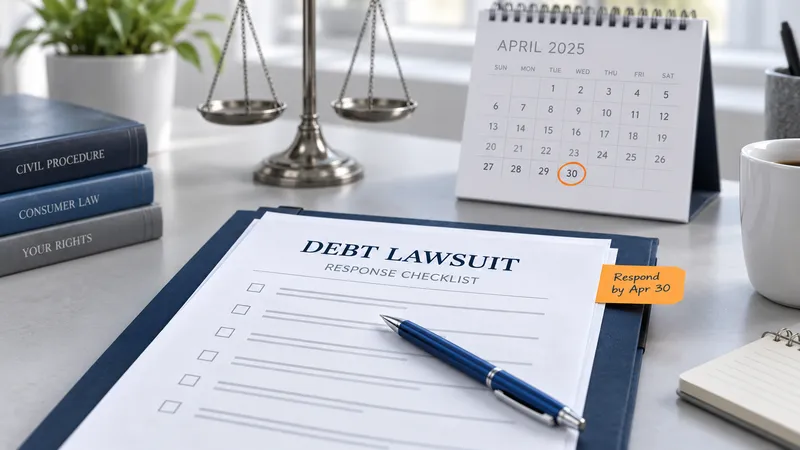
Most states give defendants between 20 and 35 days to file a formal response after being served, though the exact window depends on your state's civil procedure rules. Missing this deadline moves the case toward a default judgment, so mark the date the moment you receive the summons.
Confirm your specific deadline directly on the summons or through your local court clerk's office, since deadlines shift based on the county, the type of service used, and whether you were served in person or by mail.
A debt lawsuit starts with a summons and complaint, and your response window starts the day you receive them. Missing that window creates the single biggest risk in the entire process.

What Happens if You Do Not Respond to a Debt Lawsuit
Ignoring a debt lawsuit almost always results in a default judgment against you. Pew Research analyzed debt collection cases across multiple states and found that courts resolved more than 70 percent of debt collection lawsuits through default judgment for the plaintiff, largely because consumers never filed a response. Pew also estimated that state courts saw as many as 4.7 million debt collection lawsuits filed in a single year, which means millions of consumers face this same deadline every year.
A default judgment gives the creditor the same legal power a contested win would, including the right to pursue wage garnishment, bank account levies, and property liens in many states. Courts issue default judgments specifically because the defendant never presented a defense, not because the underlying debt was proven accurate.
Reasons People Miss the Deadline
Consumers commonly miss their response deadline for reasons that have nothing to do with the merits of the case. The lawsuit often gets delivered to an old address. The debt buyer's name may not match any creditor the consumer recognizes. Some consumers assume a phone call to the collector satisfies the legal requirement, when only a filed court response actually protects them.
How to Respond to a Debt Collection Lawsuit
Responding to a debt lawsuit means filing a written Answer with the court before your deadline expires. The Answer addresses each claim in the complaint and states any defenses you plan to raise. Filing an Answer does not mean you admit the debt is valid. It simply preserves your right to challenge the claim in front of a judge instead of losing automatically.
Read the summons and complaint fully and note the exact response deadline.
Request debt validation from the collector, which forces them to prove the debt is accurate, currently owed, and legally theirs to collect.
File a written Answer with the court clerk before the deadline, addressing each numbered claim in the complaint.
Raise applicable defenses, such as an expired statute of limitations, incorrect amount, or lack of ownership documentation.
Attend every scheduled hearing, since missing a hearing after filing an Answer can still result in a judgment against you.
Common Defenses Against a Debt Lawsuit
Several defenses appear across most debt collection cases and can significantly change the outcome. The statute of limitations defense argues that too much time has passed since the last payment or default, which varies by state and debt type. A debt collector cannot legally sue or even threaten a lawsuit once this window closes.
Lack of standing challenges whether the plaintiff actually owns the debt, which matters heavily with debt buyers who purchase large batches of accounts without complete documentation. Improper service challenges whether you were legally notified according to your state's rules. An incorrect amount challenges the specific balance claimed, especially when added fees or interest push the number above what the original account reflects.
ASAP Credit Repair
Debt Problems Leaving You Unsure About Your Next Step?
Get a clearer picture of your credit with your Free Lending Blueprint. Explore what may be holding you back from approval and plan your next steps toward your borrowing goals.
Get My Free Lending BlueprintAlready received lawsuit papers? Respond by the court deadline and seek legal help. Credit repair does not replace legal representation or pause a lawsuit.
Should You Settle a Debt Lawsuit Before Your Court Date
Settling before your court date can resolve the case faster and often for less than the full claimed amount, though settling still requires care. Negotiate in writing, request the settlement terms in a signed agreement before sending payment, and confirm the creditor will file a dismissal with the court once payment clears. A verbal settlement offers no protection if the collector later denies the agreement.
At ASAP Credit Repair, our team reviewed dozens of client files last quarter where a verbal settlement fell apart because the consumer never received written confirmation, and the lawsuit continued toward judgment anyway. A written agreement, filed with the court, closes that loophole completely.
What Happens After a Debt Judgment
A judgment against you opens several collection tools for the creditor, depending on your state's laws. Wage garnishment allows the creditor to collect a portion of your paycheck directly, subject to federal and state limits. Bank account levies allow the creditor to freeze and withdraw funds directly from your account. Property liens attach to real estate you own, which can complicate a future sale or refinance.
Options After a Judgment Is Entered
A judgment does not have to be the final word. Filing a motion to vacate can reopen a default judgment if you can show the lawsuit was never properly served or that another legitimate reason kept you from responding in time. Negotiating a payment plan directly with the judgment holder can also stop garnishment or levy actions before they begin, since most creditors prefer a reliable payment arrangement over the cost of enforcing collection through the court.
Getting Ahead of a Debt Lawsuit Before It Starts
Responding early protects you far more effectively than fighting a judgment after the fact. Request validation the moment a collector contacts you, keep every piece of written correspondence, and track the statute of limitations for each debt on your report. A consumer who understands these steps walks into a courtroom with a real defense instead of a missed deadline working against them.