
LVNV Funding lawsuit cases are becoming increasingly common as debt buyers continue purchasing charged-off consumer debt from banks and credit card issuers. According to Consumer Financial Protection Bureau data, more than 60 million Americans have collection accounts on their credit reports.
Debt collection lawsuits remain one of the most common types of civil cases filed in the United States. Research from the Pew Charitable Trusts found that debt collection actions accounted for roughly 1 in 4 civil cases in many state courts. When consumers are sued, default judgments are common because many defendants never file a response.
If you are facing an LVNV Funding lawsuit or researching your options after receiving a summons, understanding how debt buyers operate is critical. LVNV Funding purchases delinquent accounts from original creditors and may pursue collection through letters, phone calls, settlement offers, credit reporting, and legal action.
The outcome of an LVNV Funding lawsuit often depends on factors such as debt ownership records, account documentation, statute of limitations laws, and whether the consumer responds before court deadlines expire. This guide explains what LVNV Funding is, why lawsuits are filed, common defenses, settlement options, and the steps to take after being served.
Let's talk more about this topic.
LVNV Funding Lawsuit: What Happens and How to Respond
LVNV Funding purchases charged-off consumer debts from original creditors and may file lawsuits to collect unpaid balances. If you receive a summons from LVNV Funding, responding before the court deadline is critical because failing to answer could result in a default judgment.
Potential defenses may include lack of documentation, incorrect balances, mistaken identity, expired statutes of limitation, or violations of debt collection laws.
What Is LVNV Funding
LVNV Funding LLC is a debt buyer owned by Sherman Financial Group and managed by Resurgent Capital Services. It purchases large portfolios of charged-off consumer debts from banks, credit card companies, and other original creditors at a fraction of the face value. LVNV Funding then collects on those debts through Resurgent Capital Services, which handles billing, disputes, credit bureau reporting, and litigation. LVNV Funding is one of the largest debt buyers in the United States.
Is LVNV Funding a Debt Collector?
Yes. Under the Fair Debt Collection Practices Act (FDCPA), LVNV Funding qualifies as a debt collector because it collects debts that originated with another creditor. This means consumers have specific legal rights when LVNV Funding contacts them or files a lawsuit.
The FDCPA gives consumers the right to request written validation of the debt within 30 days of initial contact. It prohibits harassment, false statements, and unfair collection practices. Violations of these rules can become counterclaims in a lawsuit.
How LVNV Funding Acquires Debt
When a credit card or personal loan account goes unpaid, the original creditor typically charges off the balance after 180 days. At that point, the creditor may sell the account to a debt buyer like LVNV Funding for a small percentage of the balance. LVNV Funding pays as little as three to seven cents on the dollar for these portfolios.
This purchase price matters in a lawsuit context. LVNV Funding's financial exposure on a $2,000 debt may be $60 to $140 , which creates real negotiating strength for consumers exploring settlement.
Relationship With Resurgent Capital Services
Resurgent Capital Services manages collections on behalf of LVNV Funding. When you see Resurgent Capital Services on a credit report or receive correspondence from them, they are typically acting on behalf of LVNV Funding LLC as the legal debt owner. A lawsuit filed in LVNV Funding's name draws on documentation Resurgent Capital holds.
This relationship matters for defense purposes. The chain of ownership runs from the original creditor to LVNV Funding, and documentation from that entire chain may be required to establish standing in court.
Why Does LVNV Funding Sue Consumers
LVNV Funding typically files lawsuits when a debt account meets two conditions: the balance is large enough to justify litigation costs (typically $1,000 or more), and other collection methods , letters, calls, credit bureau reporting , have failed to produce payment. Litigation is LVNV Funding's enforcement option when the statute of limitations on the debt still has time remaining and the consumer has not responded to other collection attempts.
- Charged-off credit card accounts. The most common debt type LVNV Funding purchases and litigates. These accounts originated with major banks and credit card issuers before being sold after charge-off.
- Personal loans and fintech lending accounts. LVNV Funding also buys personal loan portfolios from online lenders and banks. These accounts follow the same litigation path when other collection fails.
- Larger balances. Filing a civil lawsuit costs time and legal fees. Most debt buyers target accounts above $1,000 to $1,500 for litigation. Accounts below that threshold more often stay in the credit bureau reporting and phone collection stage.
- Pre-statute-of-limitations deadline. Filing before the statute of limitations expires preserves the right to sue. Once the statute expires, the debt remains collectible informally , but a lawsuit becomes legally vulnerable to a statute of limitations defense.
What Happens When LVNV Funding Files a Lawsuit
When LVNV Funding files a civil lawsuit, the court issues a summons that a process server delivers to the defendant. The summons specifies the response deadline and the court where the case is filed. From that point, the consumer has the deadline window to file a written answer. Missing the deadline produces a default judgment automatically , no hearing required, no further notice.
Consequences of Ignoring the Lawsuit
- Default judgment. When no written answer reaches the court by the deadline, the judge enters a judgment for the full amount claimed , plus court costs and sometimes attorney fees. No hearing occurs. No notice arrives before the judgment.
- Wage garnishment. In states that permit it, a judgment creditor can garnish up to 25% of disposable earnings. Federal minimum wage protections apply. This continues until the full judgment balance is satisfied.
- Bank levy. A judgment creditor can also freeze and seize funds in bank accounts. This process varies by state but can empty a checking account without advance notice.
- Judgment on credit report. A court judgment appears separately on the credit report, adding a second negative entry on top of the original collection account. Judgments remain on credit reports for seven years or until satisfied.
Can LVNV Funding Garnish Wages
Yes, after obtaining a court judgment. LVNV Funding cannot garnish wages simply by filing a lawsuit. It must first win the case or receive a default judgment from the court. Once a judgment exists, it can pursue wage garnishment in states that permit it. Texas, Pennsylvania, North Carolina, and South Carolina substantially restrict or prohibit wage garnishment for consumer debts. In other states, federal law caps the garnishment at 25% of disposable earnings or the amount exceeding 30 times the federal minimum wage, whichever is less.
| Enforcement Tool | When Available | What It Means |
|---|---|---|
| Wage garnishment | After court judgment, most states | Up to 25% of disposable earnings withheld from each paycheck. TX, PA, NC, SC largely exempt. |
| Bank levy | After court judgment, most states | Funds frozen and seized from checking or savings accounts. Can empty an account without warning. |
| Property lien | After court judgment | Claim placed on real property. Complicates sale or refinancing until judgment satisfied. |
| Credit bureau reporting | Before and after judgment | Collection account plus separate judgment entry. Both remain for seven years from respective dates. |
Common Defenses Against an LVNV Funding Lawsuit
Common defenses in LVNV Funding collection lawsuits include: insufficient documentation to prove ownership of the debt, expired statute of limitations, incorrect balance or fees added without authorization, identity errors (debt belongs to another person), and violations of the Fair Debt Collection Practices Act (FDCPA) that may produce counterclaims. These are not guaranteed outcomes , they are questions a consumer attorney evaluates based on the specific documentation available in each case.
Lack of Standing , Ownership Documentation
To sue on a debt, LVNV Funding must prove it owns that specific account. This requires documentation of every sale in the chain , from the original creditor to LVNV Funding, including any intermediate sales between debt buyers. When accounts change hands multiple times, records frequently become incomplete.
Courts have dismissed collection lawsuits when the plaintiff could not produce complete chain-of-ownership documentation. Requesting this documentation through the legal discovery process is a standard defense strategy that sometimes reveals gaps the plaintiff cannot fill.
Expired Statute of Limitations
Every state sets a statute of limitations on how long a creditor or debt buyer has to sue on a consumer debt. After that period expires, the debt does not disappear , but a lawsuit based on it becomes legally vulnerable to dismissal.
The statute of limitations varies by state (commonly 3 to 6 years for credit card debt) and typically begins from the date of last activity on the account. LVNV Funding sometimes files lawsuits on older accounts. If the statute has expired, this provides a defense worth raising in the written answer.
Incorrect Balance
Debt buyers sometimes include fees, interest, or charges added after the original charge-off that are not authorized by the original account agreement. If the amount claimed in the lawsuit differs from the actual charged-off balance plus permitted charges, the consumer can challenge the claimed amount.
Identity Errors
Debt buyers purchase large account portfolios and sometimes incorrectly identify the defendant. If the debt does not belong to you , wrong Social Security number, different person with the same name, address confusion , the case involves a factual dispute about identity that the consumer can raise as a defense.
FDCPA Violations as Counterclaims
If LVNV Funding or Resurgent Capital Services violated the Fair Debt Collection Practices Act in the collection process , false statements, harassment, threatening legal action they could not take, improper communications , these violations may become counterclaims in the lawsuit. The FDCPA provides for damages up to $1,000 per violation plus attorney fees. Counterclaims sometimes produce settlements that reduce or eliminate the claimed debt balance.
What Joe Mahlow and the ASAP Team See in Debt Collection Cases
"One of the most consistent patterns we observe when LVNV Funding accounts appear on client credit reports is how old those accounts are. The average LVNV Funding collection account we review originated 4 to 5 years before the consumer sought credit repair help. Many of these accounts changed hands from the original creditor to at least one intermediate buyer before landing at LVNV Funding. Each transfer creates a documentation gap. Consumers who assume they have no options when they receive a lawsuit notice often discover that requesting documentation through the legal process changes the situation significantly."
Through reviewing consumer credit reports and assisting clients with debt buyer collection issues, the ASAP Credit Repair team frequently observes these patterns in LVNV Funding-related files:
- Original debt frequently 3 to 7 years old. Most LVNV Funding collection accounts on client reports reflect debts from this age range. Statutes of limitations in many states run 3 to 6 years , making account age a relevant question in litigation.
- Multiple bureau reporting inconsistencies. LVNV Funding and Resurgent Capital Services sometimes report the same underlying debt with different balances or different original delinquency dates across Equifax, Experian, and TransUnion. These inconsistencies create FCRA dispute grounds separate from any lawsuit defense.
- Consumers who respond create outcomes that consumers who ignore do not. ASAP clients who responded to LVNV Funding lawsuits , even without an attorney, using only the self-help resources available in their county , consistently reported different outcomes than the default judgment path. Responding does not guarantee a win. Not responding guarantees a loss.
For the full picture of how LVNV Funding collections appear on credit reports and how FCRA disputes work for these accounts specifically, the LVNV Funding credit report guide covers that side of the issue in detail , including the reporting relationship between Resurgent Capital Services and the three bureaus.
Should You Settle With LVNV Funding
Settlement is often worth exploring , because LVNV Funding purchased the debt for pennies on the dollar and typically accepts significantly less than the full claimed balance to avoid continued litigation. Documented settlements in the 40 to 60 percent range are common. However, settlement without a deletion agreement leaves the collection account and any lawsuit record on the credit report. Negotiate deletion in addition to the reduced balance before accepting any settlement offer.
- LVNV Funding's actual cost basis for the debt may be $50 to $150 on a $2,000 account , creating room to negotiate below the claimed balance
- Avoids the uncertainty and time of court proceedings
- A negotiated settlement stops collection activity and enforcement risk
- A pay-for-delete settlement removes the bureau entry AND resolves the lawsuit simultaneously
- Paying without a deletion agreement leaves the collection account on the report for the full 7-year window
- Settling may restart the statute of limitations in some states if improperly structured
- Tax implications: forgiven debt above $600 may generate a 1099-C and become taxable income
- Verbal settlement agreements are not enforceable , always get the agreement in writing before paying
Settlement Negotiation Strategy
Start below the typical settlement range. Offer 25 to 30 percent of the balance as a starting point in writing. LVNV Funding's legal team processes high volumes of cases and often accepts settlements well below the full balance when documentation requests complicate the case.
Always request a pay-for-delete agreement in writing. The agreement specifies that upon receipt of the settlement payment, LVNV Funding and Resurgent Capital Services instruct Equifax, Experian, and TransUnion to delete the collection account. Get the confirmation in writing before sending any payment.
Can an LVNV Funding Lawsuit Affect Your Credit
Yes, in multiple ways. The collection account from LVNV Funding already appears on the credit report and suppresses the score. A court judgment adds a second, separate negative entry. Both entries remain for seven years from their respective dates. A judgment that produces wage garnishment does not appear on the credit report itself , but the collection account and any court judgment entry remain visible to every lender who pulls the credit file.
- Collection account. Already present. Typically suppresses the credit score by 60 to 100 points from the time it first reports. This entry ages off seven years from the original delinquency date.
- Court judgment. A separate entry added if LVNV Funding wins or receives a default judgment. Appears in the public records section of the credit report. Remains for seven years from the judgment date , which may be years after the original collection account dates.
- Settled accounts. A "settled" status on a collection account still shows the account as derogatory under FICO Score 8. The collection entry does not disappear from payment , only deletion through FCRA dispute or successful pay-for-delete negotiation removes the bureau entry.
As the FTC's debt collection FAQ confirms, consumers have the right to dispute collection accounts that contain inaccurate information , and this right applies independently of any lawsuit status. The FCRA dispute process on the credit bureau entry runs parallel to any legal proceedings, not instead of them.
How to Respond to an LVNV Funding Lawsuit
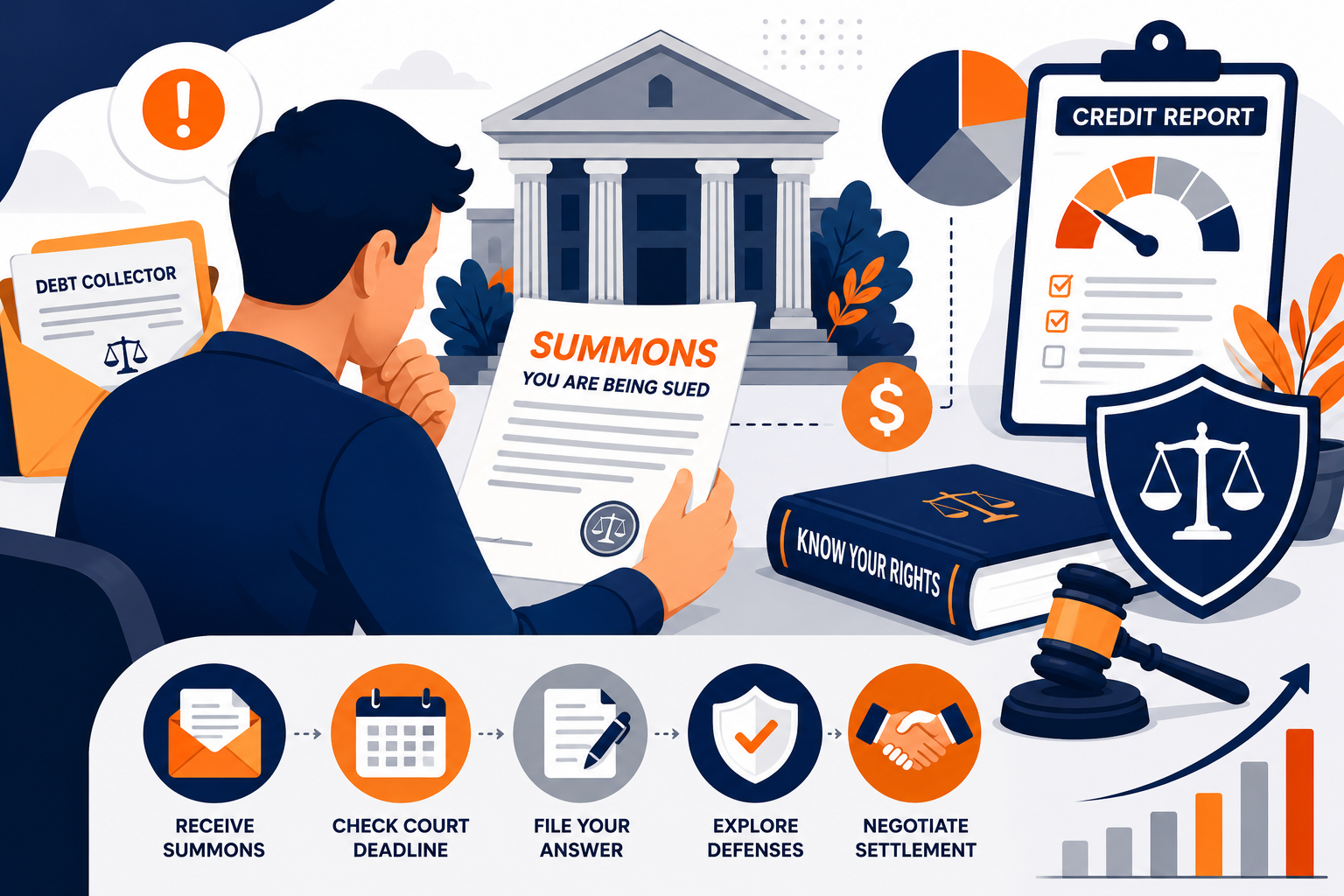
The summons contains the case number, the court where it was filed, the claimed amount, and the response deadline. The deadline typically runs from the date of service , not when you open the envelope. Mark the deadline on a calendar immediately. Many states allow 20 to 30 days. Some allow fewer. This is the most time-sensitive element of the entire process.
Determine when the original delinquency on the account occurred. Compare that date against the statute of limitations for this debt type in your state. If the statute has expired, that becomes a central element of your written answer. Also verify that the claimed balance matches what you believe is owed , fee additions after charge-off are sometimes challengeable.
A written answer does not need to contain a detailed legal argument. It needs to state that you deny the claims and appear for the case. Filing an answer before the deadline prevents the default judgment from entering automatically. Many county courts provide self-help forms for answering collection lawsuits. Consult a consumer attorney or free legal aid organization in your county for guidance on the specific language required in your state.
After filing the answer, the discovery process allows both sides to request documentation from the other. A consumer can request the complete chain of ownership documentation showing every sale of this account from the original creditor to LVNV Funding. Documentation gaps in this chain are one of the most common and potentially effective defenses in debt buyer lawsuits. A consumer defense attorney can assess whether the documentation LVNV Funding produces is complete.
LVNV Funding's legal teams often accept settlements at 40 to 60 percent of the claimed balance. If documentation requests reveal gaps in the ownership chain, settlement offers at lower percentages sometimes succeed. Any settlement must be in writing, must specify the exact payment terms, and should include a pay-for-delete provision for the credit bureau entry. Do not pay any settlement amount before receiving the signed agreement.
As the CFPB's debt collection resource confirms, consumers facing collection lawsuits have rights under the FDCPA and state law , and those rights only remain available when the consumer actively participates in the process rather than allowing a default.
Understanding how the debt validation process works provides context for what LVNV Funding must prove at every stage , both in credit bureau dispute contexts and in court proceedings where documentation standards apply.
Additionally, as Nolo's state statute of limitations guide confirms, the deadline for filing collection lawsuits varies significantly by state and debt type , and an expired statute of limitations is one of the most frequently raised and legally recognized defenses in consumer debt collection cases.
Does LVNV Funding win lawsuits?
LVNV Funding wins a high percentage of cases it files , primarily through default judgments when consumers fail to respond. When consumers respond and contest the lawsuit, outcomes vary significantly. Cases where the consumer challenges ownership documentation, raises statute of limitations defenses, or identifies FDCPA violations frequently result in settlements, case dismissals, or consent judgments for lower amounts than originally claimed. A consumer who responds changes the outcome distribution compared to one who does not respond.
Can LVNV Funding remove a collection after settlement?
Only if the settlement agreement specifically includes a pay-for-delete provision. Payment alone , without a written deletion agreement , changes the account status from "unpaid" to "paid" on the credit report, but the derogatory entry remains for seven years from the original delinquency date. To achieve actual deletion, the settlement agreement must state in writing that LVNV Funding and Resurgent Capital Services will request deletion from all three credit bureaus upon receipt of payment. Get this agreement in writing before sending any payment.
How long can LVNV Funding collect a debt?
Two different timelines apply. The credit bureau reporting window: the collection account must come off the credit report seven years from the original delinquency date regardless of whether the debt is paid. The legal collection window: the statute of limitations for filing a lawsuit varies by state (typically 3 to 6 years for credit card debt). After the statute expires, LVNV Funding can still attempt to collect informally but a lawsuit becomes legally vulnerable to dismissal on statute of limitations grounds. Neither timeline requires LVNV Funding to stop contacting you , only payment, settlement, or a cease communication letter does that.
-
LVNV Funding on Your Credit Report , How to Remove It A lawsuit from LVNV Funding and a credit bureau entry from LVNV Funding are two separate problems requiring two separate strategies. This covers the credit report side: how LVNV Funding and Resurgent Capital Services report collection accounts across Equifax, Experian, and TransUnion, the CFPB complaint data behind their reporting practices, and the FCRA dispute strategy that has produced deletions for ASAP Credit Repair clients. The credit report entry can be challenged independently of any court proceedings.
-
Debt Validation: When Collectors Must Prove It The documentation standards that apply in a collection lawsuit , chain of ownership, account agreements, accurate balances , are closely related to the debt validation rights consumers have under the FDCPA. This covers what a valid debt validation response must contain, what gaps in the collector's response mean for dispute strategy, and why requesting validation before paying any collection account is the standard first step in any debt resolution process involving a debt buyer.
-
Should You Use a Personal Loan to Pay Off Collections? For consumers exploring options outside the lawsuit process , including consolidating collection balances through a personal loan , this covers the critical sequencing question: dispute and attempt deletion before any payment, because paying a collection without a deletion agreement leaves the bureau entry intact for seven years. The same principle applies to LVNV Funding lawsuit settlements: the payment strategy and the credit bureau strategy are two separate decisions that both need attention.