
Asking the right questions before taking out a loan can save you thousands of dollars. It can also save you years of financial stress. Most borrowers skip this step. They apply, get approved, and only start asking questions when payments become hard to make.
I run a credit repair company. The most common story I hear goes like this: someone took out a loan without thinking it through, missed a few payments, and then came to us with damaged credit and a debt they could no longer afford. One client took out a $15,000 personal loan for home renovations. The monthly payment looked fine on paper. Then his hours got cut at work. Within six months, he was delinquent. That case is one of the most preventable ones I've ever seen.
The numbers back this up. As of Q4 2025, nearly 4% of unsecured personal loan accounts were 60 days or more past due, an 11.8% increase from the year before, according to LendingTree. Americans now owe $276 billion in personal loan debt, the highest amount in 20 years of available data. A thread in r/personalfinance (reddit.com/r/personalfinance) shows the same pattern, dozens of posts from people who borrowed too fast and are now stuck. The Government of Canada's Financial Consumer Agency puts it plainly: ask yourself how much you can afford to pay back each month before you borrow, not after (canada.ca).
Here are the 12 questions that separate smart borrowers from regretful ones.
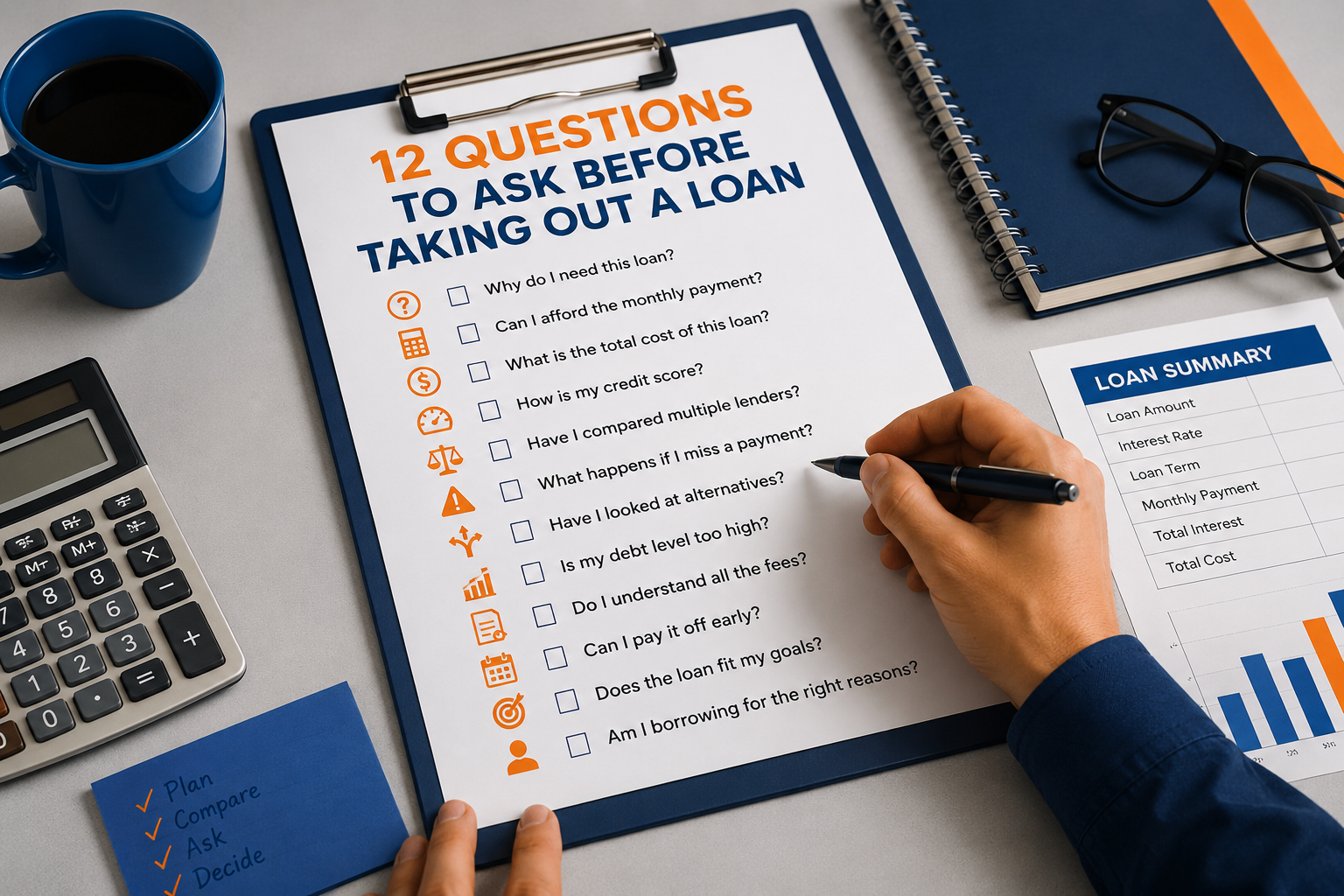
12 Questions to Ask Before Taking Out a Loan
1. Why do I actually need this loan?
Start here. A clear purpose changes everything. It determines the loan type, the amount, and whether borrowing even makes sense.
Debt consolidation is different from a home renovation loan. A business loan has different terms than a personal loan. Without a clear reason, you risk borrowing more than you need — and paying interest on money that did nothing useful.
Ask yourself: Does this loan solve a real financial problem? Or does it delay one?
2. Can I afford the monthly payment?
This is the question most people get wrong. They look at the monthly payment and think it looks fine. Then they forget to account for rent, groceries, insurance, and every other bill they already have.
Here is a simple example. A $10,000 loan at 6% interest over three years comes to about $304 per month. That sounds manageable. But if your take-home pay is $2,800 and your fixed monthly expenses are $2,600, that payment breaks your budget.
Use an online loan calculator before you apply. Plug in the amount, rate, and term. Then compare the result to your real monthly budget — not an optimistic version of it.
3. What is the total cost of this loan?
The loan amount is not what you actually pay. Interest and fees are what make the real number.
Take a $10,000 loan at 10% interest over five years. The monthly payment looks reasonable. But over the full term, you pay back nearly $12,800. That extra $2,800 is the real cost of borrowing.
The average interest rate for a 24-month personal loan in February 2026 was 11.4%, according to the Federal Reserve. Before you sign anything, ask the lender for the Annual Percentage Rate (APR) and total repayment amount. Those two numbers tell you the real cost.
4. How is my credit score?
Your credit score decides two things: whether you get approved, and what interest rate you pay. A higher score means a lower rate. A lower rate means less money out of your pocket.
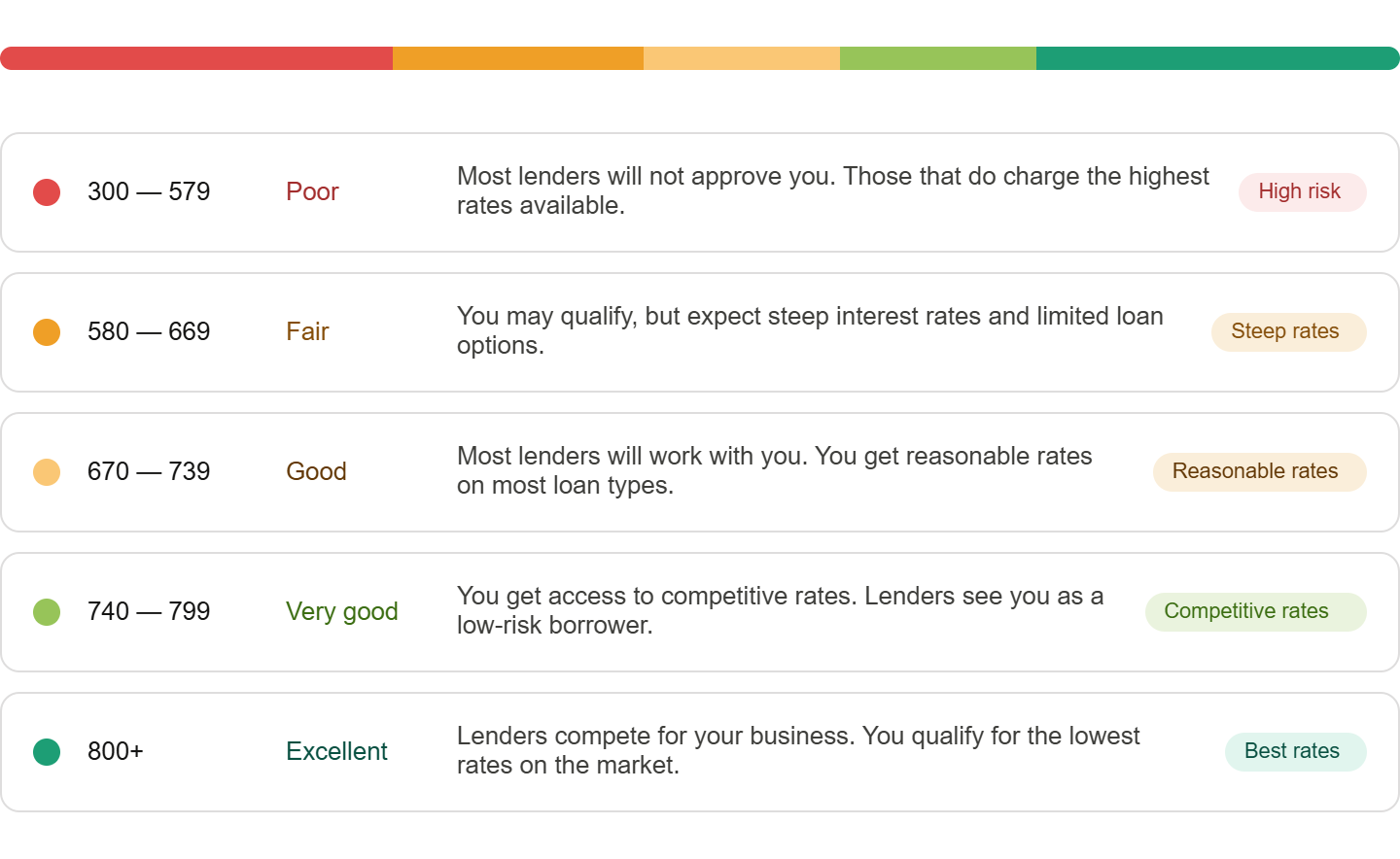
Check your credit report before you apply. Errors in your report are more common than you think. Fixing one mistake can improve your score by dozens of points. Free tools like Experian (experian.com) let you check without hurting your score.
So far, you have covered your purpose, your budget, your total cost, and your credit standing. Those four questions alone will stop most bad loan decisions before they start.
5. Have I compared multiple lenders?
Do not take the first offer you see. Banks, credit unions, and online lenders all have different rates and terms. Shopping around takes an hour. It can save you hundreds of dollars a year.
Last quarter alone, our team helped three clients refinance loans they had taken out without comparing rates. In all three cases, they were paying 4 to 6 percentage points above what they could have qualified for. One client saved over $180 per month simply by switching lenders.
Compare at least three offers. Look at the APR, the repayment term, any origination fees, and prepayment penalties. The lowest monthly payment is not always the best deal.
6. What happens if I miss a payment?
Life changes. Income drops. Emergencies happen. Know the consequences before you commit.
A single missed payment can trigger a late fee. It can also drop your credit score by 50 to 100 points, depending on your credit history. Some lenders report missed payments after just 30 days.
Ask the lender directly: Is there a grace period? Do you offer hardship programs or payment deferrals? Some lenders will work with you during a financial crisis, but only if you ask before you miss a payment, not after.
7. Have I looked at alternatives to borrowing?
A loan is not always the only option. Sometimes it is not even the best one.
Before you apply, ask yourself these questions:
Do I have savings I could use instead?
Can I cut expenses to cover this cost over the next few months?
Do I have anything I could sell?
Can I delay this purchase until I have the cash?
Borrowing always costs more than paying with money you already have. The interest you pay is money that could have stayed in your pocket.
8. How stable is my income right now?
A loan locks you into a fixed payment every month for months or years. Your income needs to be stable enough to handle that commitment — even if things change.
Ask yourself: How secure is my job? Do I have a three to six-month emergency fund? If your income dropped 30% tomorrow, could you still make your payments?
A Clarify Capital survey found that 29% of respondents said their biggest financial regret was taking on too much debt. Most of them felt financially stable when they borrowed. The problem showed up later.
Build your emergency fund before you add a loan payment to your monthly obligations.
At this point, you know what the loan will cost, whether you can afford it, and whether your income can support it through rough patches. The next four questions cover the details that most borrowers skip and later regret.
9. Does this loan require collateral?
Some loans require you to put up an asset as security. Mortgages use your home. Auto loans use your car. If you miss payments, the lender can take that asset.
Unsecured loans, like most personal loans, do not require collateral. But they come with higher interest rates because the lender takes on more risk.
Know what you are pledging before you sign. If the loan is secured by your home or car, a missed payment is not just a credit problem. It is a housing or transportation problem.
10. Do I understand every term in this agreement?
Loan agreements are long. They are full of legal language. Most borrowers sign without reading them.
Do not do that. Before you sign, make sure you understand:
Your exact monthly payment and due date
The full repayment term
The APR and total repayment amount
Any origination fees or closing costs
Prepayment penalties if you pay off early
Late fees and how quickly they apply
If you do not understand something, ask. Ask again if the answer is unclear. A few extra minutes of questions now can prevent years of expensive surprises.
11. How does this loan fit into my long-term financial goals?
Every loan payment is money that cannot go toward savings, investments, or retirement. That trade-off matters.
A loan that helps you build a business or consolidate high-interest debt can make sense. A loan for a vacation or luxury item adds debt without adding long-term value.
Ask yourself: in five years, will I be glad I took this loan? Does it move me closer to my financial goals or further away?
12. Am I comfortable with the risk?
Every loan carries risk. The risk that your income changes. The risk that interest rates rise. The risk that an emergency wipes out your ability to pay.
If you have answered all 11 questions above and still feel unsure, that feeling is worth listening to. Talk to a financial advisor or a credit counselor before you commit. A second opinion costs nothing and can change everything.
Before You Take Out a Loan, Check Your Credit First
A loan can help, but the wrong loan can cost you more than you expect. Let ASAP Credit Repair help you review your credit, spot possible errors, and understand where you stand before you apply.
Get Your Credit Report ReviewKnow your credit before lenders do.
What to Do Before You Apply
You do not need to be a finance expert to borrow smart. You just need to slow down and ask the right questions.
Here is a simple pre-loan checklist before you apply:
Write down the exact reason you need the loan.
Calculate your real monthly budget with the new payment included.
Check your credit score and report for errors.
Get quotes from at least three lenders and compare APRs.
Confirm you have an emergency fund in place.
Read the full loan agreement before signing.
The Consumer Financial Protection Bureau (CFPB) offers free resources on borrowing responsibly at consumerfinance.gov. It is worth reading before you apply for any loan.
Taking out a loan is not a bad decision. Taking out the wrong loan without asking questions first is. These 12 questions exist to make sure you know the difference.