

Renting an apartment with an eviction is incredibly difficult, and it’s one of the biggest reasons many Americans struggle to find stable, comfortable housing. An eviction on your record creates one of the toughest barriers to securing a place to live.
Approximately 3.6 million eviction cases are filed annually across the United States, according to Princeton University's Eviction Lab. Each filing becomes a public record that follows tenants for years, drastically reducing their housing options.
We specialize in credit and public record disputes, helping clients remove inaccurate evictions and navigate the apartment application process. Over the past decade, we've assisted thousands of individuals in securing housing despite eviction records.
The Fair Housing Act and Fair Credit Reporting Act provide protections and rights that many tenants don't know exist. Understanding these laws, combined with strategic application approaches, significantly increases your approval odds.
This guide explains how evictions impact your housing search and provides actionable strategies for getting approved.
How Evictions Appear on Your Record
Evictions become public records the moment your landlord files the court case. This information propagates through multiple databases that landlords access during tenant screening.
Where Eviction Records Appear
Eviction records show up in three primary locations:
Credit reports include evictions when the debt goes to collections or when the landlord reports the judgment. The three major credit bureaus (Equifax, Experian, and TransUnion) maintain this information for seven years from the date of first delinquency, as mandated by the Fair Credit Reporting Act.
Court records maintain eviction filings as public information. These records stay accessible through county courthouse databases. Most states maintain permanent public access to civil court records, including eviction proceedings.
Tenant screening reports pull data from court records, credit bureaus, and specialized eviction databases.
Companies like CoreLogic SafeRent, TransUnion SmartMove, and RentGrow compile eviction information specifically for landlord use. According to the Consumer Financial Protection Bureau, over 90% of landlords use tenant screening services before approving applications.
Recommended Read: How Eviction Records Impact Your Credit Score
How Long Evictions Stay on Your Record
The timeline varies by information source and state law:
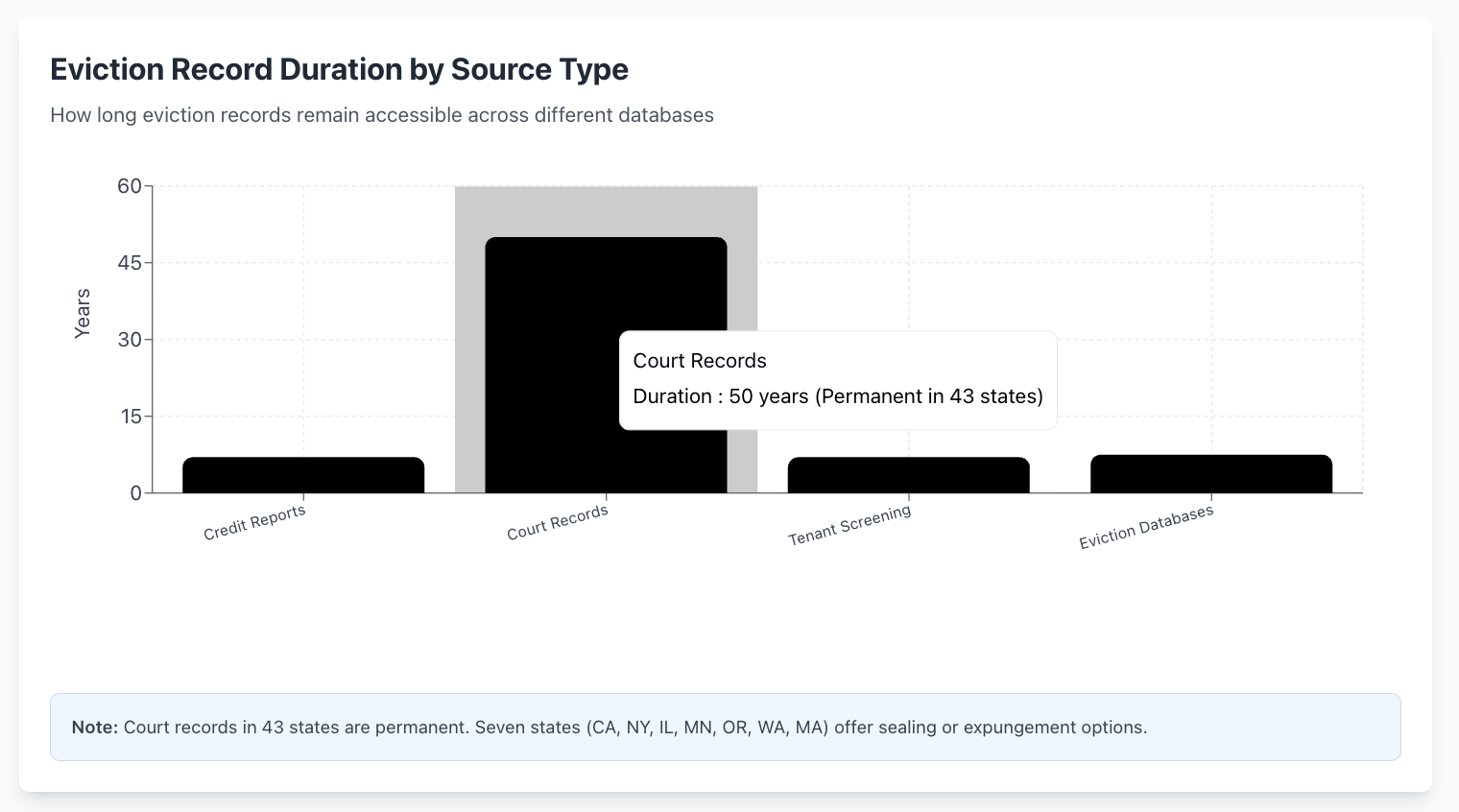
- Credit reports: Seven years from first delinquency
- Court records: Permanent in 43 states
- Tenant screening reports: Seven years
- Specialized eviction databases: Five to ten years, depending on database
Seven states offer eviction record sealing or expungement:
- California: Sealed after one year if dismissed
- New York: Sealed after three years if case dismissed or settled
- Illinois: Sealed after three years upon petition
- Minnesota: Sealed immediately if dismissed or won at trial
- Oregon: Eligible for expungement after five years
- Washington: Eligible for vacation after three years
- Massachusetts: Sealed after three years
Here's a timeline comparison of how long evictions appear in different databases:
The Real Impact of Evictions on Apartment Applications
Research from the National Multifamily Housing Council shows that almost 84% of landlords reject applicants with evictions on their record. Your eviction signals financial instability and potential risk to property owners.
Automated Screening Rejections
Large property management companies use automated tenant screening software.
These systems scan for specific red flags:
- Eviction filings within the past seven years
- Outstanding rental debt or judgments
- Criminal records
- Credit scores below threshold (typically 600-650)
The software generates automatic rejections before human review. According to RealPage, the largest provider of property management software, their systems screen over 8 million rental applications annually. Approximately 40% get automatically rejected based on screening criteria.
Manual Review Variables
Smaller landlords and independent property owners conduct manual reviews. They consider multiple factors beyond the eviction:
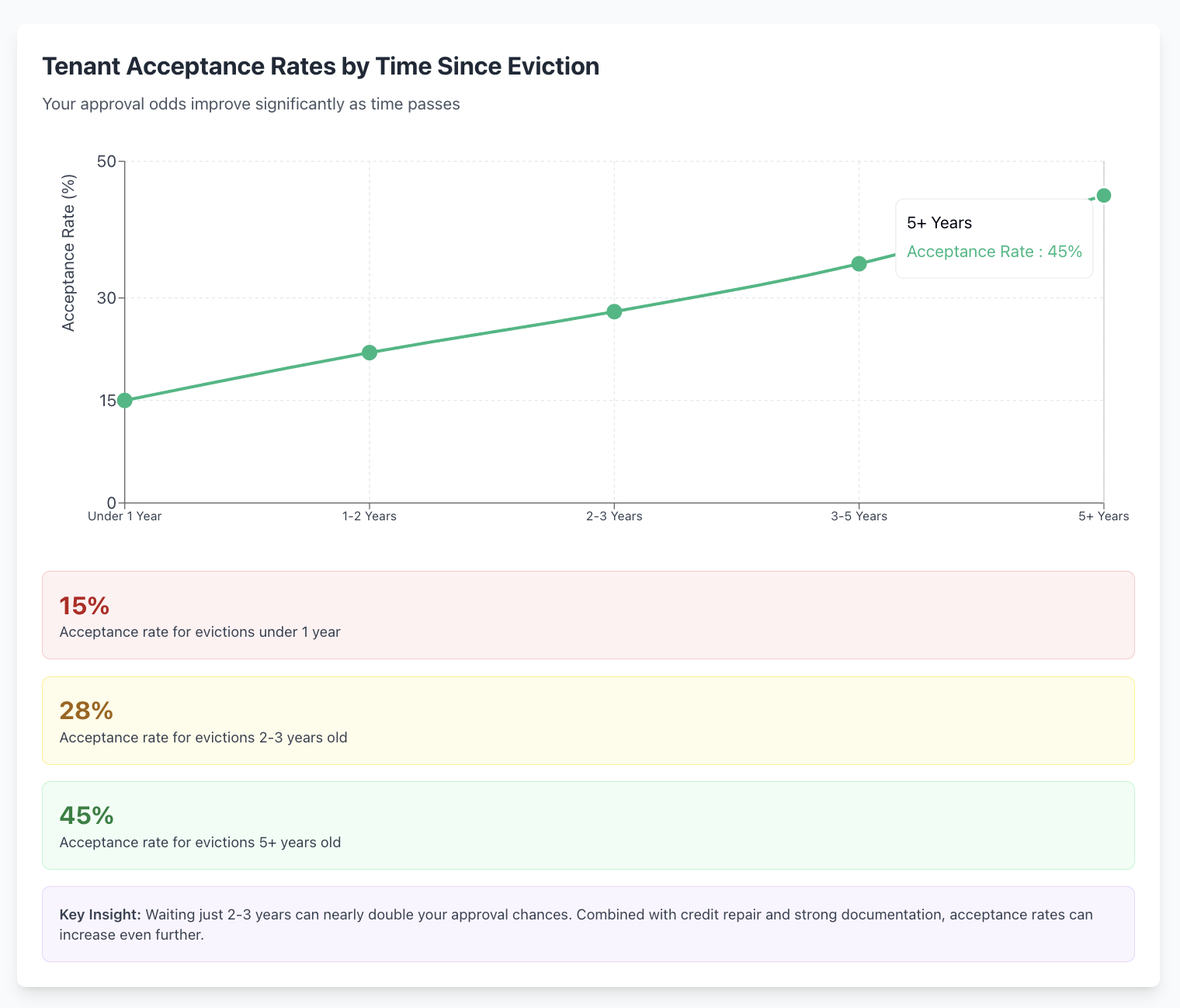
Time since eviction weighs heavily. An eviction from five years ago raises fewer concerns than one from six months ago. Data from the Urban Institute shows acceptance rates increase from 15% for evictions under one year old to 35% for evictions over three years old.
Here's a visual:
Eviction circumstances matter. Landlords distinguish between evictions for non-payment versus evictions for lease violations or property damage. Non-payment evictions during documented hardships (job loss, medical emergency, pandemic) receive more consideration than chronic late payments.
Current financial stability demonstrates changed circumstances. Stable employment, increased income, and improved credit scores since the eviction indicate lower risk. Landlords want evidence you've resolved the issues that led to eviction.
Related Content: How to Find Out if I Have an Eviction on My Record For Free
Can You Get an Apartment With an Eviction on Your Record?
Yes, but it takes strategy, preparation, and documentation. While an eviction on your record creates obstacles, it doesn’t automatically disqualify you from all rental opportunities. Many landlords are willing to consider applicants with past evictions if they can demonstrate financial recovery, stability, and accountability.
The key is understanding what landlords look for and presenting your situation in the most transparent, professional way possible.
With the right approach, even tenants with prior evictions can secure housing.
How to Get an Apartment With an Eviction on Your Record
Getting approved with an eviction requires a combination of strategic targeting, documentation, and honesty.
Here’s how to approach the process effectively:
1. Target Independent Landlords

Private property owners are more flexible than corporate management companies. They often handle their own screening and are open to explanations or negotiations. You can find independent listings on platforms like:
- Facebook Marketplace
- Craigslist
- Local classifieds
- Community bulletin boards
These landlords typically rely on intuition and personal judgment rather than automated screening systems.
2. Be Transparent About Your Eviction
Honesty is critical. Attempting to hide your eviction often backfires when the landlord discovers it during screening. Instead, address it upfront.
Explain the circumstances briefly, such as job loss, medical hardship, or temporary financial struggles, and emphasize what’s changed since then (steady income, improved credit, or references).
Transparency builds trust and positions you as a responsible tenant who’s learned from past mistakes.
3. Prepare a Strong Rental Resume
A rental resume strengthens your application. Include:
- Proof of income (recent pay stubs or offer letters)
- Employer verification letter
- Personal and professional references
- Letters of recommendation from past landlords (if possible)
- Proof of on-time rent payments for your current or previous residence
The more evidence you can show of reliability and financial stability, the better your approval chances.
4. Offer a Larger Security Deposit or Prepaid Rent
Money talks. Offering to pay two to three months of rent upfront, or a higher security deposit, can ease a landlord’s concerns. It demonstrates financial stability and good faith.
Some states limit the amount a landlord can legally accept as a deposit, so check local laws before making the offer.
5. Get a Co-Signer or Guarantor
A co-signer with strong credit and income reassures landlords that rent will be paid even if you face challenges. Parents, close relatives, or trusted friends can fill this role.
This step is especially effective for recent evictions (under two years old) where landlords need extra assurance.
6. Write a Rental Explanation Letter
Attach a one-page letter to your application that explains your eviction, what caused it, and what’s changed since. Keep it professional and concise, focus on accountability and improvement, not blame.
Example themes to include:
- You’ve resolved past financial issues.
- You’ve established steady employment.
- You’ve improved your credit score or paid off debts.
- You’ve taken financial education or budgeting steps.
How to Improve Your Chances of Getting Approved
Even with an eviction on your record, proactive credit and documentation strategies can significantly improve your approval odds.

1. Review and Repair Your Credit Report
Many evictions appear as collection accounts or judgments. Under the Fair Credit Reporting Act (FCRA), you have the right to dispute inaccurate or unverifiable information.
Our credit repair team helps clients identify and remove outdated or incorrect eviction records that continue to hurt their credit.
Improving your payment history, reducing debt utilization, and adding positive tradelines can raise your score within 60–90 days.
2. Apply for Apartments Without Strict Credit Requirements
Some properties specialize in second-chance housing, designed for applicants with prior evictions or poor credit. These landlords understand your challenges and typically charge higher deposits or slightly higher rent in exchange for flexibility.
Search terms like:
- “Second chance apartments”
- “Eviction-friendly rentals”
- “No credit check apartments”
These listings can often be found through local housing agencies or rental assistance organizations.
3. Provide Proof of Financial Stability
Landlords value consistency. Demonstrate that your financial situation has improved by showing:
- Bank statements with steady deposits
- Debt reduction proof or paid-off collections
- Recent pay stubs or tax returns
The goal is to replace their doubt with data.
4. Secure Professional Help
Working with a credit repair company or tenant rights advocate can help you dispute inaccurate eviction entries, negotiate removal, and prepare for screening.
Professionals can also help you understand your rights under the Fair Credit Reporting Act (FCRA) and Fair Housing Act (FHA), both designed to protect tenants from unfair or discriminatory practices.
Final Thoughts
An eviction doesn’t define your future, it’s simply a financial event that can be overcome with the right information and approach.
By improving your credit, preparing documentation, and targeting the right landlords, you can secure housing again and rebuild your financial reputation.
If you’re struggling to get approved due to a past eviction or credit issue, don’t do it alone.
👉 Click here to schedule a free credit consultation, and let our team help you remove inaccurate evictions, restore your credit, and get back into the home you deserve.