
TL;DR: Winning an eviction lawsuit usually means the landlord cannot remove the tenant based on that case. The tenant may remain in the rental, but the outcome depends on the judge's order, state law, and whether the landlord appeals or files a new case based on different facts.
Let me tell you something most people do not realize when they are sitting across from a landlord in an eviction courtroom.
Winning is not just about getting to stay in the apartment. Winning an eviction lawsuit can put money back in your pocket, remove a record from your background check, and in some situations give you legal grounds to sue the landlord. That is not the story most articles tell about eviction. But it is the accurate one.
I have worked with hundreds of clients at ASAP Credit Repair USA who came to us after eviction situations. Whether they won, lost, or settled before a judge ruled.
The ones who understood what a win actually meant, legally and financially, were the ones who came out of the situation the cleanest.
This article covers exactly what happens when a tenant wins. What you are entitled to, and what you need to do immediately after the ruling to protect your credit and your rental history.
Key Takeaways
If a tenant wins an eviction lawsuit, they retain the legal right to remain in the rental property and the landlord cannot remove them without starting the process over from scratch. Depending on the state and the circumstances, the court may also award the tenant attorney fees, court costs, and compensatory damages.
An eviction case that the tenant wins should not appear as an eviction on background checks, but errors happen and the record may require a manual dispute to remove. An eviction that was wrongfully filed, filed in retaliation, or filed based on discrimination can expose the landlord to additional civil liability beyond just losing the case.
The eviction record itself, even a dismissed one, can affect your ability to rent elsewhere unless you take steps to clean it from tenant screening databases.
What Happens if a Tenant Wins an Eviction Lawsuit?
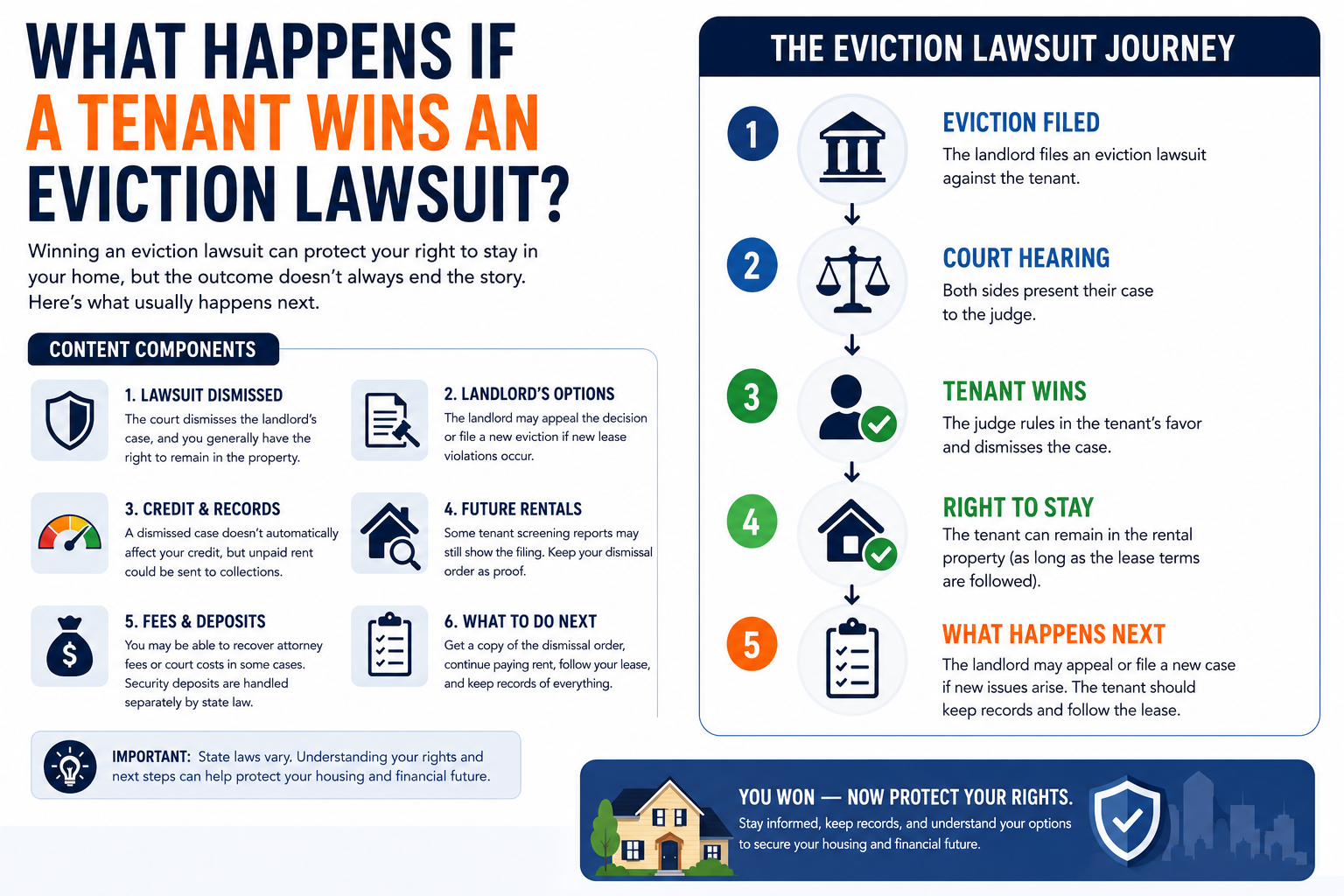
A tenant who wins an eviction lawsuit usually keeps possession of the rental property because the court dismisses the landlord's eviction claim.
The landlord cannot remove the tenant under that case but may have other legal options depending on state law and the reason for the dispute.
The infographic below summarizes the typical timeline and what both parties can do after the court's decision.
What Does It Mean to Win an Eviction Lawsuit?
When a judge rules in your favor in an eviction lawsuit, the court dismisses the landlord's case. The legal action is over. The landlord has lost their attempt to remove you from the property.
That ruling does several things at once.
The writ of possession the landlord was seeking is denied. A writ of possession is the court order that authorizes law enforcement to physically remove you from the premises. Without it, the landlord has no legal mechanism to make you leave. They cannot call the sheriff. They cannot change the locks. They cannot remove your belongings. Doing any of those things without a valid court order is an illegal self-help eviction, which itself is a civil wrong in most states.
You retain your lease rights exactly as they existed before the lawsuit was filed. If your lease had six months remaining, those six months still belong to you under the same terms.
The landlord cannot refile the same eviction based on the same grounds. If the court dismissed the case because the landlord's notice was defective, the landlord would need to start over with a proper notice before they could even begin a new eviction process.
What winning does not do is erase the underlying dispute. If you owe unpaid rent, a dismissed eviction does not cancel that debt. The landlord can still pursue the money separately in civil court. Winning the eviction case and losing a separate small claims judgment for unpaid rent at the same time is entirely possible.
Why Tenants Win Eviction Lawsuits
Understanding why tenants win is important because it determines what you are entitled to after the ruling.
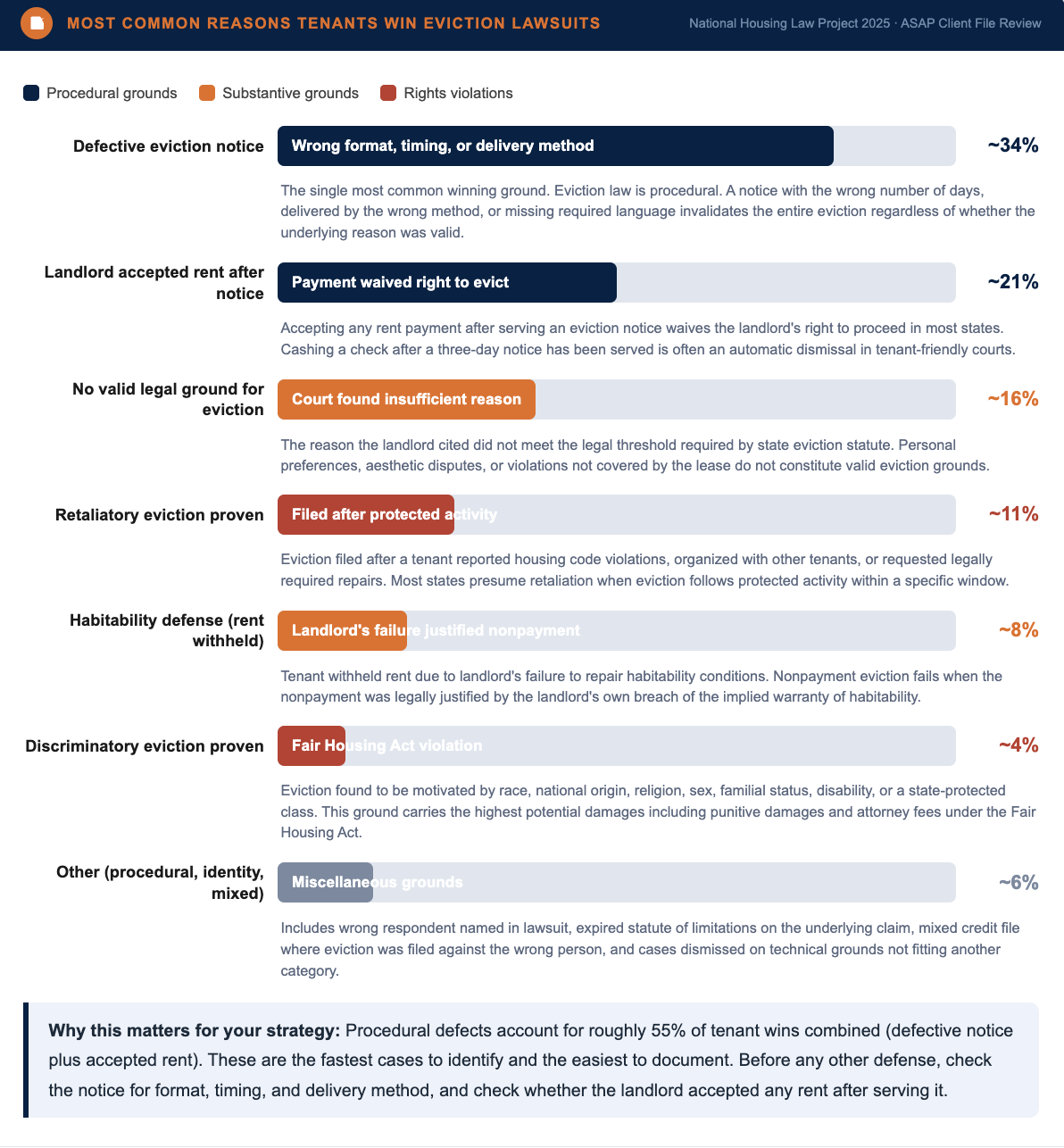
Different grounds for winning produce different legal remedies. Let's go over them one by one.
Procedural defects in the landlord's notice.
This is the most common reason landlords lose. Eviction law is highly procedural. The notice the landlord serves before filing the lawsuit must meet specific requirements for content, format, delivery method, and timing.
In Texas, a landlord must give three days written notice before filing for eviction unless the lease specifies a different period.
In California, notice requirements vary from three to sixty days depending on the reason for eviction and the length of tenancy.
A notice delivered in the wrong way, missing required language, or served too early or too late can invalidate the entire eviction even if the underlying reason for the eviction was valid.
No legal ground for eviction.
A landlord needs a legal reason recognized by state law to evict a tenant. Disliking the tenant, wanting the unit back for personal use without proper notice, retaliating against a tenant who complained about habitability conditions, or discriminating based on a protected class are not valid legal grounds. If the court finds the landlord had no legally sufficient reason for the eviction, the case is dismissed.
Retaliatory eviction.
In most states, a landlord cannot legally evict a tenant in retaliation for exercising a legal right. Common protected activities include reporting housing code violations to a government agency, organizing with other tenants, requesting legally required repairs, or contacting a fair housing agency. If the eviction was filed within a certain period after the tenant engaged in protected activity, courts often presume the eviction was retaliatory. The landlord then must prove the eviction was for a legitimate reason independent of the protected activity.
Discriminatory eviction.
The Fair Housing Act prohibits eviction based on race, color, national origin, religion, sex, familial status, or disability. State laws often add additional protected categories including source of income, sexual orientation, age, and immigration status. A tenant who proves the eviction was motivated by discrimination wins the case and has grounds for a separate discrimination claim.
Landlord's failure to maintain habitable conditions.
In most states, tenants have the right to withhold rent or pay reduced rent when a landlord fails to make necessary repairs that affect habitability. A tenant who withheld rent because the landlord failed to fix a heating system, roof leak, or mold problem may have a complete defense to a nonpayment eviction. The landlord cannot successfully evict for nonpayment if the nonpayment was legally justified by the landlord's own failure to maintain the unit.
Landlord accepted rent after serving the notice.
In many states, accepting any rent payment after serving an eviction notice waives the landlord's right to proceed with that eviction. If the landlord cashed a check after sending the three-day notice, the eviction may be defeated on that basis alone regardless of whether there were any other defenses.
What Are You Entitled to After Winning?
This is the part most other eviction articles skip almost entirely, and it is the part that matters most financially.
The right to remain in the property.
You stay. The lease continues under its existing terms. The landlord cannot change the locks, remove your belongings, cut off utilities, or interfere with your possession of the unit in any way.
Attorney fees and court costs. Many state eviction statutes include a fee-shifting provision that requires the losing party to pay the winning party's reasonable attorney fees. In states like California (Code of Civil Procedure Section 1174.2), Texas (Property Code Section 92.109 for retaliation cases), and Florida (Statute 83.48), a tenant who prevails may recover attorney fees from the landlord. If you represented yourself, you can typically recover your court filing fees and any documented costs related to your defense. If you had an attorney, you may recover their fees.
Actual damages. If the landlord's conduct during the eviction process caused you measurable financial harm, you may be able to recover those damages. Examples include moving costs you incurred because you wrongly believed you had to leave, lost wages from taking time off work to attend hearings, costs of temporary housing, and damage to personal property caused by any unlawful lockout attempt.
Damages for illegal self-help eviction. If at any point during the process the landlord attempted an illegal self-help eviction, such as changing locks, removing doors, shutting off utilities, or removing your belongings without a court order, that conduct is independently actionable. Most states impose statutory penalties for self-help eviction that go beyond actual damages. Texas Property Code Section 92.0081 allows a tenant locked out illegally to recover one month's rent plus $500, actual damages, and attorney fees.
Damages for retaliatory or discriminatory eviction. A tenant who wins on retaliation or discrimination grounds typically has access to a separate civil claim beyond the dismissed eviction. Under the Fair Housing Act, a prevailing tenant in a discrimination case can recover actual damages, punitive damages in cases of willful violation, and attorney fees. State fair housing statutes often provide additional or parallel remedies.
As the National Housing Law Project notes in their tenant rights documentation, tenants who prevail in eviction proceedings on retaliation or habitability grounds may have concurrent claims that exceed the value of the dismissed eviction case itself. (National Housing Law Project, Tenant Defenses and Remedies, 2025)
Winning Your Eviction Case Doesn't Always Mean Your Credit Is Clear.
Even if the court ruled in your favor, unpaid rent collections, reporting errors, or other negative accounts could still affect your credit and future rental applications. Find out what's actually showing on your credit report before your next move.
Get My Free Credit Report Review →✓ No obligation ✓ Personalized review ✓ Know what landlords and lenders may see
Can the Landlord Appeal or Refile After Losing?
Yes to both, under certain conditions.
Appeal. A landlord who loses an eviction case can appeal to a higher court. In most states, filing an appeal does not automatically allow you to stay in the unit pending the appeal. The landlord may be required to post a bond, and you may be required to pay rent into escrow during the appeal period. The appeal timeline and rules vary by state. If the appeal is successful and the higher court reverses the lower court's ruling, you would then be subject to the eviction.
Refile. If the landlord lost due to a procedural defect, such as a defective notice, nothing prevents them from correcting the defect and starting the eviction process again. A dismissal for procedural reasons is not a ruling on the merits. The landlord can serve a proper notice the next day and file a new eviction. If the landlord lost on the merits, meaning the court found no valid legal basis for the eviction, refiling on the same grounds is generally not available because the issue has been decided.
New grounds. A landlord who lost an eviction for nonpayment can refile if you miss another rent payment in the future. The previous win does not give you permanent immunity from eviction. It resolves the specific lawsuit that was filed.
Does Winning an Eviction Lawsuit Remove It From Your Background Check?
This is where winning gets complicated, and it is where most tenants get hurt even after a favorable ruling.
The court record of the eviction filing is a public record. It exists in the courthouse database from the moment the landlord filed, regardless of how the case resolved. Tenant screening companies that access court records will often pick up the filing and report it on background checks even when the case was dismissed in your favor.
This matters because a landlord running a background check on you for a new apartment may see an eviction filing on your record. If the screening company does not note the dismissal or does not display the outcome, the landlord may deny your application based on the filing alone.
Winning the case does not automatically scrub the public record. You may need to take additional steps.
Request a record seal or expungement. Several states allow tenants who prevailed in eviction cases to petition the court to seal or expunge the eviction record. States with expungement provisions for dismissed or tenant-won evictions include Michigan, Nevada, Colorado, Oregon, and Minnesota as of 2026, among others. If your state allows it, file the petition as soon as possible after winning because some states have time limits on when you can apply.
Dispute the record with tenant screening companies. Under the Fair Credit Reporting Act, tenant screening reports are consumer reports and must meet accuracy standards. A dismissed eviction reported as an active or adverse eviction record is an inaccuracy you can dispute. Contact the screening company in writing, include documentation of the dismissal, and request correction under FCRA Section 611. The screening company has 30 days to investigate and correct inaccurate information.
File a dispute with specialty consumer reporting agencies. CoreLogic SafeRent, Experian RentBureau, TransUnion SmartMove, and similar tenant screening databases maintain their own records separate from the three major credit bureaus. A dismissed eviction may appear in one or more of these databases. Each one is subject to the FCRA and must correct inaccurate records upon dispute.
For a full breakdown of how eviction records appear in tenant screening databases and how to dispute them, read our guide: How to Dispute an Inaccurate RentGrow Report.
Does Winning an Eviction Lawsuit Affect Your Credit Score?
The eviction lawsuit itself does not appear on your credit report at all, win or lose.
Evictions are court proceedings and the three major credit bureaus stopped reporting civil judgment data in 2017 and 2018 under the National Consumer Assistance Plan.
However, the financial situation that led to the eviction often does affect your credit, and winning the case does not erase those effects.
If the eviction was filed for nonpayment of rent and the landlord turned the unpaid rent over to a collection agency, that collection account is on your credit report regardless of the eviction outcome. Winning the eviction case is a separate legal result from the credit reporting result.
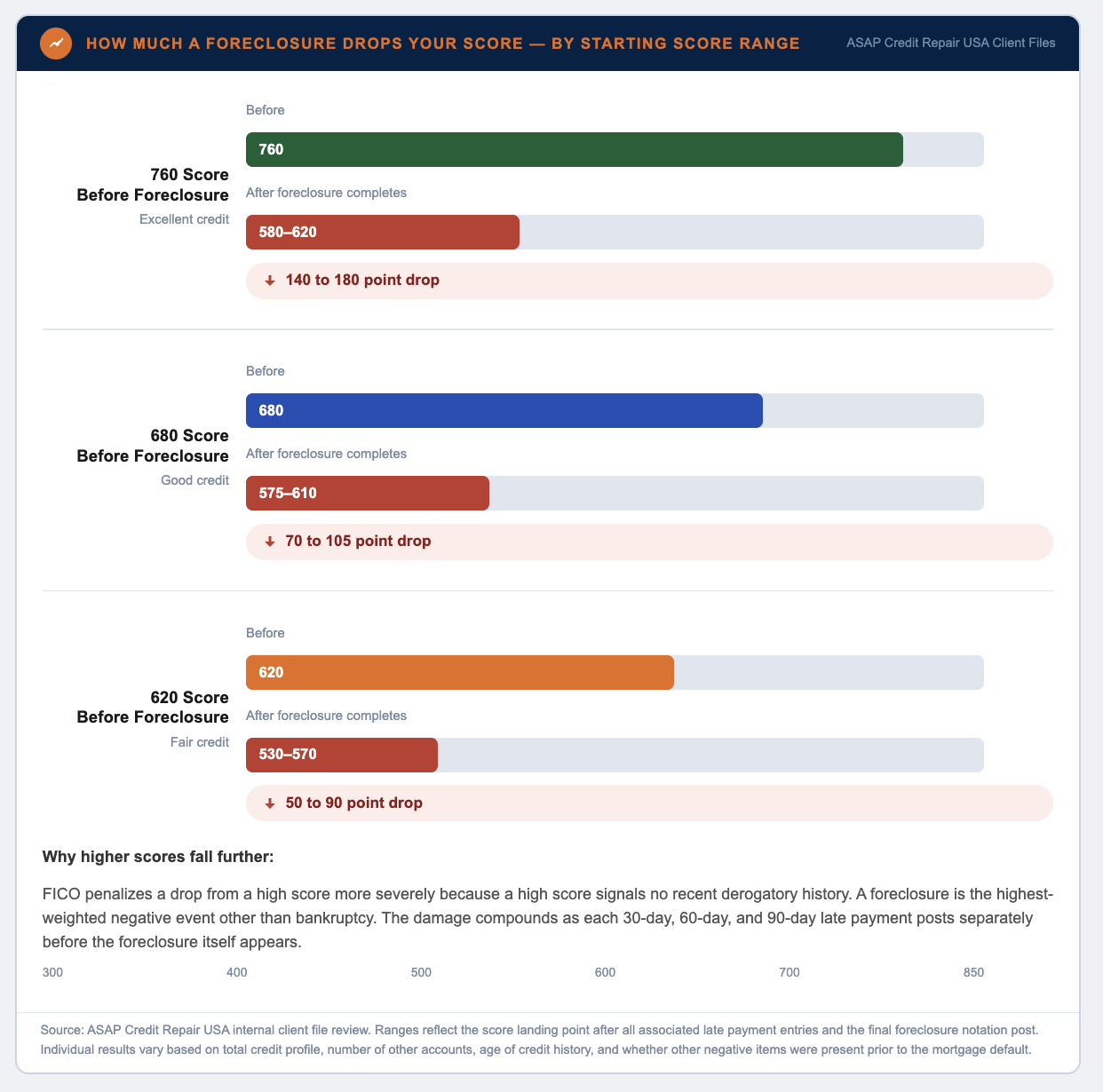
The collection stays unless you dispute it as inaccurate or negotiate its removal. However, if it's a foreclosure, it's a different story.
If your landlord obtained a separate money judgment against you for unpaid rent independent of the eviction case, that judgment itself no longer appears on your credit report. But the consequences of the judgment, wage garnishment, bank levies, and liens, can affect your financial situation in ways that indirectly affect your credit if other obligations go unpaid as a result.
Planning to Rent or Buy Another Home?
A dismissed eviction case doesn't automatically remove collections, credit report errors, or other issues that landlords and mortgage lenders may review. Understanding your credit now can help you avoid surprises during your next application.
Check My Credit Report Learn How We Can HelpYour next housing application starts with knowing what's on your credit report.
For a detailed breakdown of how debt lawsuits and judgments affect your credit report, read: Does a Debt Lawsuit Impact Your Credit Score?
How Winning an Eviction Affects Your Ability to Rent Elsewhere
Even a dismissed eviction can make your next rental application harder if the record is not cleaned up. This is the practical consequence that affects more people than any other outcome of the eviction process.
Landlords run background checks that include public court records. Many screening algorithms flag any eviction filing regardless of outcome. Property management companies with automated screening systems may deny applications without a human ever reviewing the context.
The steps to protect yourself after winning:
First, obtain the court's written order dismissing the case. The written dismissal is your primary documentation for any subsequent disputes with screening companies.
Second, immediately write to any tenant screening company you know has your file. If you applied for housing recently and a RentGrow, CoreLogic, or similar report was pulled, those companies have your eviction record. Dispute it with the dismissal order attached.
Third, check whether your state allows expungement of the eviction record from the court system itself. If it does, file that petition immediately. A court-sealed record cannot be reported by any consumer reporting agency.
Fourth, be proactive with future landlords. Some landlords, particularly independent landlords and smaller property management companies, will review context rather than rely entirely on automated screening. A brief written explanation of the dismissed eviction, supported by the court order, can overcome an automated flag in a manual review.
For a full guide on how landlords evaluate tenant credit and screening history, including how to position yourself after a difficult rental history, read: Which Credit Score Do Landlords Use.
What to Do Immediately After Winning an Eviction Lawsuit
Step 1: Get the written order from the court. Do not leave the courthouse without a copy of the judge's ruling. If the case was dismissed at the hearing and no written order was issued immediately, contact the clerk's office within 24 hours and request a written copy of the dismissal. You need this document in hand before you do anything else.
Step 2: Document any landlord conduct that violated your rights during the process. If the landlord made any threat, attempted a lockout, shut off utilities, or intimidated you in any way during the eviction period, document it now while the details are fresh. Texts, emails, photos, and written notes with dates. This documentation supports any subsequent claim for damages or retaliation.
Step 3: Send the landlord a written notice of the outcome. Send a certified mail letter to your landlord acknowledging the court's ruling and your continued right to occupy the premises. This creates a paper trail that establishes you formally notified them of the result and your intent to remain in the unit.
Step 4: Research whether you are owed attorney fees or damages. Pull your state's eviction statute and read the remedies section. If your state provides for attorney fees to a prevailing tenant, you may need to file a separate motion within a specific timeframe to recover them. If you had an attorney, discuss this immediately. If you represented yourself, research whether self-represented litigants can recover fees in your state.
Step 5: Check your background check reports. Within 30 days of winning, request your own tenant screening report from CoreLogic SafeRent, RentBureau, and any other screening service you are aware of. Review them for how the eviction is listed. If it shows anything other than dismissed or expunged, dispute it immediately with the written court order.
Step 6: Evaluate whether your financial situation created any credit issues that need attention. If the eviction arose from a period of financial hardship and you have collection accounts, charge-offs, or late payment entries from the same period, those need to be addressed separately from the eviction record. Winning the eviction case does not resolve credit reporting issues that grew alongside it.
For guidance on collection accounts that may have resulted from a difficult rental period, read: What Happens If You Ignore TSI Collections.
Winning an Eviction vs. Settling Before Judgment: Which Is Better?
I get this question from clients who are in the middle of an eviction case and have been offered a settlement. The landlord says they will drop the eviction if the tenant pays a portion of the back rent, or moves out by a certain date.
Settling before judgment avoids the court record of an eviction filing. This is meaningful because a filed case is a public record even when withdrawn. If the landlord withdraws the case before it goes to hearing and before a filing appears in eviction screening databases, there may be no record to dispute afterward.
But settling has costs. You may give up your right to the attorney fees and damages you would have recovered by winning. You may agree to leave when you had a strong defense. You may pay money you did not legally owe.
The comparison depends entirely on the strength of your defense and your housing timeline. If you have a strong procedural defense and plan to stay in the area where this rental history will matter for future applications, fighting and winning produces a cleaner outcome because the dismissed record is stronger than a withdrawn-with-settlement record.
If you need to move anyway and want to minimize the time and cost of litigation, a negotiated settlement that includes written confirmation the landlord will not report a negative rental history, will not pursue a collection judgment, and will provide a neutral or positive reference may be worth more than a courtroom win.
According to Investopedia's legal rights guide for renters, settlement agreements should always be in writing, signed by both parties, and should specifically address what the landlord will and will not do with respect to references, rental history reporting, and any outstanding financial claims. (Investopedia, Tenant Rights Guide, 2025)
State-by-State Differences After Winning an Eviction Lawsuit
Eviction law is entirely state law. The remedies available after winning vary significantly.
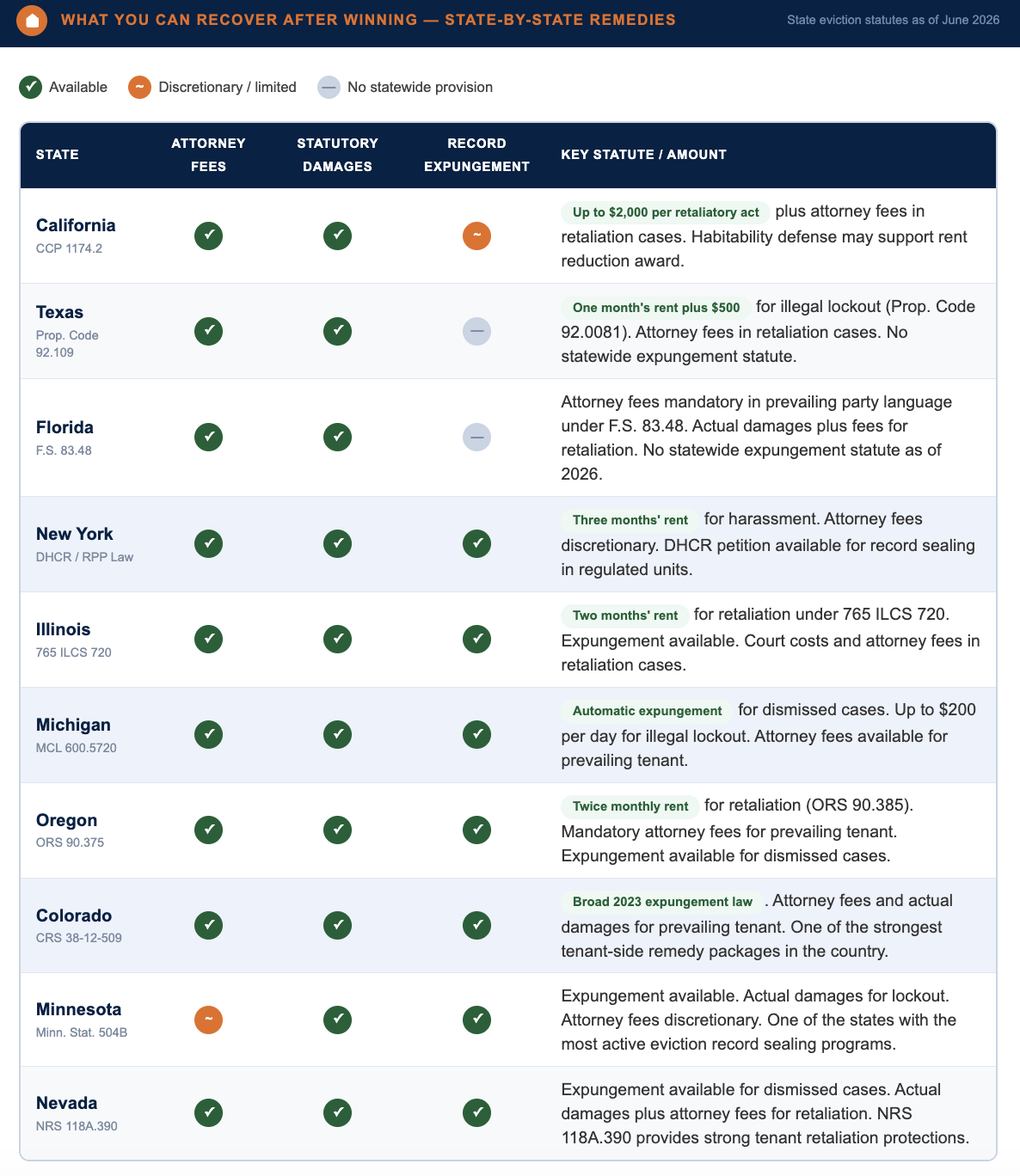
Check your state before assuming you are entitled to fees or damages.
State laws change frequently. Michigan's automatic expungement, Oregon's mandatory attorney fees, and Colorado's 2023 broad expungement law represent some of the strongest tenant protections in the country. If your state is not listed here, consult your state's tenant rights organization or a licensed tenant attorney to confirm what remedies apply to your specific situation.
How an Eviction Lawsuit Win Protects Your Future Housing Applications
The biggest practical benefit of a documented win is what it does for your rental history going forward, assuming you clean up the record properly.
A dismissed eviction with proper documentation is a very different conversation with a future landlord than an active eviction or an unresolved filing. Most independent landlords and many smaller property management companies will review context when a screening report shows an eviction filing. An applicant who can hand the landlord the court's dismissal order, explain the circumstances in one paragraph, and provide a reference from the property where they stayed after winning is in a meaningfully better position than someone with an unexplained eviction record.
The conversation is not "I was evicted." It is "My landlord filed an eviction. I went to court, the judge dismissed the case in my favor, and I continued my tenancy for the remaining term of the lease." Those are completely different narratives and most reasonable landlords will treat them differently.
The RentGrow dispute process, the CoreLogic dispute process, and any applicable state expungement petition all contribute to making that narrative as clean as possible on paper, which is where it counts most when an automated system is reviewing your application.