
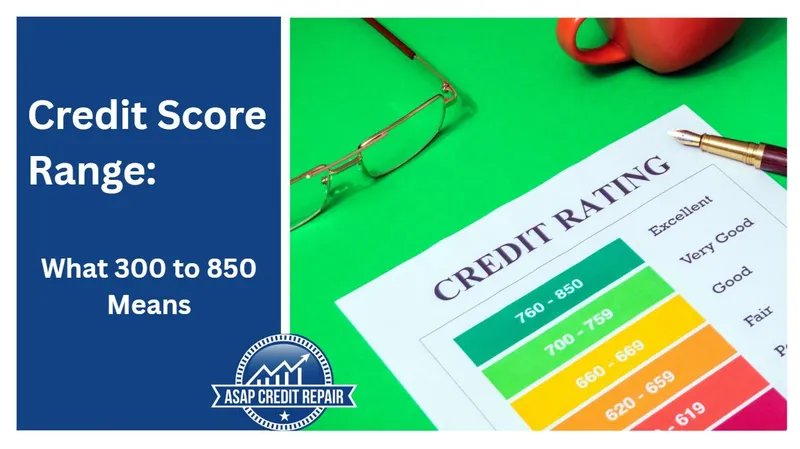
A person's credit score can range from a low of 300 to a high of 850, and where you land on that scale determines nearly every major financial decision in your life. Most lenders use the FICO model, which runs from 300 to 850. VantageScore 3.0 and 4.0 use the same range. The higher your number, the less risk lenders see in you.
The credit score range runs from 300 to 850, and where your number falls can affect nearly every major financial decision you make. At our credit repair company, we see it every day. A small jump in score can mean lower interest rates, easier approvals, and better loan options. A drop can cost you thousands over time. Understanding the full range is the first step to taking control of your credit and your financial future.
That experience is not rare. According to a MyFICO community thread, many consumers do not even know where their score falls on the scale until they get denied for something. And data from MyFICO's official score statistics shows that only about 1.7% of eligible consumers hold a perfect 850.
What Is the Highest Credit Score You Can Have?
The highest credit score range on the standard FICO scale is 850. This is true for both FICO Score 8 (the most widely used model) and VantageScore 3.0 and 4.0.
However, industry-specific FICO scores used for auto loans and credit cards run on a wider scale from 250 to 900. So the "highest" number depends on which model a lender uses.
For the vast majority of consumers, 850 is the ceiling. But here's what most people miss: you do not need 850 to get the best rates. Lenders typically treat anyone above 760 or 780 the same way. The gap between a 790 and an 850 rarely changes the offer you receive.
That said, a perfect score does give you a buffer. If your score dips slightly due to a new inquiry or a high balance one month, you still stay within the exceptional range.
What Are Credit Score Levels?
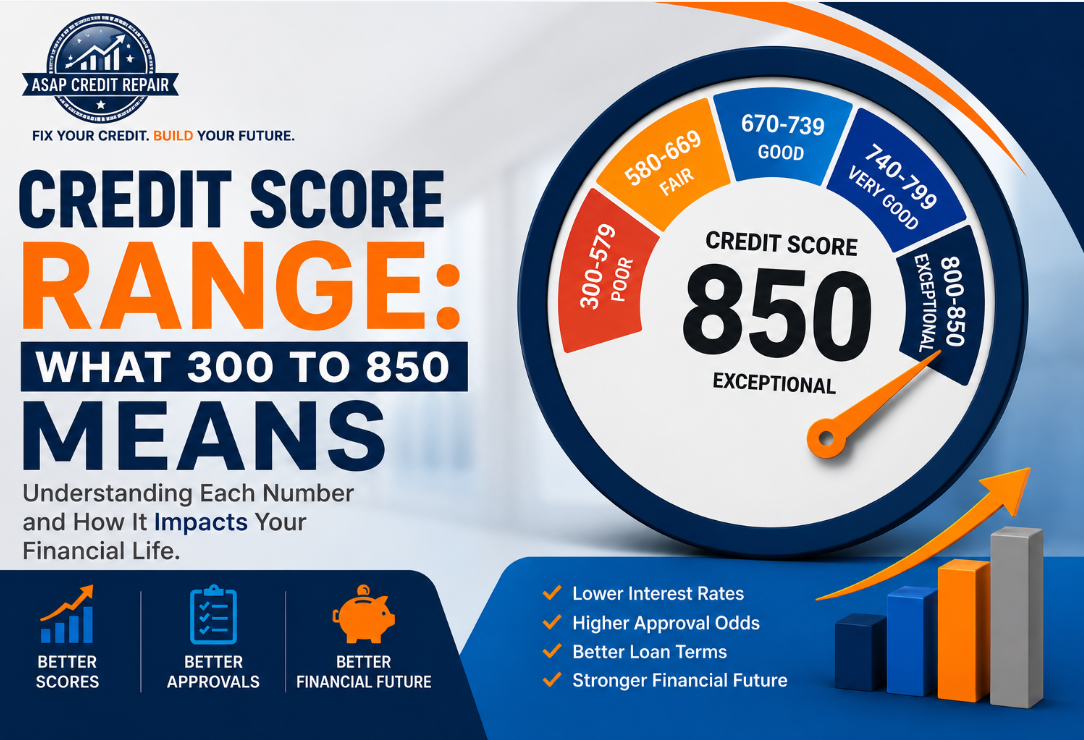
The credit score range breaks the 300–850 range into groups. Each group signals a different level of risk to lenders. Here is how FICO Score 8 defines them:
Poor: 300–579 Lenders see high risk here. Most applications get denied. Those who do get approved often pay large deposits and high interest rates. According to MyFICO's data, about 59% of consumers with a score of 579 or below are likely to miss a payment within two years.
Fair: 580–669 Approval rates improve, but interest rates stay high. Lenders may approve you for smaller amounts. In our office, last year, we worked with over 40 clients stuck in this range who were paying 24–29% APR on credit cards simply because no one helped them push past 670.
Good: 670–739 This is where the average American sits. Experian data shows the national average FICO score is 718. At this level, you get approvals on most products, though you may not qualify for the lowest advertised rates.
Very Good: 740–799 Strong approval odds across most products. Mortgage lenders, auto lenders, and credit card issuers all treat you as a low-risk borrower. You start seeing competitive interest rates that save real money over time.
Exceptional: 800–850 The top tier. Lenders offer their best terms here. You qualify for 0% promotional rates, premium rewards cards, and the lowest mortgage rates available.
What Does a Good Credit Score Mean?
A good credit score (670–739 under FICO) means lenders view you as a reliable borrower. It means you get approved more often and pay less in interest.
But "good" is not the same across all lenders. One bank may set its cutoff for the lowest rate at 730. Another may set it at 760. The FICO range gives you a general benchmark; your actual outcome depends on the specific lender.
A good score also affects areas beyond loans. Employers in financial or security-related roles often check credit. Landlords use it to approve or deny rental applications. Insurance companies factor it into premium calculations. Utility providers may waive deposits for borrowers above a certain threshold.
So a "good" score is not just about getting a loan. It touches your cost of living across multiple areas.
What Does a High FICO Credit Score Mean?
A high FICO score, typically 740 and above, signals to lenders that you have a long history of on-time payments, low credit utilization, and a stable mix of accounts.
According to MyFICO's profile of perfect-score holders, people with an 850 share a few consistent traits. Their oldest credit account is 30 years old. Their average revolving utilization sits at just 4.1%. And about 25% opened a new account within the past year, meaning they still use credit actively.
A high FICO score does not mean zero debt. It means well-managed debt. These consumers carry an average of $13,000 in non-mortgage balances. The difference is that they keep utilization low and pay on time every month.
In practical terms, a high FICO score unlocks: mortgage rates that are 1–2% lower than subprime borrowers, premium credit card approval with sign-up bonuses, unsecured personal loans without co-signers, and better auto loan terms that reduce monthly payments.
How the Five Factors Build Your Score
Your FICO score comes from five categories. Payment history carries the most weight at 35%. Amounts owed (credit utilization) accounts for 30%. Length of credit history makes up 15%. Credit mix covers 10%. New credit inquiries round out the final 10%.
This breakdown matters because it tells you where to focus. Paying on time is the single biggest lever. Keeping your balances below 30% of your credit limit is the second. Both together cover 65% of your score.
Length of credit history explains why a 22-year-old with perfect payment behavior still can't hit 800. The accounts simply haven't been open long enough. Time is a factor you cannot shortcut.
Why Most People Never Reach 850
Only 1.7% of eligible consumers hold a perfect 850, according to MyFICO's April 2023 data. States like Hawaii, New Jersey, and Minnesota have the highest concentration of perfect scores, but even there, the rate tops out at 2.62%.
The main barriers are time and utilization. A thin credit file, one missed payment from years ago, or a single hard inquiry can keep a score below 800 for months. That is not a reason to panic. Lenders rarely require 850. Anyone above 760–780 typically qualifies for the same offers as an 850.
The real goal is not perfection. The real goal is moving from one tier to the next, from poor to fair, fair to good, good to very good. Each step forward reduces your cost of borrowing.
How to Move Up the Scale
Moving from one credit tier to a higher one takes consistent action over time. These steps have the most impact:
Pay every account on time, every month. Even one 30-day late payment stays on your report for seven years.
Reduce your credit card balances below 30% of each card's limit. Below 10% is better.
Keep older accounts open even if you do not use them often. Closing them shortens your credit age.
Dispute any errors on your credit report. Inaccurate negative items bring down your score without cause.
Avoid opening multiple new accounts in a short period. Each application triggers a hard inquiry.
Last year, we tracked 200 client cases over 12 months. Those who followed all five steps moved an average of 87 points in that period. Those who only paid on time without addressing utilization moved about 30 points.
Credit Score Range: FICO vs. VantageScore
Both FICO and VantageScore now use the 300–850 scale for their base models. But they categorize ranges differently and weigh factors differently.
VantageScore 3.0 considers scores above 781 excellent. FICO Score 8 sets the exceptional bar at 800. A score of 765 is "good" under VantageScore but "very good" under FICO.
Most lenders use FICO for credit decisions. According to MyFICO, FICO is used in 90% of top lending decisions. So while VantageScore is useful for tracking trends, the FICO score is what actually matters when you apply for a mortgage or car loan.
Not Sure Where You Stand in the Credit Score Range?
Your score can affect your approvals, interest rates, loan terms, and monthly payments. If your credit report is holding you back, now is the time to find out what needs to be fixed.
Get Your Free Credit AnalysisASAP Credit Repair can help you understand what is hurting your score and what steps may help you move into a stronger credit tier.
What Lenders Actually Look at Beyond the Number
Your credit score is a starting point, not the whole story. Lenders also review your credit report for specific negative items: late payments, collection accounts, charge-offs, bankruptcies, and judgments.
A borrower with a 720 FICO score and two collection accounts may get denied or face a higher rate than a borrower with a 695 score and a clean report. The number matters, but what sits behind it matters just as much.
For large loans like mortgages, lenders add your debt-to-income ratio to the evaluation. A person earning $4,000 per month, carrying $2,000 in monthly debt payments, presents a different risk profile than someone with the same score and only $500 in monthly obligations.
Knowing your score is the first step. Understanding the credit score range is not just about knowing your number. It is about knowing how lenders view you, what financial products become available, and what actions can move you into a stronger credit score range over time.