

Does Experian Boost work? For about two-thirds of users who see any score change, yes. The average gain is 13 points. One in three users who see movement hits 20 points or more. But for a large group of borrowers, Experian Boost delivers nothing. Knowing which group you fall into before you connect your bank account saves time and prevents false expectations.
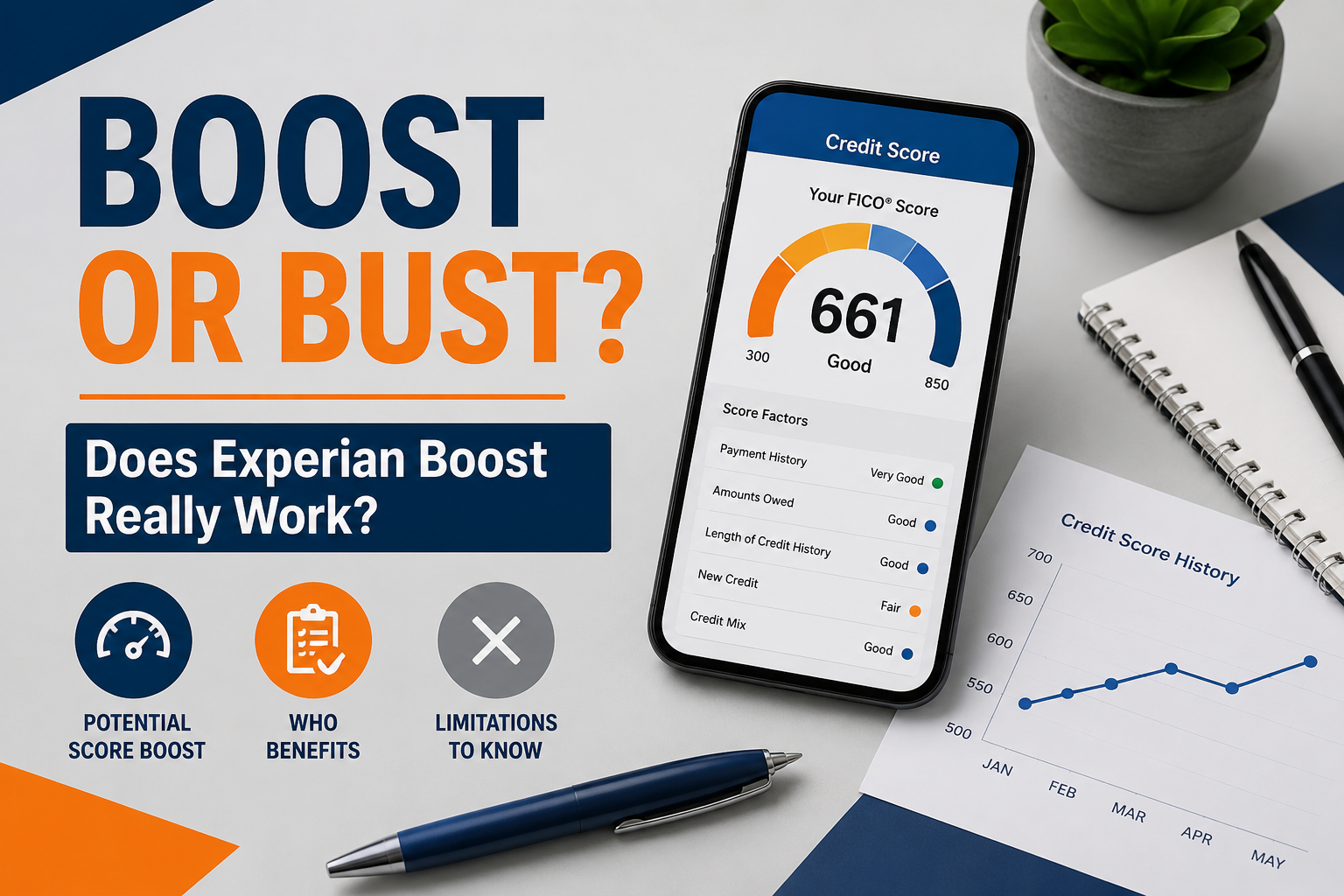
Running a credit repair company, I see clients try Experian Boost every week. One of the most unforgettable accounts came from a 31-year-old client. He had been paying his electric bill, phone bill, and Netflix subscription on time for three years. None of that history appeared on his credit report. He had two credit cards and a score of 648. After connecting to Experian Boost, his score moved to 661 in minutes. That 13-point jump pushed him over the 660 threshold his auto lender required for a standard rate tier. A free tool did in 10 minutes what months of waiting would have done.
A large Reddit thread in r/personalfinance (link) paints a more divided picture. Users with thin files and consistent utility payments reported gains of 10 to 40 points. Users with existing thick credit files reported gains of 0 to 5 points. Several users with scores above 720 reported no change at all. The CFPB estimates that 26 million Americans are credit-invisible or have thin files. Experian Boost was built for that group specifically.
What Is Experian Boost and How Does It Work
Experian Boost is a free tool from Experian. It lets you add payment history from bills that do not normally appear on your credit report. Those bills include utility payments, phone bills, and select streaming services.
Here is how the process works:
You create a free Experian account.
You connect your bank account through Plaid, a secure data connection service.
Experian scans up to two years of your transaction history for qualifying payments.
You choose which payments to add to your credit file.
Experian updates your credit file. Your score reflects the new data right away.
Experian launched the product in 2019. The qualifying categories now include utilities, cell phone, landline, Netflix, Disney+, Hulu, HBO Max, and rent paid through select property platforms.
To qualify, a bill needs at least three payments in the past six months. At least one must fall within the last three months. Experian only pulls positive payment history. If you have missed a utility payment, Boost excludes that account. It cannot add negative marks to your file.
Does Experian Boost Work: What the Data Actually Shows
Experian reports that the average score increase from Boost is 13 points. That number comes from Experian's own data across millions of enrolled users. Two-thirds of users who see any score movement experience a gain. One-third of users see gains of 20 points or more, per Experian's product data.
The people who benefit most share a clear profile. They have thin credit files with fewer than four active credit accounts. They have been paying utility and phone bills on time for at least 12 months. They have limited U.S. credit history.
For someone with only one or two credit accounts and limited payment history depth, adding 24 months of on-time utility payments can meaningfully increase the payment history portion of their score, which is 35% of FICO.
The people who see little or no gain also share a clear profile. They already have thick credit files with many accounts and years of history. They may have significant negative marks, such as late payments or collections. For that second group, 13 points does not overcome a charge-off or a missed credit card payment. The file needs more than Boost can give.
Last year, our office ran Experian Boost for 22 clients during the same quarter. Clients with fewer than four accounts gained an average of 19 points. Clients with six or more gained an average of 4 points. The difference was not the tool. The difference was the starting file.
The One Limitation Most People Miss
Experian Boost only changes your Experian credit file. It does not touch your TransUnion or Equifax reports.
This matters more than most people realize. Many lenders pull more than one bureau. Mortgage lenders typically pull all three and use the middle score. Auto lenders often default to TransUnion or Equifax. Credit card issuers vary by company.
Boost only reports to Experian. If your lender pulls from TransUnion or Equifax, Boost doesn't help. Because Boost is Experian-only, it's one of the most common reasons your three-bureau scores diverge.
A borrower who boosts their Experian score from 658 to 671 may feel ready for a mortgage application. If the lender pulls all three bureaus and both TransUnion and Equifax show 651, the lender uses 651 as the qualifying score. The Boost gains do not apply.
This does not make Experian Boost useless. It makes it important to know which bureau your lender pulls before you rely on Boost gains to cross a scoring threshold. Call your lender and ask which bureau they use before your application.
Can Experian Boost Hurt Your Credit Score?
No. Experian Boost cannot lower your score. Here is why.
Boost only imports positive payment history. It ignores any missed or late payments on qualifying bills. If a bill has a missed payment in the past, Boost skips it. It does not add that entry to your file.
If your bills don't qualify, you simply won't see an increase. No negative information transfers. No hard inquiry is triggered. You can disconnect your bank account and remove the added payments at any time. Removing them reverses the boost but adds nothing negative to your file.
The connection to your bank account is read-only. Experian uses Plaid, a financial data company, to view your transaction history. It cannot move money, make transfers, or access account numbers beyond what it needs for payment verification.
Who Should Use Experian Boost
Experian Boost makes the most sense for four groups:
Thin-file borrowers with fewer than four active credit accounts who have been paying bills consistently for at least 12 months.
Credit-invisible borrowers who do not yet have a FICO score and want to generate one faster.
Borrowers are near a scoring tier threshold where 10 to 20 points would unlock better loan terms.
Immigrants or people returning to the credit system after a long absence, who have strong utility payment habits but limited U.S. credit history.
Experian Boost is less effective for borrowers who already carry thick credit files with 5 or more accounts and long histories. It is also less effective for borrowers with derogatory marks as the primary issue. A charge-off, bankruptcy, or collection account needs direct dispute or time to recover. Experian Boost does not address those items.
Does Experian Boost Help With Mortgage Applications?
This is one of the most common questions we get. The honest answer: probably not.
Most mortgage lenders use older FICO scoring models, specifically FICO 2, FICO 4, and FICO 5. These models do not incorporate the alternative data that Experian Boost adds to your file. Most mortgage lenders use older FICO models like FICO 2, which don't include Boost data
FICO Score 8 is the model Experian Boost works with. Most retail lenders and credit card issuers use FICO 8. So, for a credit card application or a personal loan, Boost gains may count. For a conventional mortgage, they likely will not.
Ask your loan officer which scoring model they use. Do this before counting on Boost to move your qualifying score.
How Long Does Experian Boost Take to Work
Experian Boost works faster than any other credit-building method. Most users see their updated score within minutes of completing setup. There is no waiting period, no billing cycle delay, and no 30 to 45 day reporting lag.
Here is the typical setup timeline:
Account creation: 2 minutes to create a free Experian account.
Bank connection: 2 to 3 minutes to connect via Plaid.
Payment scan: 1 to 2 minutes for Experian to scan transaction history.
Payment selection: 1 to 2 minutes to review and confirm qualifying bills.
Score update: immediate. Your Experian score reflects the new data right away.
The full setup takes about 10 minutes. For a borrower applying for a loan in the next 30 days, Experian Boost is one of the few tools that can move a score in that window.
Experian Boost Isn't the Only Way to Improve Your Credit
Experian Boost can help if you have a thin credit file, but it won't remove collections, late payments, charge-offs, or reporting errors. If inaccurate information is keeping your credit score down, professional credit repair may help you achieve results that affect all three major credit bureaus.
Get Your Free Credit Analysis
Our team will review your credit reports, identify inaccurate negative items, explain what may be hurting your score, and show you a personalized strategy for Rebuilding your credit—at no cost or obligation.
- ✔ Personalized credit review
- ✔ Identify inaccurate negative accounts
- ✔ Learn your best options for improving your score
- ✔ No upfront consultation fees
Trusted by thousands of consumers looking to improve their credit and qualify for better financing.
Alternatives to Experian Boost That Work Across All Three Bureaus
If the single-bureau limitation concerns you, these three options build credit across all three reports:
Secured Credit Card
A secured card with a $200 to $500 deposit reports to all three bureaus every month. Payment history is built on Experian, TransUnion, and Equifax at the same time. It takes 6 to 12 months to see meaningful score movement, but the gain applies everywhere a lender looks.
Credit-Builder Loan
A credit-builder loan reports installment payment history to all three bureaus. Self, Inc. and similar products deposit the loan amount into a savings account while you make monthly payments. At the end of the term, you receive the funds. The payment history stays on all three reports.
Rent Reporting Services
Platforms like Esusu, Boom, and RentTrack report your monthly rent payments to all three bureaus, not just Experian. In 2024, Esusu reported that renters on their platform saw an average gain of 45 points during enrollment. Rent is usually your biggest monthly expense. Getting credit for it across all three bureaus beats streaming history on just one.