

Yes. A person earning minimum wage can apply for a loan. Getting a minimum wage loan is not impossible. But you need to know what lenders actually care about before you apply.
Most people think lenders only look at how much you earn. That is not true. Lenders look at your full picture. How much debt do you already have? Do you pay your bills on time? Is your job stable? Your answers to those questions matter more than your paycheck amount.
I run a credit repair company. This topic comes up every single week. One of my clients worked a warehouse job earning just above minimum wage. Three banks said no to him. Not because of his salary. Because his monthly debt payments took up 62% of what he brought home. We helped him pay off one credit card. He reapplied 90 days later and got approved. His income never went up. His debt went down. That was enough.
A Bankrate survey found that people earning under $40,000 a year get denied for loans 59% of the time. But that also means 41% of them get approved. You can be in that 41%. You just need to know the rules (Bankrate).
Show Image
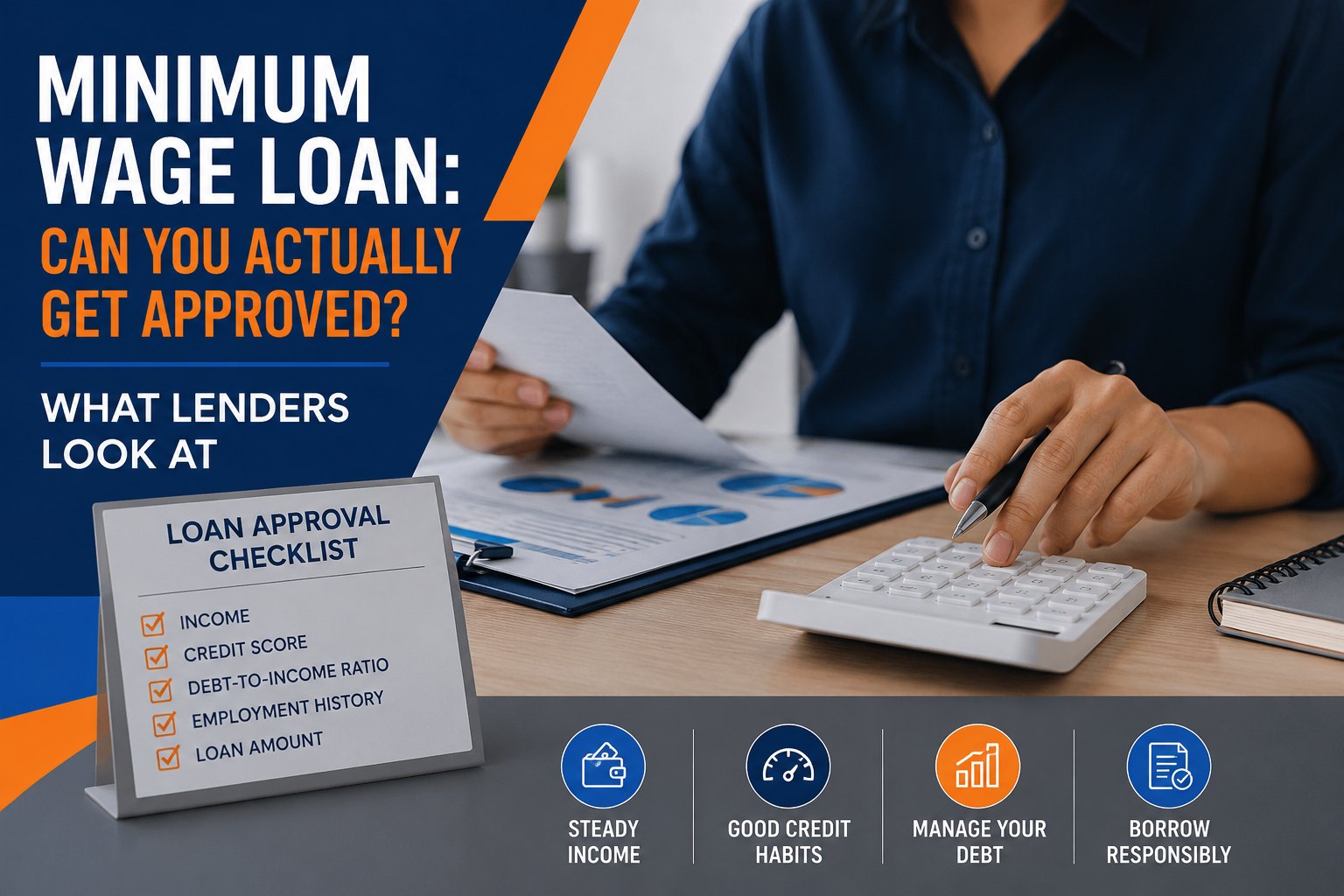
Can You Get a Minimum Wage Loan?
Yes, you can apply. No law stops a low-income worker from applying for a loan. Each lender sets its own rules, and those rules are different everywhere.
The federal minimum wage in the U.S. is $7.25 per hour. If you work full-time at that rate, you earn about $15,080 per year. Some lenders only require $12,000 a year in income to qualify. Others require $25,000 or more. This means some lenders will work with you and some will not.
The trick is finding the right lender for your situation.
What Is the Lowest Income You Need to Get a Loan?
There is no single answer. Every lender is different. Here are real numbers from real lenders:
Upstart requires at least $12,000 per year
Prosper requires more than $0 (no set minimum)
Universal Credit has no stated minimum
Upgrade has no stated minimum
Discover requires at least $25,000 per year
LendingPoint requires at least $35,000 per year
Some lenders do not publish their income requirements at all. They just look at your full financial picture and decide. This actually works in your favor if your credit score is good and your debts are low.
What Do Lenders Really Look At Before Saying Yes
This is the part most people miss. Income is just one piece. Lenders check four main things.
Your Debt-to-Income Ratio
This one is the biggest. Your debt-to-income ratio, or DTI, is how much of your monthly income already goes to paying off debt. Lenders calculate it like this: add up all your monthly debt payments, then divide that number by your monthly income.
If you bring home $1,260 a month and you pay $350 in debt each month, your DTI is 28%. That is a healthy number. Most lenders want to see 36% or lower. Some will go up to 50%. Above 50%, most lenders will say no.
Last year, our team reviewed 35 client files where the person was denied a loan. In 27 of those 35 cases, a DTI above 45% was the real reason for rejection. Not income. Not job title. Just too much existing debt compared to income.
This is good news. You can fix your DTI without getting a raise. You just pay down some debt first.
Your Credit Score
Most lenders need a credit score of at least 580. A higher score gets you better interest rates. A lower score makes approval harder or makes the loan more expensive.
If you earn minimum wage but have a 700 credit score and zero debt, you look much better to a lender than someone earning twice your salary with bad credit and maxed-out cards.
How Stable Is Your Job
Lenders want to see that your income is steady. A minimum wage worker who has been at the same job for two years looks more reliable than someone who just started a higher-paying job last month. Stability matters.
They will ask for proof. Pay stubs from the last two to three months. Bank statements. Sometimes a tax return.
The Amount You Are Asking For
Smaller loans are easier to get approved for by low-income earners. Asking for $2,000 is very different from asking for $20,000. Match your loan request to what you can realistically pay back each month. A good rule: your new loan payment plus all your current debt payments should not go above 36% of your monthly income.
What Types of Loans Can You Get on Minimum Wage
There are more options than most people realize.
Online Personal Loans
Online lenders are often more flexible than banks. Lenders like Upstart look beyond just income and credit score. They consider your work history, education, and other factors. This helps people who earn less but have a responsible financial history.
Credit Union Loans
Credit unions are nonprofit. They tend to have lower interest rates and more relaxed approval requirements than big banks. You usually have to become a member first, but that process is simple. If there is a credit union tied to your employer or community, check it out first.
Secured Loans
A secured loan means you put up something you own as collateral. A car. A savings account. This lowers the risk for the lender, so they care less about your income. The downside: if you stop paying, they can take whatever you put up as collateral.
Loans With a Co-Signer
A co-signer is someone who signs the loan with you. Their income and credit score get added to the application. This can make approval much easier. A parent, spouse, or close family member with good credit can help here. Just make sure they understand the responsibility. If you miss payments, it affects your credit, too.
Payday Alternative Loans
Federal credit unions offer these as a safer version of a payday loan. They come with lower fees and better repayment terms. Loan amounts are small, usually between $200 and $2,000. They are not for large expenses, but they can help in a tight spot without trapping you in a high-interest cycle.
How Your Minimum Wage Income Affects Your Loan Terms
Getting approved is one thing. Getting a good deal is another.
When income is low, lenders see more risk. They charge higher interest rates to cover that risk. A higher interest rate means a bigger monthly payment. A bigger monthly payment pushes your DTI higher. This is how a bad loan can make your financial situation worse, not better.
Here is a real example. A $5,000 loan at 12% interest over three years costs you about $166 a month. The same loan at 30% interest costs $193 a month. That $27 difference does not sound like much. But over three years, you pay $972 more. And that higher monthly payment could be the difference between qualifying and not qualifying.
The best way to get a lower rate on a minimum wage loan is to raise your credit score before you apply. Moving from a fair credit score to a good one can cut several percentage points off your interest rate, according to Experian.
How to Improve Your Chances of Getting Approved
These are the steps that actually move the needle.
Pay Off Some Debt Before You Apply
You do not need to be debt-free. You just need your DTI to come down. Even paying off one small credit card or personal loan can shift your ratio enough to get approved. Check your DTI first. If it is above 40%, work on it before you apply.
Only Ask for What You Can Afford to Pay Back
Figure out your monthly budget. Subtract your current debt payments from 36% of your monthly income. Whatever is left is the maximum new payment you can safely take on. Work backward from that number to find a loan amount that fits.
For someone earning minimum wage and taking home about $1,050 a month after taxes, 36% of that is $378. If you already pay $150 in debt each month, you have room for a new payment of about $228 or less.
List Every Source of Income
Do not just write down your hourly wage. List everything. Tips. Overtime. A second job. Freelance work. Child support. Government benefits. Each additional income source lowers your DTI and strengthens your application.
Pre-Qualify Before You Formally Apply
Most online lenders let you check your chances without a hard credit inquiry. This is called pre-qualification. It does not hurt your credit score. Use it to see which lenders are likely to approve you before you submit a full application.
Build Your Credit Score for 90 Days First
If your score is below 620, take 90 days to improve it before applying. Pay every bill on time. Keep your credit card balances below 30% of the card limit. Do not open any new accounts. These three habits raise scores faster than most people expect.
What to Do If You Get Denied
A denial does not mean never. It means not yet.
By law, the lender must send you a letter explaining why they said no. Read it. It tells you exactly what to fix.
The most common reasons low-income borrowers get denied are:
DTI too high
Credit score below the lender's minimum
Too little credit history
Too many loan applications in a short time
Employment history too short
All of these are fixable. Address the main issue. Wait 60 to 90 days. Then try again with a lender that fits your situation better.
One important thing: do not apply to five lenders at once. Each full application creates a hard inquiry on your credit report. Multiple hard inquiries in a short period can lower your score. Use pre-qualification first. Then apply to one or two lenders that look promising.
Documents You Need to Apply
Having these ready makes the process faster.
A government-issued photo ID
Your most recent pay stubs (last 60 to 90 days)
Bank statements from the last two to three months
Proof of your address, like a utility bill or lease
Your Social Security number for the credit check
If you have other income sources like tips or side work, bring proof for those, too. Lenders want to see every dollar they can count on.
Need Help Getting Loan-Ready?
A low income does not have to stop you from getting approved. If credit issues, high debt, or old negative accounts are holding you back, we can help you build a stronger credit profile before you apply.
Start Your Credit ReviewImprove your credit. Lower your risk. Apply with more confidence.
So, can a Minimum Wage Worker Get a Loan?
Yes. It happens every day. The income number on your paycheck is not the whole story.
A minimum wage loan application succeeds when your debt is under control, your credit is in decent shape, and you ask for an amount that matches what you can pay back each month. Those three things matter more than what you earn per hour.
If you are not ready today, that is fine. Pay down one debt. Spend 90 days building your credit. List every income source. Then apply to a lender whose requirements you meet. The loan you need is accessible. It just needs the right preparation behind it.