

A credit specialist helps people understand what is helping or hurting their credit. That can include reviewing credit reports, explaining score factors, identifying inaccurate reporting, and building a plan to improve a borrower’s overall credit profile.
Many people confuse a credit specialist with a loan officer, credit attorney or debt counsellor.
They are related, but not identical roles.
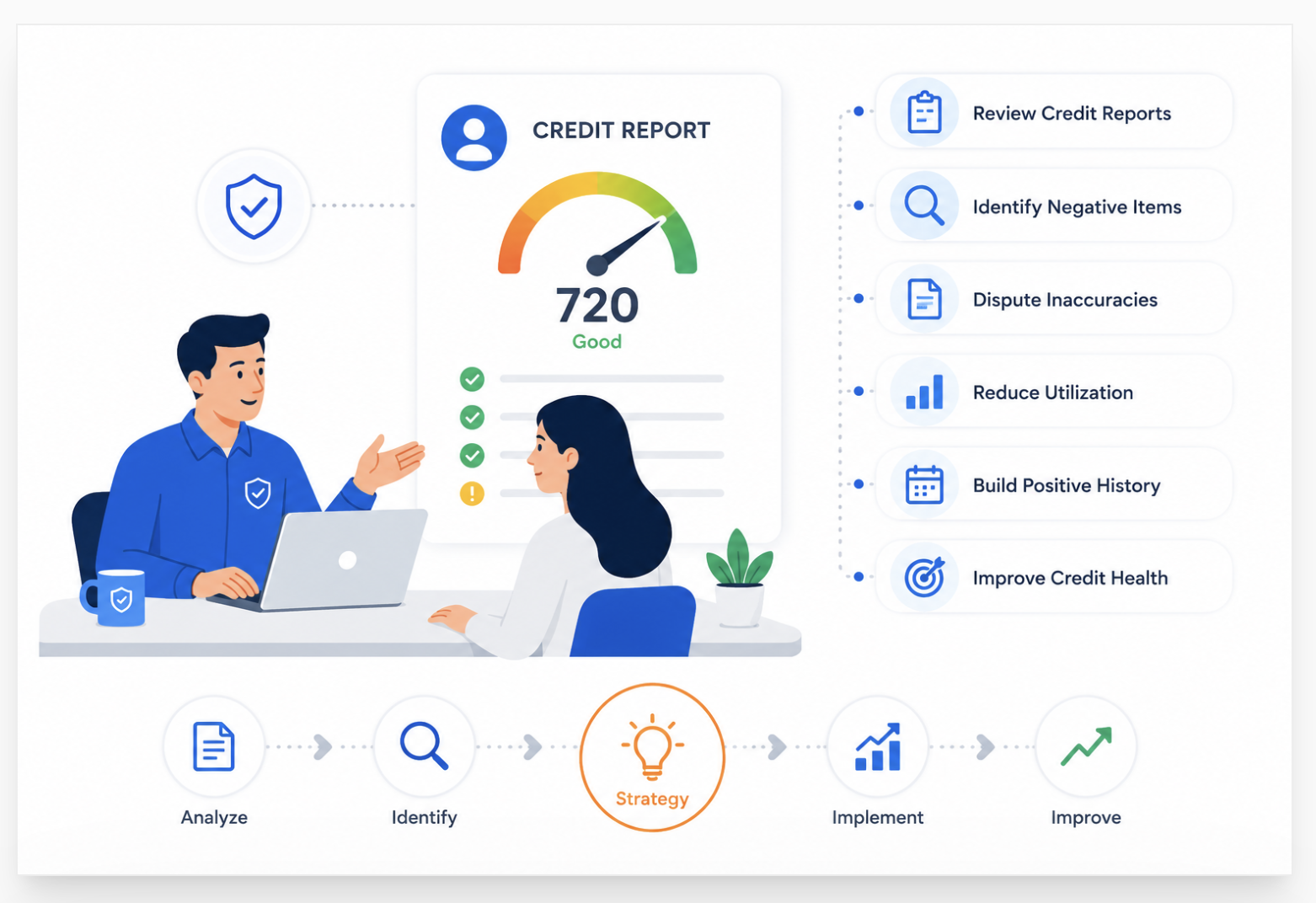
A credit specialist is focused on credit analysis and credit improvement strategy. Helping consumers understand what lenders see and what actions may strengthen approval odds over time.
The biggest value is clarity. Most consumers know their score, but not why it is that score.
A credit specialist helps connect the dots between the number and the report behind it.
What Does a Credit Specialist Do?
A credit specialist evaluates a consumer’s credit profile and identifies opportunities for improvement.
Common responsibilities include:
✅ Reviewing credit reports.
✅ Explaining negative accounts.
✅ Identifying reporting errors.
✅ Helping dispute inaccurate information.
✅ Suggesting utilization reduction strategies.
✅ Explaining payment history impact.
✅ Helping build positive credit habits.
✅ Preparing borrowers for lending approval.
In simple terms:
They help people understand their credit and make smarter decisions to improve it.
What Does a Credit Specialist Do
A credit specialist looks at your full credit picture.
Not just the score. The report behind it.
They identify what is working, what is hurting, and what can be changed. Then they build a step-by-step plan based on your specific situation.
Common responsibilities include:
- Reviewing all three bureau credit reports side by side
- Explaining what each negative entry is and how long it stays
- Identifying inaccurate or outdated information that does not belong
- Helping initiate disputes on entries that violate FCRA reporting rules
- Recommending utilization reductions that can raise scores within one billing cycle
- Explaining the difference between FICO models and which one your lender will use
- Preparing borrowers for a specific loan application or underwriting review
- Showing what positive credit behavior looks like and how to build it over time
The simplest version of what they do: they help you understand your credit, then show you what to actually do about it.
Most consumers score on one bureau but lenders often pull from all three. Understanding what lenders actually evaluate when they pull your file is part of what a credit specialist helps clarify before you apply for anything.
Who Should Work With a Credit Specialist
Not everyone needs a credit specialist. But some situations make expert review genuinely worth it.
The common thread: borrowers who know something is off but cannot identify what.
A credit specialist helps turn "I don't know why my score is low" into "here are the three specific things holding your score down and here is what we do about each one."
Can a Credit Specialist Help Improve Credit
Yes. But the specific mechanism matters.
A credit specialist does not wave a wand and raise a number. They identify what is suppressing the score and tell you what to fix. The score improves when those specific things actually get fixed.
Here is how improvement typically works through credit specialist guidance:
Dispute removal of inaccurate entries. One wrong collection, one incorrect late payment date, or one account that belongs to someone else can suppress a score by 30-80 points. Removing it through a successful dispute produces immediate score improvement. As challenging inaccurate reporting through the right process demonstrates, the FCRA gives consumers legal rights to dispute every entry on their report , and bureau investigations must complete within 30 days.
Utilization reduction strategy. High credit card balances suppress scores through the utilization factor, which controls 30% of a FICO score. A specialist identifies which cards are dragging utilization and shows the order of paydown that moves the score fastest. Paying a card below 10% before the statement close date , not the due date , can produce 20-40 points of improvement in a single billing cycle.
Positive account building. A thin credit file with few accounts scores differently than a file with a 10-year history of on-time payments. A credit specialist identifies whether the problem is negative entries, low activity, or both , and builds a plan that adds positive history while addressing the negative side simultaneously.
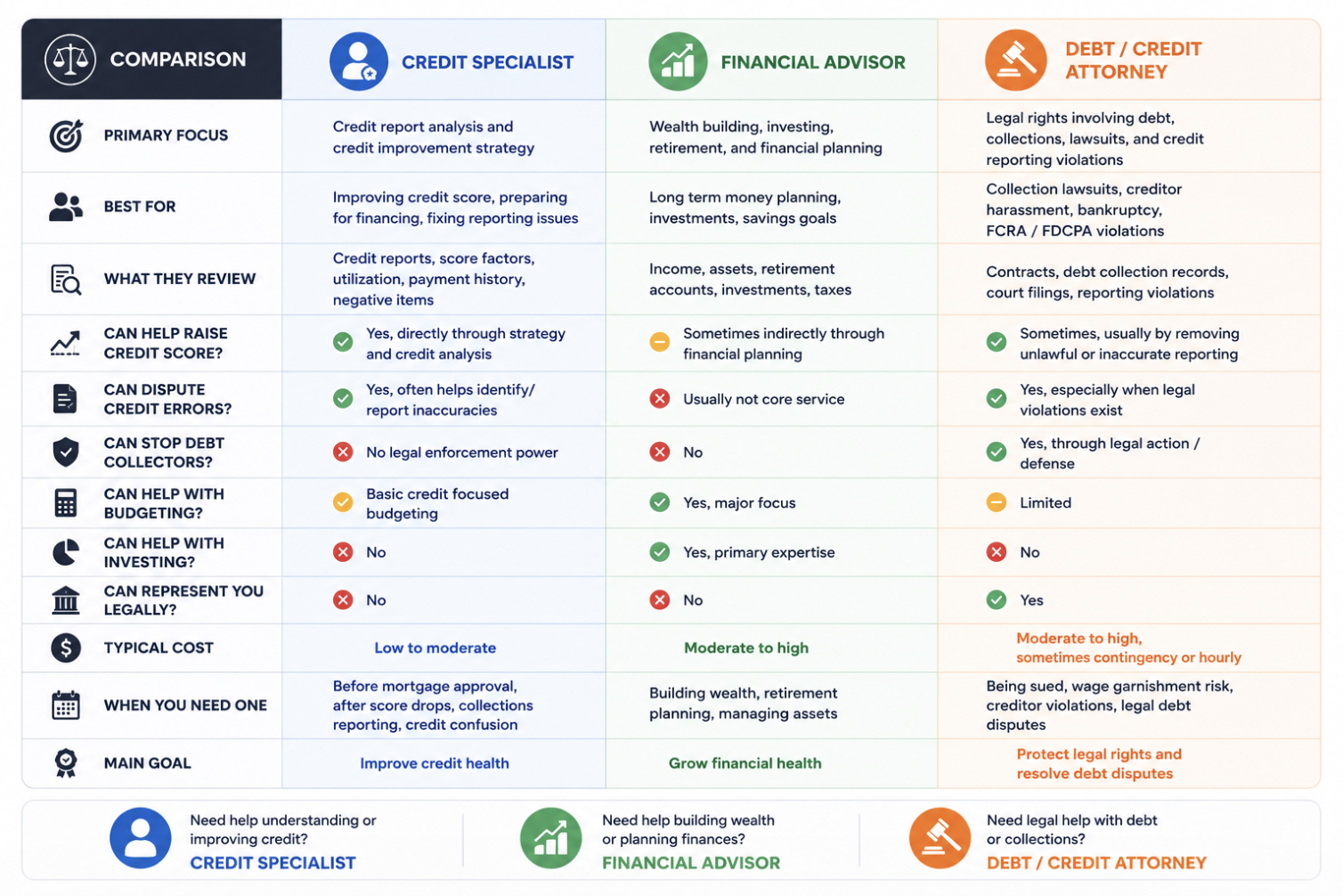
Credit Specialist vs Credit Counselor
These titles get mixed up constantly. They are different roles with different scopes.
| Role | Primary Focus | What They Do |
|---|---|---|
| Credit Specialist | Credit profile analysis and improvement | Reviews reports, identifies suppression factors, builds a score improvement plan, may assist with disputes |
| Credit Counselor | Budgeting, debt management, repayment planning | Works through nonprofit agencies, builds budgets, sets up debt management plans, negotiates with creditors on interest rates |
| Credit Repair Company | Formal dispute and inaccurate entry removal | Actively disputes negative entries on your behalf, manages bureau correspondence, registered under CROA |
The key distinction: a credit counselor helps you manage money and debt. A credit specialist helps you understand and improve what lenders see when they pull your report. They solve different problems.
If you carry significant debt and need a structured repayment plan, a nonprofit credit counselor may be the right starting point. If your problem is a low score driven by inaccurate entries, high utilization, or a thin file, a credit specialist is a better fit.
How to Choose a Legitimate Credit Specialist
The credit improvement space contains both legitimate professionals and outright scams. Here is what to look for and what to avoid.
Signs of a legitimate credit specialist
- Registered under the Credit Repair Organizations Act (CROA) if they offer dispute services
- Provides a written contract before any payment changes hands
- Explains what they can and cannot do clearly , and in writing
- Does not guarantee a specific score increase or outcome
- Does not ask you to dispute accurate negative information
- Has verifiable reviews, a real address, and a business history you can confirm
Red flags that signal a scam
- Guarantees a specific number of points or a specific score within a specific timeframe
- Asks for full payment upfront before any work begins
- Suggests creating a new credit identity or using a different Social Security number
- Tells you to dispute all negative items regardless of accuracy
- Cannot produce a written contract or service agreement
- Has no verifiable business registration or physical address
The Federal Trade Commission provides consumer guidance on legitimate credit improvement at consumer.ftc.gov, including a clear summary of what credit repair organizations can and cannot do under federal law. The CFPB's credit reports and scores resource center covers your rights when reviewing and disputing your own credit file.
As NerdWallet's credit repair company guide notes, the most important filter when choosing a credit specialist or repair company is whether they explain the process clearly before asking for money. Legitimate professionals welcome questions about their process, timeline, and what happens if results do not materialize.
What is a credit specialist?
A credit specialist helps consumers understand and improve their credit profile. They review credit reports from all three bureaus, identify what is suppressing the score, explain negative entries, and build a plan for improvement. Some also manage the formal dispute process for inaccurate entries. The focus is connecting what you see on your report to what lenders actually use when making credit decisions.
Can a credit specialist raise my credit score?
A credit specialist identifies the specific actions that will raise your score , removing inaccurate entries, reducing utilization, adding positive accounts , and guides you through each one in the right order. The score improvement comes from the actions taken, not from the specialist alone. For borrowers whose scores are suppressed by inaccurate entries, the improvement can be significant and rapid. For borrowers with only accurate negative history, the timeline is longer but the strategy is still clear.
Is a credit specialist the same as credit repair?
Not always. A credit specialist analyzes the report and builds a strategy. A credit repair company formally disputes inaccurate entries on your behalf. Some professionals do both. Some do only one. Ask specifically whether dispute management is included in the service before signing any agreement. A credit specialist who only analyzes and advises is not the same as one who actively manages the dispute process with the bureaus and furnishers.
How much does a credit specialist cost?
Pricing varies widely. Some specialists charge a flat fee for a one-time report review and consultation. Others charge a monthly fee for ongoing dispute management and monitoring. Under CROA, credit repair organizations cannot charge before completing services. Be cautious of any specialist who requires full payment upfront before reviewing a single document. Ask for an itemized service agreement that explains exactly what is included and how fees are structured before any work begins.
Start With a Free 3-Bureau Audit
Before working with any credit specialist, know what all three bureaus currently report on your file. A free 3-bureau audit shows every entry across Equifax, Experian, and TransUnion so you walk into any credit conversation with the full picture already in hand.
Get My Free 3-Bureau Audit → Secure · 2 minutes · No credit card required-
How Lenders Read Your Credit Report A credit specialist helps you understand your file before a lender pulls it. This covers what underwriters actually look for , payment history patterns, utilization signals, derogatory account age , and why the same score reads differently depending on the full file behind it.
-
FICO Score vs Credit Score , What Is the Real Difference A credit specialist identifies which scoring model your lender will use and why the score on your free app may differ by 20-50 points from what the lender sees. This covers the model versions lenders use for mortgages, auto loans, and credit cards, and how to find the score that actually matters for your next application.
-
The 609 Letter , How It Works and When to Use It Disputing inaccurate entries is the most impactful work a credit specialist guides. This covers the 609 letter process, what the FCRA requires bureaus to do in response, and the exact documentation that produces successful removals on inaccurate collection accounts, wrong dates, and misreported balances.