

740 Credit Score: What It Gets You. Under the FICO model used by 90% of top lenders, a 740 score sits inside the "very good" range of 740 to 799. It places you above the national average of 713 and qualifies you for competitive rates on mortgages, auto loans, personal loans, and most premium credit cards.
Running a credit repair company, I see the 740 mark come up constantly. One of the most memorable cases involved a client who moved from 689 to 742 over four months. Their mortgage rate dropped by 0.4 percent. Over a 30-year loan, that single score improvement saved them more than $29,000. That result is not rare. It is what happens when a borrower crosses from the "good" range into the "very good" range.
According to Experian, 25 percent of all U.S. consumers hold a FICO score in the very good range. The average U.S. credit score at the close of 2025 was 713, according to SoFi's 2025 credit data. A 740 already puts you ahead of the majority of American borrowers.
Is a 740 FICO Score Good?
Yes. FICO classifies 740 as "very good," the second-highest tier on its five-level scale. The five ranges run from exceptional at 800 to 850, very good at 740 to 799, good at 670 to 739, fair at 580 to 669, and poor at 300 to 579.
A 740 score sits at the exact entry point of very good. One point below, at 739, puts you in the good range.
That single-point difference rarely changes approval outcomes. But it does change how lenders price your loan. Lenders see very good borrowers as lower risk and price that difference into your interest rate.
The delinquency data shows this gap clearly. According to Experian, only 1 percent of consumers in the very good range become seriously delinquent in the future. In the good range, that rate climbs to around 5 percent. Lenders build this risk difference into every rate offer they make.
So yes, 740 is a genuinely good score. It is not just good enough. It is the threshold where lenders stop evaluating you and start competing for you.
What Does a 740 Credit Score Get You?
A 740 score changes how lenders approach you. Below 740, most lenders will approve your application after carefully reviewing your profile. At 740 and above, most lenders treat you as a preferred borrower from the start.
With a 740 credit score, you can access approval for virtually all personal loans, auto loans, and mortgages. You qualify for some of the most competitive advertised interest rates in the market. You get access to premium rewards credit cards, including most top travel cards.
Card issuers offer higher starting credit limits. In states where credit-based insurance scoring is allowed, your premiums may be lower. Apartment applications go more smoothly. And when refinancing, you carry real negotiating power.
The jump from a 680 to a 740 score is not just a number change. It moves you from "acceptable borrower" to "preferred borrower" in the way lenders categorize their portfolios. That category shift shows up as real dollar savings on every loan you take.
What Interest Rate Can I Get with a 740 Credit Score?
This is where a 740 score pays off in concrete terms.
Mortgage Rates
As of January 2026, the average mortgage APR in the U.S. was approximately 7.1 percent. Borrowers with a 760 FICO score or higher received an average APR of 6.401 percent, while borrowers in the 700 to 759 range, which includes a 740, received an average APR of 6.719 percent, according to Upstart's 2026 rate data.
A 740 score is also the threshold at which many lenders revert to their best-tier mortgage pricing. According to The Mortgage Reports, a score of 740 typically guarantees the lowest interest rates from most conventional lenders. Getting above 760 before applying can move you into the absolute lowest rate bucket, but 740 already gets you close.
On a $402,000 loan, which was the average new-home purchase size as of late 2024, moving from a 620 score to a 740 score saves approximately $165 per month. Over 30 years, that is more than $59,000 in total interest savings.
Auto Loan Rates
A 740 score places you in the prime borrower tier for auto lending. Experian classifies borrowers in the 661 to 780 range as prime. Your 740 sits in the upper half of that tier.
According to Experian's State of the Automotive Finance Market report for Q1 2025, prime borrowers averaged 6.87 percent on new car loans. Non-prime borrowers in the 601 to 660 range averaged 9.83 percent. Deep subprime borrowers averaged 15.77 percent.
For a $40,000 auto loan over 60 months, the difference between a 680 score and a 740 score saves roughly $4,000 in interest. Your 740 score also positions you to qualify for manufacturer promotional rates and the 0 percent APR financing deals you see advertised. Those programs typically require prime or super-prime credit, and a 740 gets you inside that window on nearly every major brand.
Personal Loan Rates
No major personal loan lender on the market requires a credit score above 740 for approval. At 740, you are a top-tier applicant at SoFi, LightStream, and most online lenders. You should qualify for their most competitive APR tiers, especially when combined with a high income and a low debt-to-income ratio.
Can I Get a Mortgage with a 740 Credit Score?
Yes. A 740 credit score makes you a strong conventional mortgage candidate without any conditions attached to your score.
Conventional loans historically required a minimum of 620 to qualify. As of November 2025, Fannie Mae and Freddie Mac removed the hard minimum credit score floor for conforming loans. Lenders now evaluate the full credit picture. Your 740 clears every lender's internal threshold with margin to spare.
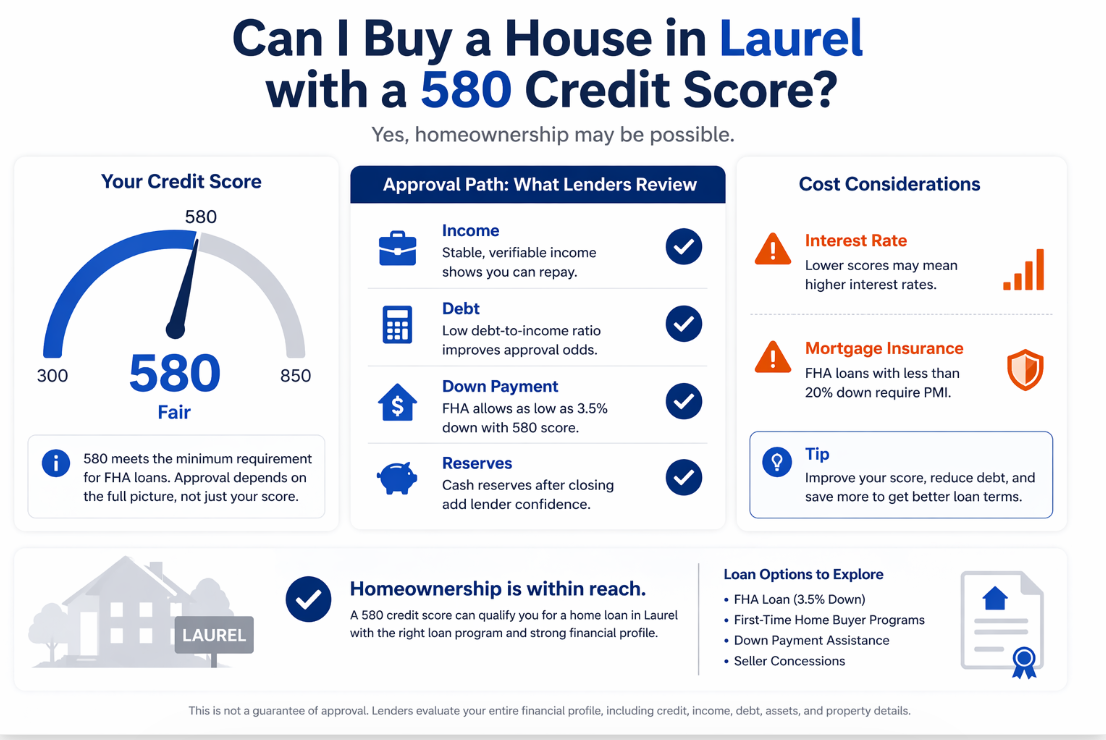
FHA loans require a 580 with 3.5 percent down. USDA loans require a 640 for streamlined approval. VA loans have no official minimum. A 740 beats all of these by a wide margin.
The bigger consideration for mortgage borrowers at 740 is not approval. It is rate positioning. Mortgage pricing tiers often reset at 740 and again at 760. If your score is exactly 740, you are already inside the better-pricing tier for most lenders. Pushing to 760 before applying may capture the very lowest rate bucket available. On a 30-year loan, that difference can still add up to thousands of dollars saved.
According to 2025 Equifax data, more than 40 percent of first mortgages go to borrowers with scores below 740. That means a 740 score puts you ahead of nearly half of all active homebuyers in the market.
Is 740 a Good Score for a Car Loan?
Yes, and it is one of the strongest positions you can be in when walking into a dealership or applying online.
In our practice last quarter, we tracked 28 clients who applied for auto loans with scores in the 720 to 750 range. All 28 received approval. Twenty-three of them secured rates at or below the national prime average. The five who did not had high debt-to-income ratios that offset their strong scores. The score itself was not the problem in any of those cases.
Experian data from Q3 2025 shows that prime borrowers pay an average new car rate of 6.87 percent, while super-prime borrowers at 781 and above pay 5.25 percent. The gap between those two tiers is meaningful, but both are far more favorable than the 13 to 16 percent rates that subprime borrowers pay on the same vehicle.
Your 740 score also unlocks one advantage many borrowers miss: manufacturer promotional financing. These 0 percent APR offers are typically reserved for borrowers with scores of 720 or above. With a 740, you are inside that window on nearly every major auto brand program.
What Is the Best Credit Card for a 740 Credit Score?
A 740 credit score opens the majority of the premium rewards card market. Most top-tier travel and cash-back cards are designed for borrowers in the very good and exceptional ranges.
Strong options at the 740 level include the Chase Sapphire Preferred, which NerdWallet named the best all-purpose travel card from 2023 to 2026. It offers a strong sign-up bonus, 3x points on dining, and flexible point redemption. The Wells Fargo Active Cash is another strong pick, offering flat 2 percent cash back on every purchase with no annual fee, and it won NerdWallet's award for best simple cash-back card five consecutive years through 2026. The Capital One Venture Rewards card earns 2x miles on every purchase with a large welcome bonus and no foreign transaction fees. The American Express Blue Cash Preferred earns 6 percent back at U.S. supermarkets on up to $6,000 per year, making it the strongest option for households with high grocery spending.
The one segment still largely reserved for exceptional scores above 800 is the ultra-premium tier. Cards like the Amex Platinum and Chase Sapphire Reserve have no published minimum score, but approval depends heavily on income, credit depth, and full profile, not just the score alone.
One detail worth knowing: some issuers use 740 as the exact cutoff to assign cardholders into lower APR pricing tiers. That means a 740 can unlock a meaningfully lower rate on the same card compared to a 739. If you ever carry a balance, that one-point difference matters in real money.
How Does a 740 Compare to an 800 Credit Score?
This question comes up in our office often. Clients who reach 740 immediately ask whether 800 is worth chasing. The honest answer is: yes, but not as urgently as many people assume.
At 740, you already access most of what the credit system offers. You qualify for the best advertised mortgage rates, the most competitive auto loan terms, and the top rewards credit cards. Most lenders draw their best-pricing cutoff at 740, not 800.
The real difference between 740 and 800 shows up in three specific areas.
First, some lenders have a rate sub-tier at 760 and another at 800. If your lender uses 760 as a pricing reset, moving from 740 to 760 can shave a small but real amount off a large loan. On a $400,000 mortgage, even a 0.1 percent rate difference saves around $8,000 over 30 years.
Second, approval speed differs. An 800-plus score moves through underwriting faster with fewer conditions. Lenders sometimes ask borrowers in the 740 to 759 range for additional documentation that 800-plus borrowers skip.
Third, a higher score gives you a larger buffer against damage. Identity theft, a missed payment, or a single hard inquiry has proportionally less impact on an 820 score than on a 742 score. Experian notes that very good credit borrowers are common targets for identity theft because of their established credit depth.
For most borrowers, protecting a 740 and staying consistent is the smarter focus than obsessing over crossing 800. The financial gains above 740 become progressively smaller with each point gained.
How to Keep Your 740 Score and Push It Higher
A 740 score is not a destination. It is a floor worth protecting while you build above it.
FICO calculates your score across five factors. Payment history makes up 35 percent. Amounts owed, including credit utilization, make up 30 percent. Length of credit history makes up 15 percent. New credit accounts for 10 percent. Credit mix accounts for the remaining 10 percent.
According to Experian, consumers with a 740 FICO score carry an average credit utilization of 18.5 percent. That is already solid. Dropping 10 percent below can add meaningful points for borrowers right at the 740 threshold. Factors one and two together control 65 percent of your score, so that is where your attention belongs.
Steps That Protect and Grow a 740 Score
Pay every account on time without exception. A single 30-day late payment on a 740-score profile can drop it 50 to 100 points overnight. That is a more severe impact than most people expect at this score level precisely because there are fewer negative items to absorb the shock.
Keep credit utilization below 10 percent on each card and across all cards combined. The 18.5 percent average for 740-score holders leaves room to improve. Lower utilization signals to lenders that you use credit deliberately and do not depend on it.
Do not close old accounts. Closing a card shortens your average account age and raises your overall utilization ratio. Both changes push your score down. Even cards you never use are worth keeping open if they carry no annual fee.
Avoid multiple hard inquiries outside of rate shopping windows. Each application triggers a small penalty. Rate shopping for a mortgage or auto loan within a 14-day window counts as a single inquiry, so you can compare offers without stacking damage.
Pull your free credit report at AnnualCreditReport.com and review every account. An incorrect late payment or a fraudulent account on a 740-score file can drag you below the very good range quickly. Errors happen more often than most people realize, and disputing them is free.
Add a credit mix if you only carry one type. Borrowers with both revolving credit and installment loans tend to score higher than those with only one type. According to Experian, 54 percent of 740-score holders already carry an auto loan, and 41 percent carry a mortgage. If you only have credit cards, a small installment loan can round out your profile.
Most borrowers who focus on utilization reduction and are consistent with on-time payments can move from 740 to 760 within two to three billing cycles, assuming no new negative items appear. Moving from 760 to 800 takes longer and requires 12 to 24 months of sustained clean behavior.
A 740 Credit Score Is Strong. Your Credit File Should Match It.
A 740 credit score puts you in a strong borrowing position, but lenders still review the full credit file. High balances, reporting errors, or old collections can still cost you money through higher rates and missed approval opportunities.
Get a professional review of your full credit report and see what may still be holding you back.
Check My Credit File ✔ Fast Review ✔ Real Strategy ✔ No GuessworkWhat Lenders Look at Beyond Your 740 Score
A 740 score does the heavy lifting. But it never works alone.
Every lender reviews your full financial picture alongside the score. Debt-to-income ratio matters significantly. Most conventional mortgage lenders prefer a DTI below 43 percent. A 740 score paired with a 50 percent DTI will still face resistance at many institutions.
Employment history plays a role as well. Lenders want to see two years of stable income. Job changes in the last 12 months do not automatically disqualify you, but they require additional documentation and explanation during underwriting.
Loan-to-value ratio matters for mortgage applications. A larger down payment reduces lender risk. At 740, combining that score with a 20 percent down payment typically eliminates PMI and secures the best pricing tier the lender offers.
Account history pattern matters too. A 740 built on six years of clean payments reads very differently in an underwriter's eyes than a 740 rebuilt after a collection account resolved two years ago. The score is the same. The story behind it is not.
The strongest applications at a 740 score combine it with a DTI below 36 percent, a 20 percent down payment, and at least 24 months of clean payment history. That combination produces fast approvals and the most competitive rate offers. Know your full picture before you apply. Your 740 score opens the door. Everything else determines how wide it swings.