
If a credit bureau investigated the wrong account, your dispute result does not resolve the error you reported. You disputed a collection or late payment, waited for an answer, and received a letter referencing a different account. Now the original error remains, and you need to establish what the bureau actually reviewed.
The Consumer Financial Protection Bureau states that credit bureaus generally have 30 days to investigate disputes, with up to 45 days in certain circumstances. That makes checking the result against your original dispute essential. A completed investigation and a corrected credit report are two different outcomes.
Start by comparing the creditor name, account number, and disputed information across your original letter, the bureau’s response, and your updated report. An unchanged account alone does not prove that the bureau reviewed the wrong one. A mismatch in the account details provides a clearer reason to question the result.
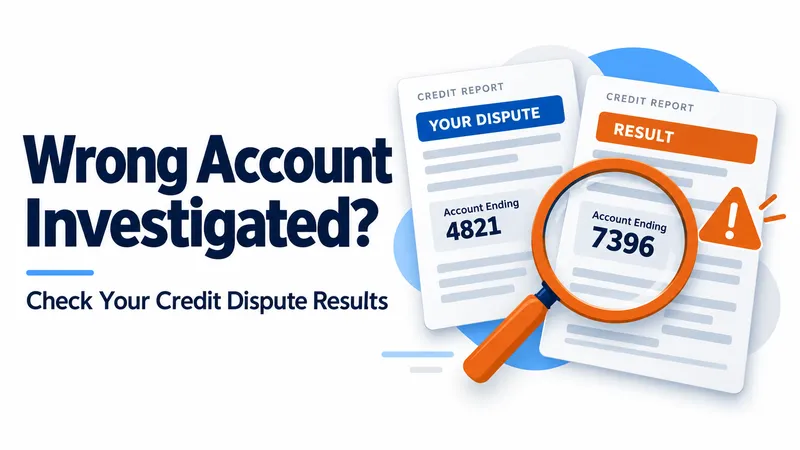
What Does It Mean When a Credit Bureau Investigated the Wrong Account?
It means the bureau matched your dispute letter to a different tradeline than the one you reported, conducted a reinvestigation on that wrong account, and closed the case without correcting the error you identified. The 30-day window expires, the original error stays on your report, and you have to refile with clearer account details to restart the process.
When you file a credit dispute, the bureau is supposed to identify the specific account you flagged, contact the furnisher, and verify whether the information is accurate. That sounds straightforward. In practice, a bureau can match your dispute to the wrong account entirely, run through the reinvestigation steps on that unrelated account, and then send you a result letter that looks complete.
You open the letter and it says "verified as accurate" or "no changes." But the account you actually disputed is untouched. The error is still there. The 30-day clock has run out. And unless you know what happened, you might assume the bureau reviewed your account and found nothing wrong.
This is not a rare edge case. The CFPB filed suit against Experian in January 2025 (case 8:25-cv-00024, U.S. District Court, Central District of California) alleging that the bureau conducted sham investigations by using weak dispute intake processes, relying on furnisher responses without independent verification, and returning confusing results that left consumers no better off than before they filed. A federal judge denied Experian's motion to dismiss in early 2026, allowing the case to proceed.
Why Does a Credit Bureau Investigate the Wrong Account?
Bureaus use automated systems called e-OSCAR to route disputes to furnishers. If your dispute letter lacks a specific account number, the system can pull a similar-looking tradeline, send the dispute to that furnisher, and close the case once the furnisher responds. Common causes include vague dispute letters, similar account names, and duplicate tradelines from the same creditor.
All three major bureaus use an electronic system called e-OSCAR to process most disputes. Your dispute letter gets converted into a two-digit dispute code and sent to the furnisher the bureau identifies as the match. If the bureau misidentifies the account, the dispute goes to the wrong furnisher, the furnisher sees nothing wrong with its own account, and the case closes.
Common Reasons a Bureau Matches the Wrong Account
A vague dispute letter is the most common trigger. If your letter says "the Capital One account is wrong" without including the account number, open date, or specific error, the bureau's system can pull any Capital One account in your file. If you have two, it may pick the wrong one.
Duplicate tradelines create the same problem. After a balance transfer, a lender sale, or a closed lender credit report error, you can end up with two entries for the same underlying account. The bureau's system may route the dispute to one while you intended the other.
Partial account numbers also cause mismatches. Some letters show only the last four digits. If multiple accounts in your file share those last four digits, the bureau can select any of them.
Your letter includes the full account number, open date, creditor name, and the specific error. The bureau's system routes the dispute to the correct furnisher. The furnisher reviews that exact account. The case closes with a real result on the right tradeline.
Your letter names the creditor but not the account. The bureau pulls a similar account, sends the dispute code to that furnisher, and closes the case once the furnisher responds. The account you meant to dispute stays unchanged and the 30-day window has now closed.
What Are My Rights Under the FCRA When This Happens?
FCRA Section 611 gives you the right to request the method of verification in writing within five business days of the bureau's result. You can also refile a new dispute with more identifying detail, add a 100-word explanatory statement to your credit file, and escalate to the CFPB, your state attorney general, or a consumer protection attorney if the bureau continues to fail its reinvestigation duty.
Most consumers who receive a wrong-account result do not know they can ask exactly how the reinvestigation was conducted. FCRA Section 611 gives you that right in plain terms.
Right to Request Method of Verification
Within five business days of receiving the bureau's reinvestigation result, you can send a written request asking for the method of verification used. The bureau must tell you what it did: which furnisher it contacted, what information was provided, and how the dispute was routed. This creates a paper trail showing the bureau investigated the wrong account, which is critical if you escalate later.
Right to Refile the Dispute
A closed case does not permanently end your options. You can file a new dispute on the correct account. The 30-day clock restarts. The key is making the new dispute specific enough that misidentification is not possible. The next section covers exactly how to do that.
Right to Add an Explanatory Statement
If the bureau continues to report the item after multiple disputes, FCRA Section 611 lets you add a statement of up to 100 words to your credit file explaining the situation. Any creditor who pulls your report will see that statement. It does not remove the entry, but it gives future lenders context when making decisions.
A credit bureau's duty is not just to forward your dispute and wait for the furnisher's response. FCRA Section 611 requires the bureau to conduct a reasonable reinvestigation of the specific information you dispute. Routing the dispute to the wrong furnisher, or accepting a furnisher's verification without any independent review, does not meet that standard. The CFPB's January 2025 lawsuit against Experian turned on exactly this point.
How Do I Refile a Dispute When the Wrong Account Was Investigated?
Send a new certified-mail dispute letter that identifies the account by full account number, open date, creditor name and address, and the specific error you are disputing. Attach the original result letter showing the wrong account was investigated. Include any supporting documents such as statements or payment confirmations. Label the envelope and letter clearly with the exact account ending so there is no room for misidentification.
Refiling after a wrong-account investigation is about precision. The goal is to make it impossible for the bureau's system to select any account other than the one you mean.
1. Pull Your Full Credit Report First
Get a fresh copy of your report from the bureau that returned the wrong result. Note the exact tradeline you want disputed: the account name exactly as it appears, the full account number or as much of it as the report shows, the open date, the reported balance, and the creditor's address listed in the report.
2. Write a Specific Dispute Letter
Your letter should include your full legal name, address, and Social Security number. Then identify the disputed account precisely: "I am disputing the following account: [Creditor Name], Account ending in [XXXX], opened [Month Year], reported balance [Amount]." State the specific error. Do not use general language like "this account is wrong." Instead say: "This account is reporting a 30-day late payment in March 2024. I made that payment on March 15, 2024, as shown in the attached bank statement."
3. Include the Previous Result Letter
Attach a copy of the result letter from the earlier investigation. Highlight or annotate the section showing which account was actually reviewed. This tells the bureau explicitly that it investigated the wrong account last time and must now review the correct one.
4. Attach Supporting Documents
Bank statements showing on-time payments, letters from the creditor confirming an error, or any document that ties the specific account to the specific error strengthens the dispute. Keep copies of everything you send.
5. Send by Certified Mail With Return Receipt
Online dispute portals give bureaus more latitude to close cases quickly. Certified mail creates a dated paper trail, proves delivery, and establishes the official start of the 30-day window. Address each bureau's dispute center separately. Do not combine disputes for multiple bureaus in one letter.
What If the Bureau Investigated the Wrong Account Again?
If a second dispute produces another wrong-account result, escalate. File a CFPB complaint, contact your state attorney general, and consult a consumer protection attorney who handles FCRA cases. Repeated failure to investigate the specific account you identified may constitute willful noncompliance under FCRA Sections 616 and 617, which carry actual damages, statutory damages, and attorney fees.
A second wrong-account result after a specific, well-documented dispute is a signal that the bureau is not conducting a genuine reinvestigation. At that point, the dispute process alone is unlikely to solve the problem. You need to apply external pressure.
File a CFPB Complaint
The Consumer Financial Protection Bureau accepts credit reporting complaints at consumerfinance.gov/complaint. Bureaus are required to respond to CFPB complaints within 15 days. A complaint creates a formal, public record of the bureau's failure and often produces a more careful review than a third dispute letter would. The CFPB's January 2025 lawsuit against Experian shows that regulators are watching how bureaus handle reinvestigations specifically.
If your credit report still shows a wrong result after a dispute and a CFPB complaint, the patterns described in what to do when a credit report is still wrong after a lender admits an error apply here too. The escalation path is the same.
Contact Your State Attorney General
Many state attorneys general have consumer protection divisions that accept credit reporting complaints. Some states have enacted their own credit reporting laws that go further than the federal FCRA. A complaint to the AG in your state creates another layer of regulatory attention.
Consult a Consumer Protection Attorney
FCRA Sections 616 and 617 let consumers sue credit bureaus directly for failing to conduct a reasonable reinvestigation. If the bureau's repeated wrong-account results caused you actual harm, such as a loan denial, a higher interest rate, or a lost rental application, you may be able to recover actual damages, statutory damages between $100 and $1,000 per violation, and attorney fees. Many consumer protection attorneys take FCRA cases on contingency, meaning you pay nothing unless you win.
How Do I Know Which Account Was Actually Investigated?
Request the method of verification in writing within five business days of receiving the bureau's result. The bureau must disclose which furnisher it contacted and what information that furnisher provided. Compare that to the account you actually disputed. If the furnisher name or account details do not match, the wrong account was investigated.
The result letter the bureau sends you will say something like "we have researched the credit account. The results are: account verified." That language tells you very little about what was actually reviewed.
Your tool is the method of verification request. Send it by certified mail within five business days of receiving the result. Ask specifically: which account was investigated, which furnisher was contacted, and what information that furnisher provided. The bureau's response will show you exactly which tradeline was pulled.
Read the Result Letter Carefully
Some result letters include a reference number or account identifier. Compare that reference to the account number you disputed. If they do not match, you have written evidence of the wrong-account error to include in your refile and your CFPB complaint.
Check Your Report After Every Result
Pull a fresh copy of your report within a few days of receiving any result letter. If the account you disputed is unchanged, but the result says "verified," a wrong-account investigation is the most likely explanation. Document this by saving both the result letter and the current report together.
A wrong-account investigation closes the 30-day window without fixing your error. Request the method of verification to confirm which account was actually reviewed. Refile with the full account number, open date, creditor address, and specific error. Attach the prior result letter. Send everything by certified mail. If a second wrong result comes back, file a CFPB complaint, escalate to your state attorney general, and consult a consumer protection attorney. Repeated wrong-account results after specific, documented disputes may give you grounds to sue under FCRA Sections 616 and 617.
What Is the Fastest Way to Fix the Account After a Wrong Investigation?
The fastest path is a precise refile sent by certified mail with the full account number, specific error, prior result letter, and supporting documents all in one envelope. Pair the refile with a simultaneous CFPB complaint. Bureaus that receive a CFPB complaint alongside a dispute tend to route the case to a human reviewer rather than the automated e-OSCAR system, which reduces the chance of another misidentification.
Sending a CFPB complaint at the same time as your refile, rather than waiting to see whether the refile succeeds, applies two different types of pressure at once. The bureau's compliance team monitors CFPB complaint volume. When a complaint arrives while a reinvestigation is open, it often gets assigned to a specialist rather than a dispute-code handler.
Do not send the same dispute letter to all three bureaus at once if the error only appears on one report. Disputes at other bureaus where the account is accurate can complicate the paper trail. Focus on the bureau that investigated the wrong account first. If the same error appears on a second bureau's report, handle it separately once the first is resolved.
- Get a fresh copy of your report and document the exact tradeline details before refiling.
- Write a new dispute letter that identifies the account by full number, open date, and creditor address.
- Attach the prior result letter showing which account was actually investigated.
- Send by certified mail to the bureau's dispute center and keep your delivery confirmation.
- File a CFPB complaint the same day, referencing the prior wrong-account result.
- Request the method of verification if the second result also comes back "verified."
- Escalate to your state AG or a consumer protection attorney if two reinvestigations fail.
If the item in dispute stems from a recalled collection still appearing on your credit report, the same step-by-step escalation applies, but the furnisher dispute path is slightly different because two separate furnishers may be reporting the same underlying debt.
Frequently Asked Questions
What does it mean when a credit bureau investigated the wrong account?
It means the bureau matched your dispute to a different tradeline than the one you identified, then closed the case without fixing the account you reported. The error stays on your report, and the 30-day reinvestigation window closes. You have to refile with clearer identifying details to restart the process.
What rights do I have under the FCRA when the wrong account is investigated?
Under FCRA Section 611, you have the right to request the method of verification in writing within five business days of receiving the bureau's results. You can also refile the dispute with more identifying detail, add a 100-word explanatory statement to your file, and escalate to the CFPB or your state attorney general if the bureau fails to conduct a real investigation.
How do I refile a dispute when the credit bureau investigated the wrong account?
Send a new certified-mail dispute letter that includes the exact account name, account number, open date, creditor address, and the specific error. Attach a copy of the result showing the wrong account that was investigated, plus any documents proving the error, such as a statement or payment confirmation. Label your dispute clearly: "Reinvestigation of account ending in XXXX" so there is no room for misidentification.
Can I sue a credit bureau for investigating the wrong account?
Yes, if the bureau's failure to conduct a proper reinvestigation caused you actual harm, FCRA Sections 616 and 617 allow you to sue for actual damages, statutory damages between $100 and $1,000 per violation, plus attorney fees. The CFPB sued Experian in January 2025 for conducting sham investigations, which signals that regulators take inadequate reinvestigation seriously.
How long does a credit bureau have to investigate a dispute?
The Fair Credit Reporting Act gives credit bureaus 30 days to complete a reinvestigation after receiving your dispute. If you submit additional information during that window, they get five more days, for a maximum of 35 days. If the bureau misidentifies the account and closes the case without fixing it, the clock resets on a new dispute.
Your dispute may have fixed the wrong account. We can check.
We pull all three credit bureau reports, identify every disputed account and its current status, and show you exactly which errors remain and what needs to happen next. No obligation.
Get Your Free Credit Audit ASAP Credit Repair USA is registered under the Credit Repair Organizations Act. We do not guarantee specific results. Individual outcomes vary.-
Credit Report Still Wrong After a Lender Admits an Error? What to do when the creditor agrees the error is theirs but the bureau keeps reporting it anyway.
-
Closed Lender Credit Report Errors: How to Fix Them How errors from banks that have closed or sold your account get disputed when the original furnisher no longer exists.
-
Recalled Collection Still on Your Credit Report? Why a collection account stays on your report after the creditor recalls it, and the FCRA path to getting it removed.