

Is it worth paying someone to fix my credit? The answer depends on your financial goals. If your credit score is holding you back from getting approved for loans, credit cards, or affordable interest rates. Then the answer is YES.
A reputable credit repair company like ASAP Credit Repair can save time, identify errors you may miss, and manage disputes on your behalf. But if your credit problems stem mainly from late payments, high balances, or recent collections that are accurate, there may be less value in paying for professional help.
Running a credit repair company, I've seen both sides. Some clients gain 80 to 150 points after removing reporting errors. Others could have achieved similar results themselves by paying down debt and establishing positive credit habits.
The critical part is understanding what credit repair companies can and cannot do.
Is It Worth Paying Someone to Fix My Credit?
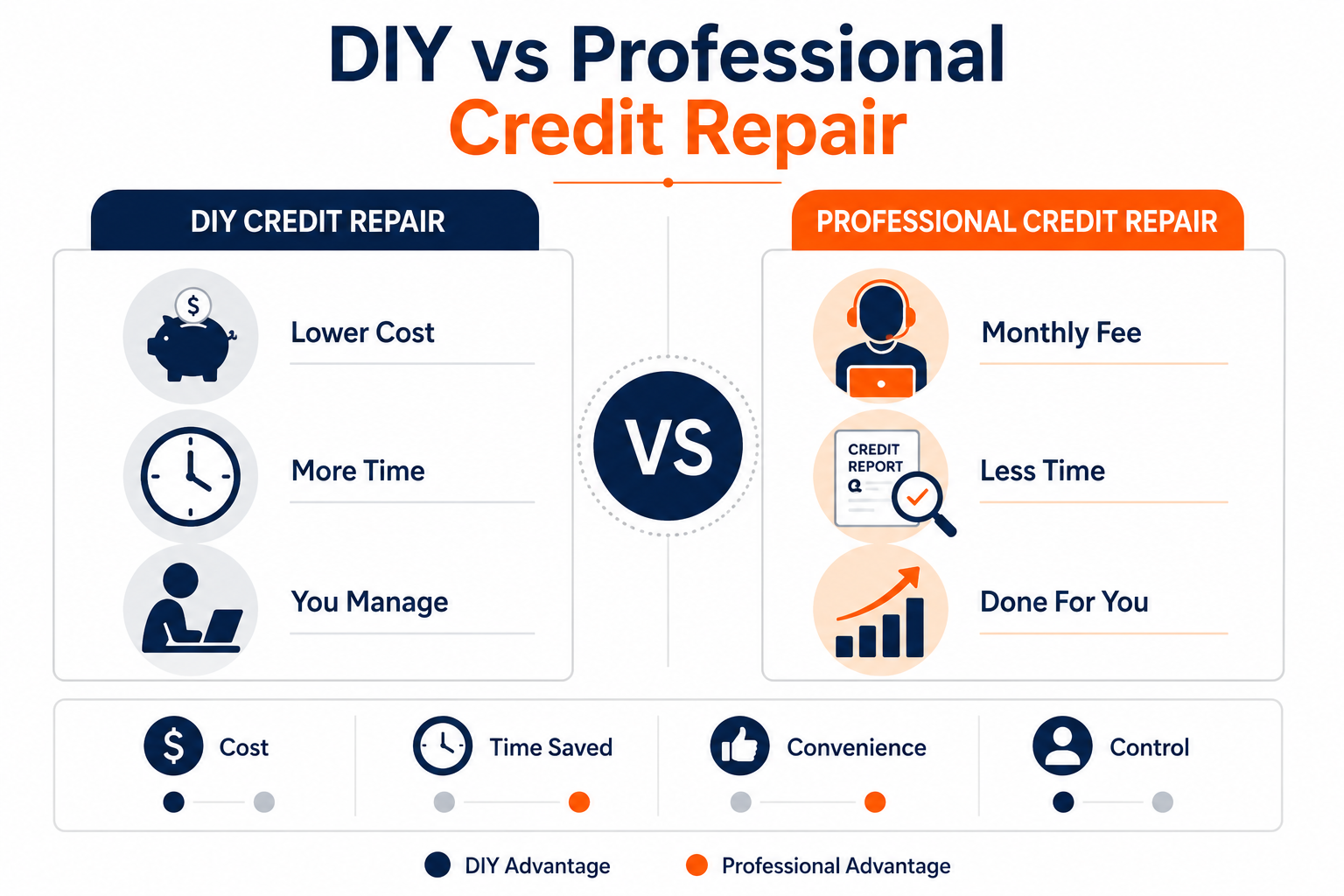
Whether paying someone to fix your credit is worth it depends on your situation. If your credit reports contain errors, inaccurate collections, or identity theft issues, professional credit repair may save time and help resolve problems more efficiently. If your credit challenges stem from accurate late payments or high balances, a do-it-yourself approach may provide similar results at a lower cost.
The comparison below highlights the main differences between DIY credit repair and hiring a credit repair company.
What Does a Credit Repair Company Actually Do
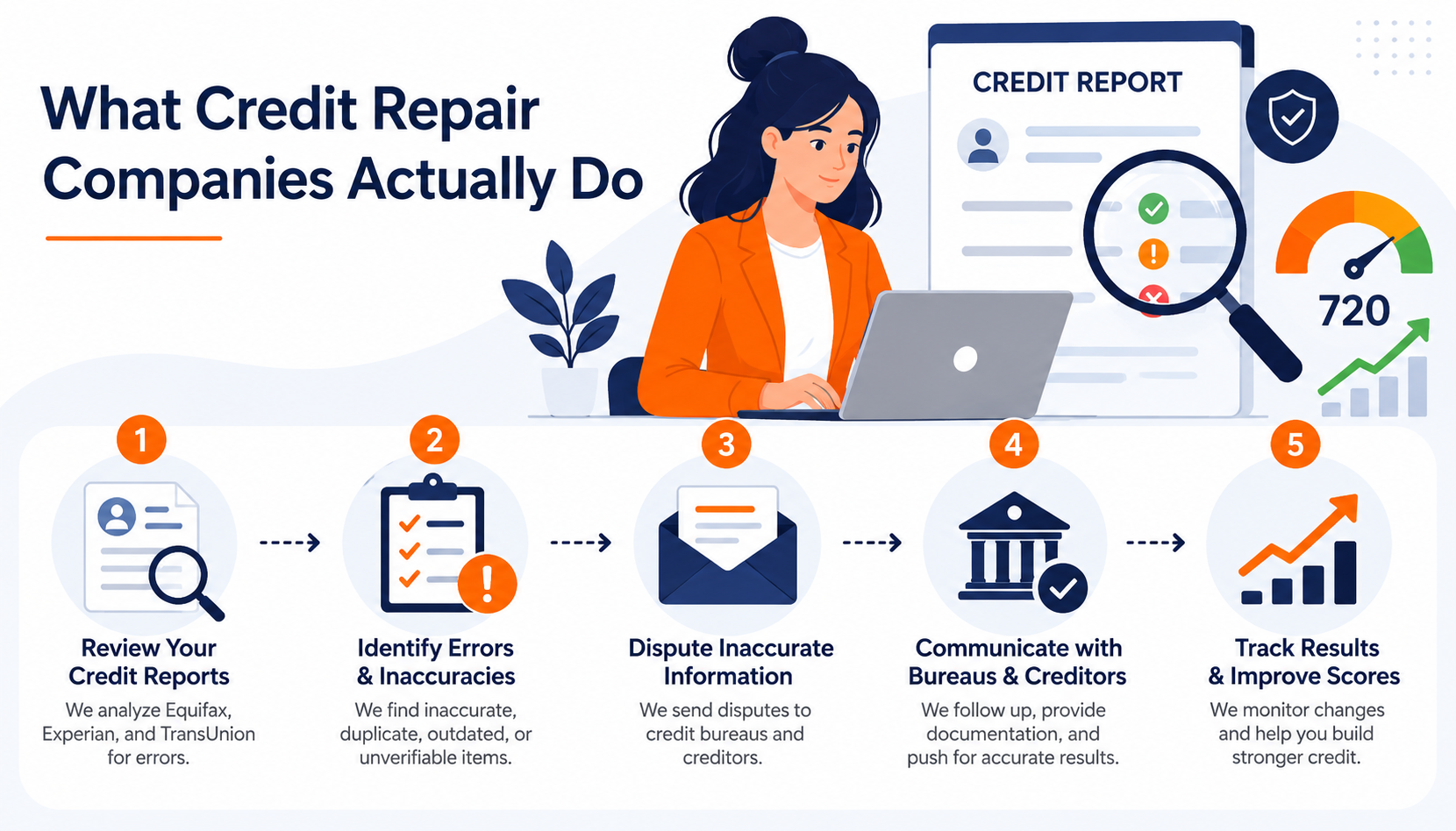
A legitimate credit repair company reviews credit reports from Equifax, Experian, and TransUnion to identify inaccurate, incomplete, or unverifiable entries. It files FCRA disputes with the bureaus and FDCPA debt validation requests with collectors on the client's behalf. It tracks investigation responses and sends follow-up challenges when items return "verified" but documentation gaps remain. It monitors credit changes across all three bureaus throughout the process. Everything the company does, a consumer can do independently under the same federal laws , the company provides expertise, organization, and time savings.
Reviewing All Three Credit Reports
Most people check one bureau. Professional review covers all three. Negative items often report differently across Equifax, Experian, and TransUnion , with different dates, different balances, or different collection company names on each. A review that misses one bureau misses the complete picture.
A thorough three-bureau audit identifies:
- Reporting inaccuracies. Wrong late payment dates, wrong balances, or accounts showing as open that closed years ago.
- Duplicate collection accounts. Original creditor and multiple debt buyers sometimes report the same underlying debt simultaneously , creating multiple negative entries for one event.
- Mixed files. Credit bureau errors sometimes merge files from different people with similar names, addresses, or Social Security numbers. These accounts produce dramatic score damage from items that never belonged to the borrower.
- Unverifiable collections. Debt buyers who purchased accounts through multiple sales often cannot produce complete chain-of-title documentation required for FCRA verification. These accounts fail disputes more frequently than many consumers expect.
- Identity theft indicators. Hard inquiries or accounts the borrower never opened signal potential fraudulent activity requiring immediate action.
Disputing Inaccurate Information Under FCRA
The Fair Credit Reporting Act (FCRA) requires bureaus to investigate disputed items within 30 days and remove entries that cannot be verified. Credit repair companies send dispute letters identifying the specific inaccuracy, the specific item, and the specific supporting documentation.
The dispute process targets:
| Item Type | Common Dispute Basis | Potential Score Impact if Removed |
|---|---|---|
| Wrong late payment date | Date does not match original creditor records | +15 to +50 points depending on recency |
| Incorrect balance | Reported balance exceeds actual amount owed | Utilization improvement + score increase |
| Duplicate collection | Same underlying debt on two or more entries | +20 to +60 points per deleted duplicate |
| Unverifiable collection | Collector cannot produce ownership documentation | +30 to +80 points per successful removal |
| Identity theft account | Account never opened by the borrower | Major score recovery , case-specific |
| Outdated negative item | Past 7-year FCRA reporting window | Full entry removal , significant improvement |
When Paying for Credit Repair Is Worth It
Professional credit repair produces the clearest value in four situations: multiple inaccurate items exist across all three bureaus (the more items, the more value from expert management), identity theft created fraudulent accounts requiring FTC reports and rapid dispute management, a mortgage or major loan is 3 to 6 months away and score improvement translates directly to rate savings, or the consumer lacks the time or documentation skills to manage a multi-bureau dispute process consistently.
- Multiple inaccurate items across three bureaus. Each bureau requires separate dispute letters. Managing 8 to 12 items across Equifax, Experian, and TransUnion simultaneously takes significant time and organization. Professional management tracks every response and sends follow-up challenges when needed.
- Identity theft with fraudulent accounts. Fraudulent accounts require FTC identity theft reports, dispute letters, fraud alerts, and sometimes credit freezes across all three bureaus. The documentation volume is significant and mistakes extend the recovery timeline.
- Mortgage application in 3 to 6 months. A score improvement from a deleted collection can cross a pricing tier that saves $50 to $150 per month over the life of a mortgage. The ROI on the program fee often pays back within 12 months and compounds over 30 years.
- Unverifiable collections from debt buyers. Debt buyers who purchased accounts through multiple transfers often lack complete chain-of-title documentation. Sending the right validation requests in the right sequence to the right entities requires specific FDCPA knowledge that most consumers do not have.
- All negative items are accurate and recent. No legitimate company legally removes accurate, fully documented, properly reported negative items. A late payment from four months ago that is correctly recorded stays on the report. Professional credit repair cannot change this.
- High credit card utilization is the main problem. Utilization improves through balance paydown , not disputes. A company cannot dispute a correct balance. Paying for credit repair when the fix is paying down a credit card wastes the program fee.
- Only one or two simple items to dispute. Filing a dispute with one bureau for one inaccurate item takes 30 minutes and costs nothing under the FCRA. Paying a monthly fee to outsource one letter is not an efficient use of money.
- No major financial milestone approaching. Credit repair ROI comes from the financial decisions the improved score enables. If no mortgage, auto loan, or major credit application is planned, the urgency of professional acceleration reduces.
How Much Does Credit Repair Cost
Professional credit repair typically costs $50 to $150 per month plus a $70 to $200 setup or first-work fee. Premium programs run $150 to $300 per month. Under the Credit Repair Organizations Act (CROA), companies cannot charge the full fee upfront before completing the promised services. A 3 to 6 month program ranges from approximately $370 to $1,100 in total cost depending on the program tier chosen.
As Bankrate's April 2026 review of credit repair companies confirms, reputable companies start at $79 to $99 per month after a one-time setup fee, and the best measure of value is whether the services being offered are proportionate to the specific credit file issues being addressed.
The ROI calculation changes significantly based on: how many score points the program produces, which LLPA pricing tier the score crosses, and the loan size. For smaller loans or modest score improvements, the math may not favor paid repair. For mortgage preparation at the right score level, the math often strongly favors it.
As Experian directly confirms, credit repair companies charge for time savings and guidance , not for any special legal rights unavailable to consumers acting alone. The fee question is always whether the time savings and expertise justify the cost relative to the specific financial goal being pursued.
Can You Fix Your Credit Yourself
Yes. The Fair Credit Reporting Act (FCRA) gives consumers the same dispute rights as credit repair companies. Pull all three reports free at AnnualCreditReport.com. Identify inaccurate or unverifiable items. Send written dispute letters to each bureau. The bureaus have 30 days to investigate and respond. Send debt validation requests to collectors via certified mail. The process costs nothing except postage and time. CROA-registered companies are legally prohibited from claiming they have rights consumers do not have.
DIY credit repair is most practical when:
- One or two clear inaccuracies exist and the documentation to dispute them is straightforward.
- Time is available to manage the 30-day investigation windows, track responses, and send follow-up disputes when needed.
- The collection or negative item is obviously obsolete (past 7 years from original delinquency) , a simple obsolescence dispute that takes one letter.
- No major loan application is on a tight timeline , the learning curve in DIY credit repair sometimes extends the timeline by one to two extra dispute cycles.
The full DIY process , what collectors must provide when requested to validate, how bureau investigation windows work, and what gaps in their response mean for dispute strategy , is covered in detail in the guide to how credit repair works. Knowing the process is the first step toward deciding whether to manage it independently or use professional support.
DIY Credit Repair vs Professional Credit Repair
How Long Does Credit Repair Take
Bureaus have 30 days to complete FCRA dispute investigations. First round results arrive within 30 to 45 days. Initial score movement typically appears within 30 to 60 days of the first dispute cycle. Meaningful improvement across multiple items takes 3 to 6 months of consistent dispute management. Full credit rebuilding from a significantly damaged profile (score in the 400s-500s) to mortgage-ready (580-640+) typically takes 12 to 36 months combining dispute work and positive payment history building.
| Phase | Timeline | What Happens |
|---|---|---|
| First dispute results | 30 to 45 days | Bureau investigation completes. Items deleted, verified, or returned for follow-up. First score movement appears. |
| Initial meaningful improvement | 2 to 3 months | First and second dispute cycles complete. Multiple items addressed. Score reflects combined removal impact. |
| Broader credit improvement | 3 to 6 months | Multiple bureau entries addressed across all three. Positive payment history building simultaneously. Score reflects both improvements. |
| Full credit rebuild | 12 to 36 months | Disputes complete. Remaining valid negatives aging. Positive tradelines established. Score reaches target range for financial goals. |
How to Avoid Credit Repair Scams
The Credit Repair Organizations Act (CROA) defines specific protections for consumers hiring credit repair companies. Any company violating these protections operates illegally. The clearest red flags: demanding full payment before any services are performed (prohibited by CROA), guaranteeing specific score increases (prohibited by CROA), offering to create a new credit identity (illegal), or claiming they can remove accurate negative information (false representation). Legitimate companies charge after completing services, disclose rights in writing, and set realistic expectations.
As the Federal Trade Commission's credit repair consumer guide confirms, no one can legally remove accurate, timely negative information from a credit report. Companies that promise to do so charge for something that cannot legally be delivered , and the FTC actively pursues enforcement against these operators.
Is Hiring a Credit Repair Company Better Than Debt Consolidation
They solve different problems. Credit repair targets what the credit report says , removing inaccurate entries, disputing unverifiable accounts, and challenging improper reporting. It does not pay debt. Debt consolidation manages what is owed , combining payments, reducing interest exposure, and improving cash flow. Many borrowers benefit from both: credit repair for inaccurate report entries, debt consolidation or targeted paydown for accurate high-balance accounts. Using only one when both problems exist produces slower results.
The typical case where both apply:
A borrower has four collection accounts. Two date back to 2019 and show inaccurate balances. Those go through the FCRA dispute process. The other two are valid, verified, and accurately reported. Those become candidates for pay-for-delete negotiation or consolidation through a personal loan.
Running credit repair and consolidation simultaneously on the right accounts produces the fastest combined improvement. Running them in the wrong order , paying valid collections before completing the dispute process , wastes money on accounts that a successful dispute might have removed for free.
For borrowers weighing their options in Houston and the surrounding Texas markets, ASAP Credit Repair Houston provides a full three-bureau review that identifies exactly which accounts fall into the disputable category versus which require a payment or consolidation strategy , before any fees are charged.
Can credit repair companies remove legitimate negative items?
No , and any company claiming they can is violating the Credit Repair Organizations Act. Legitimate credit repair addresses inaccurate, incomplete, or unverifiable items. An accurately reported late payment from 14 months ago, a legitimate bankruptcy, or a valid charge-off from an account the borrower actually defaulted on stays on the report. The FCRA provides dispute rights for incorrect information only , not for accurate derogatory information the borrower finds unfavorable.
How many points can credit repair improve my credit score?
There is no universal number. Results depend entirely on what negative items get removed and how much each suppressed the score. At ASAP Credit Repair, we've seen clients gain 80 to 150 points after removing multiple inaccurate collections from all three bureaus. We've also seen clients gain 15 to 20 points when only one small collection deletes. The improvement reflects what was causing the suppression , and that is only knowable after reviewing the specific file. Anyone quoting a specific point improvement before seeing the credit report is guessing.
Do lenders view credit repair negatively?
No. Mortgage lenders and other financial institutions evaluate the credit report itself , the accounts, the payment history, the utilization, the negative items. Whether those items improved through consumer-filed disputes, professional credit repair, or natural aging makes no difference. The report shows the current picture. The picture determines the decision. Lenders do not ask whether credit repair services played a role in a score improvement.
What is CROA and why does it matter when choosing a credit repair company?
The Credit Repair Organizations Act (CROA) is the federal law governing credit repair companies. It requires: written contracts specifying services and fees before collecting payment, a three-day cancellation right without penalty, a Consumer Credit File Rights disclosure before any agreement is signed, and a prohibition on charging fees before services are performed. CROA registration means the company operates under these legally binding requirements. Choosing a CROA-compliant company provides legal recourse if the company fails to deliver promised services.
-
Am I Financially Ruined by Debt? What to Do When It Feels Impossible Many people asking whether credit repair is worth paying for are asking from a place of financial overwhelm , the same place as the borrower who Googles "am I ruined at $96k in debt." This covers the recovery framework that applies regardless of which strategy is chosen: what the numbers actually mean, the realistic timeline from a credit profile in distress to a mortgage-ready file, and why the plan matters more than the debt amount. Credit repair is one tool in that plan.
-
Should You Use a Personal Loan to Pay Off Collections? Collections are the primary target of legitimate credit repair , and this article covers the critical decision that comes before any payment or consolidation choice: which collections to dispute first (before paying), which to negotiate pay-for-delete on, and when a consolidation loan makes sense for what remains. This is the execution guide for the collection removal strategy that credit repair companies and consumers acting independently both use.
-
How Available Credit Can Raise Your Credit Score Faster Than You Think The article above notes that credit repair is typically not worth paying for when high utilization is the primary problem , because balance paydown produces faster score improvement than any dispute process. This covers the exact mechanics of why: how utilization updates every billing cycle, why paying before the statement closes produces the fastest score movement, and how getting from 80% to under 10% utilization can add 30 to 50 points faster than most dispute outcomes. For borrowers where utilization is the issue, this is the DIY path.