

A wrong credit limit on your credit report can hurt your credit score even when you pay every bill on time. The Consumer Financial Protection Bureau (CFPB) identifies incorrect credit limits as a common type of credit reporting error. According to FICO, amounts owed, which include credit utilization, account for approximately 30% of a typical FICO Score.
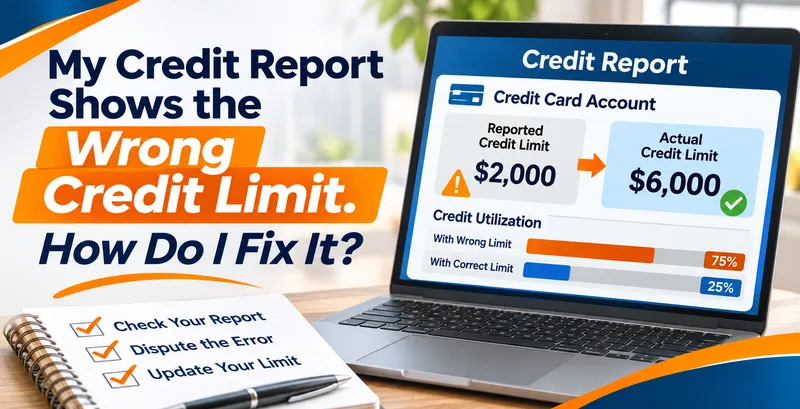
For example, if your actual credit limit is $6,000 but your credit report shows $2,000, a $1,500 balance would appear as 75% utilization instead of 25%. This inaccurate information could affect how lenders assess your creditworthiness when you apply for a mortgage, auto loan, or credit card.
At ASAP Credit Repair USA, we help consumers identify inaccurate account information and understand their credit dispute options. Correcting an inaccurate credit limit starts with reviewing your credit reports, gathering supporting documents, and contacting the appropriate parties.
This guide explains why your credit report may show the wrong credit limit, how inaccurate limits affect your credit score, and how to dispute reporting errors with Equifax, Experian, TransUnion, and your credit card issuer. You will also learn what to do if your initial dispute fails and how to confirm that the corrected information appears on your credit reports.
Why Does My Credit Report Show the Wrong Credit Limit?
A credit report shows the wrong credit limit when the card issuer reports incorrect data to the bureau, fails to update a recent limit change, or, in the case of some store cards and charge cards, deliberately does not report a credit limit at all and reports your highest balance instead. A data entry error, a mixed file, or a stale update are the most common causes of a genuinely inaccurate limit. The fix is a dispute with the bureau, the issuer, or both, backed by documentation of your actual credit limit.
The issuer reported a data entry error
Issuers report account data to the three bureaus each month through automated systems. A data entry error in that report can cause the wrong limit to appear sometimes the limit from a different account, sometimes an outdated figure, sometimes a typo. Because the bureaus receive furnisher data passively and do not independently verify credit limits, an error in the furnisher's file flows directly into your credit report without any review.
A recent credit limit change was not updated
When an issuer increases or decreases your credit limit, that change must be reflected in the next monthly data submission to the bureaus. If the issuer's system misses the update or the change is processed after the monthly reporting cycle, your old limit stays on the report until the next submission corrects it. A limit increase that never updated means your utilization appears higher than it is on that card. A decrease that never updated means the report may show a limit that is higher than what the issuer now allows — a less common but possible error.
The issuer does not report credit limits
Some issuers — particularly certain store card programs, some charge card products, and a handful of credit card issuers do not report your actual credit limit to the bureaus at all. Instead, they report your highest balance on the account. The bureau then uses that highest balance as a stand-in limit when calculating your utilization. If your highest balance on the card was $600 but your actual limit is $3,000, your bureau-reported "limit" is $600, and any current balance on that card is calculated against that figure.
This practice is legal. The issuer has not reported a wrong number — they have simply chosen not to report the limit. This creates a unique problem: it cannot be disputed as a factual inaccuracy because no limit was reported at all. The practical workarounds are covered below in the section on issuers that do not report limits.
A mixed file merged another consumer's account into your report
A mixed file occurs when the bureau's matching system incorrectly merges data from two different consumers into one file. This can happen when two people share similar names, addresses, or Social Security number digits. If another consumer's lower-limit account is merged into your file, your report shows their limit instead of yours. Mixed file errors require a different dispute approach: you must flag the account as not belonging to you rather than simply disputing the limit figure.
Does a Wrong Credit Limit Hurt Your Credit Score?
Yes, when the reported limit is lower than your actual limit. FICO calculates credit utilization using the limit on your credit report, not your actual limit. A $1,500 balance against a correctly reported $6,000 limit is 25 percent utilization. The same $1,500 balance against a wrongly reported $2,000 limit is 75 percent utilization, a figure that pushes into the range that scores treat as a significant risk signal. The score difference between 25 percent and 75 percent utilization can be substantial, particularly for consumers with otherwise clean credit files.
Utilization is not just calculated card by card; it is also calculated in aggregate across all revolving accounts. A wrong limit on one card raises both the per-card utilization for that account and the overall utilization ratio across all cards. If the card with the wrong limit is your highest-limit card, the aggregate impact is proportionally larger.
| Scenario | Your Balance | Reported Limit | Apparent Utilization |
|---|---|---|---|
| Correct limit reported | $1,500 | $6,000 | 25% — favorable range |
| Limit reported too low | $1,500 | $2,000 | 75% — high-risk range |
| Highest balance used as limit | $1,500 | $900 (highest prior balance) | 167% — extreme distortion |
| No limit reported, $0 balance | $0 | Not reported | Account excluded from utilization calculation |
How to Find Out If Your Credit Limit Is Reported Correctly
Pull your credit reports from all three bureaus at AnnualCreditReport.com and compare the credit limit listed for each card account to the actual limit shown on your most recent card statement or in your online account portal. If the bureau report shows a different limit lower, higher, or blank you have identified an error. Check all three bureau versions of the same account because an issuer may have submitted different data to each bureau in separate reporting cycles.
What to look for on your credit report
Find the account in question on each bureau's report. The tradeline entry includes a field labeled "Credit Limit," "High Credit," or "Credit Line." Compare that figure directly to your actual limit. If the field shows a dollar amount that is lower than your real limit, that is a disputable error. If the field shows "N/A," "not reported," or is blank, your issuer is not reporting a limit — which is a separate issue handled differently than a factual error.
Gather your documentation before disputing
Your dispute needs evidence. The two strongest documents are a recent credit card statement showing your credit limit in the account summary, and a letter or email from the issuer confirming your current credit limit. If you received a credit limit increase or decrease notice, keep that too. Screenshots of your online account portal showing the limit are supporting evidence but are easier for bureaus to dismiss than a physical statement. A printed or saved PDF of your statement is better.
How to Dispute a Wrong Credit Limit — Step by Step
File two disputes simultaneously: one with each bureau reporting the error under FCRA Section 611, and one directly with the card issuer under FCRA Section 623. Filing both at the same time means neither process waits on the other. The bureau must complete its investigation within 30 days. The issuer has 45 days on a direct dispute. Send copies of your documentation and your statement showing the correct limit with both disputes. If the error is not corrected, escalate with a CFPB complaint.
1. Dispute with the credit bureau (FCRA Section 611)
File your dispute online at Equifax.com, Experian.com, or TransUnion.com, or by mail if you prefer a paper trail. Identify the specific account, describe the error clearly ("Credit limit reported as $2,000; actual limit is $6,000"), and upload your statement as evidence. The bureau forwards the dispute to the issuer through the e-OSCAR automated system. The issuer verifies or corrects the data. The bureau then updates your report and notifies you of the result.
Under FCRA Section 611, the bureau has 30 days from receipt of your dispute to complete the investigation. If you submit additional documents during the process, the window extends to 45 days. If the bureau finds the data is accurate as reported, it will notify you, and you can then escalate to the furnisher directly.
2. Dispute directly with the issuer (FCRA Section 623)
Send a written dispute to the card issuer's designated address for FCRA disputes. This is typically different from general customer service and is listed in the issuer's FCRA notice, which appears on your credit card agreement or the issuer's website. State the specific error, include your account number, and attach a copy of your statement showing the correct limit. Under FCRA Section 623, the issuer must investigate within 45 days and report any correction back to the bureaus. Send this letter by certified mail so you have a delivery record.
3. File a CFPB complaint if the error is not corrected
If the bureau closes the dispute without correcting the limit, or if the issuer ignores your direct dispute, file a complaint at consumerfinance.gov/complaint. Name both the bureau and the issuer as respondents. Describe the dispute history, include your documentation, and specify the dates of each unresolved dispute. CFPB complaints are routed to the company and require a formal response. Many credit limit errors that survived an initial bureau dispute are corrected after a CFPB complaint is filed.
4. Send a method of verification request if the bureau verifies the error
If the bureau closes your dispute with the result "verified as accurate" but you know the limit is wrong, you are entitled to request the method of verification, the specific process, and the evidence the bureau used to confirm the data. Send this request in writing to the bureau. If the bureau cannot describe a reasonable investigation or relied solely on the issuer's automated confirmation through e-OSCAR without reviewing your actual documentation, that is grounds for escalation. At that point, a credit repair organization or consumer law attorney can evaluate whether the bureau's handling of the dispute violated FCRA Section 611.
The bureau updates the credit limit field to reflect the correct figure. Your utilization ratio recalculates against the accurate limit at the next scoring update. If the corrected limit is higher than what was reported, your score increases — sometimes substantially at the next lender pull or bureau scoring refresh.
Request the method of verification in writing. File a direct dispute with the issuer under Section 623 if you have not already. File a CFPB complaint naming both the bureau and the issuer. Consult a consumer law attorney if the error persists. FCRA Sections 616 and 617 provide for statutory damages of $100 to $1,000 per willful violation.
What to Do When Your Issuer Does Not Report Your Credit Limit
When an issuer does not report a credit limit at all and reports your highest balance as a proxy, the problem cannot be fixed through a bureau dispute because no incorrect fact was reported. The two practical approaches are to pay the card's balance to zero, which removes it from the utilization calculation entirely, or to contact the issuer directly and request that they begin reporting your actual credit limit to the bureaus. Some issuers will update this practice upon request. If neither option works, that card's impact on your utilization score is best managed by keeping its balance as low as possible so the highest-balance proxy limit stays close to your actual limit.
Issuers that commonly use highest balance instead of credit limit include certain store card programs managed on the Synchrony and Comenity networks, and some charge card products. American Express has historically not reported limits on its charge cards (cards with no preset spending limit), though it now reports limits on most of its credit cards. Capital One previously did not report limits but changed this practice.
A wrong limit, one that differs from your actual limit, is a disputable factual error. A missing limit where the issuer reported no limit because they choose not to is a reporting practice, not an error, and cannot be successfully disputed as an inaccuracy. Knowing which situation applies to your account determines whether a dispute or a workaround is the right approach.
How Long Does It Take to Fix a Wrong Credit Limit?
From the date you file the dispute, the bureau has 30 days to investigate under FCRA Section 611, and the issuer has 45 days on a direct dispute under Section 623. Once the bureau posts the correction, your score reflects the accurate limit at the next scoring update, typically within 30 to 45 days, though some lenders see the updated score faster when they pull your report. The full process from dispute to score improvement is typically 30 to 60 days when the first dispute succeeds.
Score improvement is not guaranteed on a fixed timeline because scoring engines recalculate only when a lender pulls your file or when the bureau refreshes its scoring model for that account. If you need the corrected score for a specific purpose, a mortgage application, an auto loan, a credit card application, file the dispute as early as possible relative to that need. A 30-day dispute window that runs right up against a lender pull may not leave enough time for the score to reflect the correction.
What to Check After Your Credit Limit Is Corrected
After the bureau posts the corrected limit, pull updated reports from all three bureaus and confirm the correction appears consistently. Check that the corrected limit matches your actual limit exactly, that no negative remark was added during the investigation, and that your utilization ratio now reflects the accurate available credit. If one bureau corrected the limit and another did not, file a separate dispute with the bureau that still shows the error.
- ✓ Pull fresh reports from all three bureaus within two weeks of the correction notice
- ✓ Confirm the corrected limit matches your actual limit on each bureau's version
- ✓ Verify no adverse remark was added to the account during the dispute investigation
- ✓ Check that your credit utilization ratio has recalculated correctly across all accounts
- ✓ Monitor your credit score over the next one to two billing cycles to confirm the score improvement posts
- ✗ Do not close the account after the correction; a corrected tradeline with a high limit is an asset to your credit file
- ✗ Do not apply for new credit during the dispute window — a hard inquiry adds a new variable while the investigation is open
A corrected credit limit that restores your true available credit also makes you a stronger candidate for a credit limit increase request in the future. Lenders use your bureau-reported utilization as part of their review. Accurate reporting of a higher limit, combined with low utilization, is the profile that most issuers reward with additional credit. Our guide on how tradelines are reported and how they affect your credit file covers how credit limit data flows from issuer to bureau to your score.
A wrong credit limit on your credit report inflates your utilization ratio and suppresses your score sometimes by a significant margin. The most common causes are a furnisher data error, an unupdated limit change, or an issuer that reports the highest balance instead of the credit limit. For a genuinely wrong limit, dispute with the bureau under FCRA Section 611 and directly with the issuer under FCRA Section 623 at the same time, with your statement as evidence. For a missing limit on an issuer that does not report one, the dispute route does not apply; pay the balance to zero or request the issuer change its reporting practice. If disputes fail, escalate with a CFPB complaint. The full correction cycle is typically 30 to 60 days.
If a credit limit error has been suppressing your score and you are not sure what else on your report may be inaccurate, a full review of all three bureaus is the right starting point. ASAP Credit Repair reviews every tradeline across Equifax, Experian, and TransUnion and identifies every disputable error, not just credit limit issues. See also our breakdown of closed account errors from lenders and how they affect scores the same way wrong limit data does.
Frequently Asked Questions
Why does my credit report show the wrong credit limit?
A credit report can show the wrong credit limit for several reasons. The most common are a data entry error by the issuer, a credit limit increase or decrease that was not updated in the furnisher's next report to the bureaus, or an issuer that does not report credit limits at all and instead reports your highest balance on the account as a proxy. Some store cards and charge cards fall into this last category. A mixed file where another consumer's account data has been merged into your report can also cause a wrong limit to appear.
Does a wrong credit limit on my credit report hurt my score?
Yes, when the reported limit is lower than your actual limit. Credit utilization, the ratio of your current balance to your available credit limit, accounts for about 30 percent of a FICO score. If your credit report shows a $2,000 limit when your actual limit is $5,000, the bureau calculates your utilization against the smaller figure, which makes your utilization appear much higher than it actually is. A $1,000 balance against a $2,000 reported limit shows 50 percent utilization. The same $1,000 against a correctly reported $5,000 limit is only 20 percent, a significant scoring difference.
How do I dispute a wrong credit limit on my credit report?
Dispute with both the credit bureau and the card issuer simultaneously. With the bureau, file online at Equifax, Experian, or TransUnion with a copy of your credit card statement or account agreement showing the correct limit. The bureau has 30 days to investigate and correct the error under FCRA Section 611. With the issuer, file a direct dispute under FCRA Section 623 the issuer has 45 days to investigate. Send both disputes at the same time so neither one delays the other. If the error is not corrected, escalate with a complaint to the CFPB.
What if my issuer does not report my credit limit to the bureaus?
Some issuers, particularly certain store cards and charge card issuers, do not report credit limits to the bureaus. Instead, they report your highest balance on the account as a proxy for the limit. When this happens, your utilization is calculated against your highest balance rather than your true limit, which almost always makes your utilization appear higher than it is. Because the issuer has not reported an incorrect limit, they have simply chosen not to report one; this cannot be disputed as a factual error. The only practical fix is to pay your balance to zero so it does not inflate your apparent utilization, or to contact the issuer and request that they begin reporting your actual limit.
How long does it take to fix a wrong credit limit on a credit report?
A bureau dispute must be investigated within 30 days under FCRA Section 611, or 45 days if you submit additional information during the investigation. A direct furnisher dispute under FCRA Section 623 gives the issuer 45 days. Once corrected, most bureaus update their records within one to five business days of the investigation closing. Your score reflects the corrected limit at the next scoring update, which typically happens when a lender pulls your report or when the bureau refreshes its scoring data, usually within 30 to 45 days of the correction posting.
Wrong Credit Limit Inflating Your Utilization?
An understated credit limit can suppress your score by dozens of points with no other negative entries on your file. ASAP Credit Repair reviews every tradeline across all three bureaus, identifies every disputable error, and handles the entire dispute process at no cost for the initial audit.
Get My Free Audit ASAP Credit Repair USA is a CROA-registered credit repair organization. Individual results vary.-
→
Closed Account Errors from Lenders: How to Fix Them Post-closure reporting mistakes that inflate utilization and suppress your score after an account closes and how to dispute each one.
-
→
Tradeline Credit Repair: What Your Credit File Actually Shows How credit limit data flows from issuer to bureau to your score, and what each tradeline field means for your utilization calculation.
-
→
Recalled Collections on Your Credit Report: What to Do A different type of reporting error: collection accounts that were recalled but not removed, and the dispute path to get them off your file.