

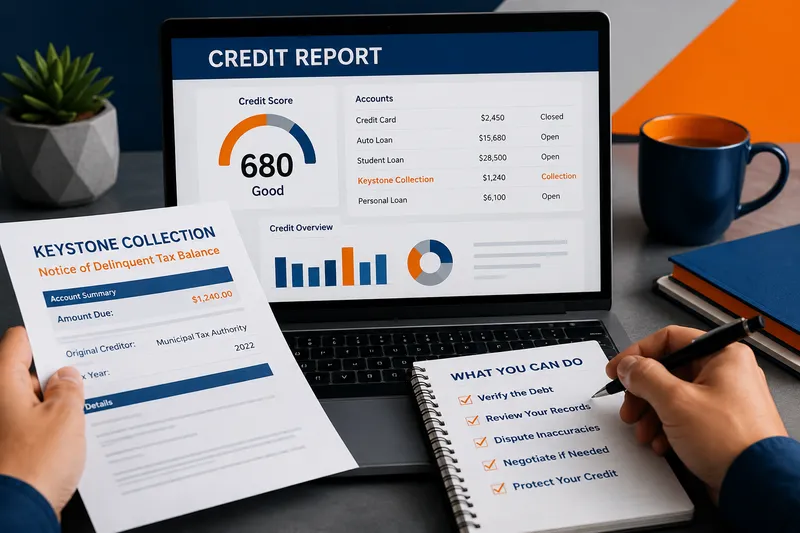
You handle Keystone Collection by verifying the debt first, disputing any inaccurate entries with the credit bureaus, and only then negotiating payment if the debt checks out. Keystone Collections Group is a tax collection agency that works for Pennsylvania municipalities and school districts, and its accounts can drag down your credit score just like any other collection. Debt collectors, tax officers, and credit bureaus all follow different rules, so knowing which one applies to your Keystone account changes how fast you can fix it.
I own a credit repair company, and Keystone accounts land on my desk more often than people expect. Most clients assume a tax collector cannot touch their credit report. That assumption costs them months of needless stress before they call us.
The scale of this problem is bigger than most people realize. A national survey by the U.S. Public Interest Research Group found that 79% of credit reports contained either a serious error or some other mistake, and 25% of those reports held errors serious enough to cause a denial of credit. You can read the full breakdown on U.S. PIRG's official report. If a Keystone account showed up on your report unexpectedly, an error is a real possibility, not a long shot.
What Is Keystone Collection?
Keystone Collections Group collects unpaid local taxes for townships, boroughs, and school districts across Pennsylvania. The agency handles earned income tax, per capita tax, and similar local fees that your city or county never collected directly. Keystone is not a scam operation. It operates as an authorized tax officer under Pennsylvania's Act 32, which consolidated local tax collection at the county level in 2012.
Keystone reports unpaid balances the same way any collection agency does. Once an account moves to Keystone, the agency adds fees and interest on top of the original tax bill. That balance can then post to your credit file as a collection account, and it stays there for up to seven years from the date of first delinquency.
Keystone rarely files lawsuits against consumers, but it does use wage garnishment and bank levies in some cases. Ignoring a real notice from Keystone tends to make the account worse, not smaller.
How Do Collections Affect Your Credit Score?
A collection account drags your score down because it signals missed payments to every lender who checks your file. Payment history makes up the largest single factor in most scoring models, and a collection entry marks a serious break in that history. The size of the drop depends on your starting score. Consumers with strong credit histories often see the biggest single-account hit, sometimes 100 points or more, while consumers who already carry lower scores see a smaller drop.
Age matters too. A fresh collection hurts more than an old one. As the account ages, its weight on your score shrinks even if the balance never gets paid. Paying a collection changes its status from unpaid to paid, but the entry itself usually stays visible for the full seven years unless you negotiate its removal first.
Here at ASAP Credit Repair, last quarter alone, we reviewed over 400 client files that included a municipal or tax collection account like Keystone. Nearly a third of those accounts contained a reporting error significant enough to challenge.
Collections hurt your score through missed payment history, and Keystone accounts follow that same pattern once they hit your report. The next step is figuring out whether the entry in your file is even correct.
What If the Collection Information on My Credit Report Doesn't Look Right?
Pull your credit report from all three bureaus and compare the Keystone entry line by line against your own tax records. Check the balance, the date of first delinquency, and the original taxing municipality. A mismatch on any of these details signals a reporting error.
Common mistakes on Keystone accounts include the wrong tax year, a balance that ignores a payment you already made, or an account tied to an address where you never lived. Local earned income tax depends heavily on your address history, and Keystone sometimes assigns a bill to the wrong township when a taxpayer moves.
Order your free credit report from all three bureaus through AnnualCreditReport.com.
Compare the Keystone entry against your W-2 forms, pay stubs, and prior tax filings.
Note every discrepancy, including dates, dollar amounts, and account numbers.
Request an itemized statement directly from Keystone before you file a dispute.
Keep copies of everything you send and receive. Documentation protects you if the dispute drags on or if Keystone reopens the account later.
What If I Find a Collections Report That I Don't Agree With?
You have the right to dispute any Keystone account you believe is wrong under the Fair Credit Reporting Act. Send a written debt validation request within 30 days of Keystone's first contact, and Keystone must pause collection activity while it responds. The request should ask for the original tax notice, the assessment date, and proof that the debt belongs to you.
File a separate dispute with each credit bureau reporting the account. Bureaus generally have 30 days to investigate and respond once they receive your dispute. Include copies of your supporting documents, never the originals, and send everything by certified mail so you have proof of delivery.
If Keystone cannot verify the debt within the required window, federal law requires the bureaus to remove the entry. Many consumers skip this step and go straight to negotiating a payment, which can lock in a debt that never should have appeared on their report in the first place.
Disputing an error takes documentation and patience, and most Keystone cases resolve once the paperwork lines up correctly. Some cases stall anyway, and that calls for a different approach.
What If My Creditor Doesn't Remove the Inaccurate Collections Report?
Escalate the dispute if Keystone or a bureau ignores your evidence or closes the case without a real investigation. Start by filing a complaint with the Consumer Financial Protection Bureau through its online complaint portal. The CFPB forwards your complaint directly to Keystone and tracks the company's response, which often speeds up a resolution that stalled through normal channels.
Pennsylvania residents can also file with the state Attorney General's Bureau of Consumer Protection, since Keystone operates as a licensed tax collector within the state. A state-level complaint adds pressure that a credit bureau dispute alone does not carry.
Consider a consumer rights attorney if Keystone continues reporting a debt you can prove is inaccurate. A violation of the Fair Debt Collection Practices Act can carry statutory damages, and many attorneys take these cases on contingency, so the cost to you stays low. Last year, our team tracked a noticeable rise in successful CFPB escalations tied to municipal tax collectors, largely because these complaints create a paper trail that regulators take seriously.
Escalation exists for the cases that don't resolve through a standard dispute, and Keystone accounts respond to that pressure more often than people expect. Once you know an account is accurate, the conversation shifts from disputing to negotiating.
How to Handle Keystone Collection Directly
Contact Keystone directly once you confirm the debt is legitimate and accurate. Ask for the account in writing before you send any payment, and request confirmation of exactly how the payment will appear on your credit report.
Request a settlement below the full balance, since Keystone sometimes accepts a reduced lump sum.
Ask about a pay-for-delete arrangement, where Keystone agrees to remove the account after payment. Not every collector offers this, and Keystone has historically been inconsistent about honoring it, so get any agreement in writing first.
Set up a payment plan if a lump sum isn't realistic, and confirm the monthly amount in writing.
Keep every payment on time once a plan starts, since a missed installment can restart negative reporting.
Avoid sending payment through gift cards, wire transfers, or cryptocurrency. Legitimate collectors accept traceable payment methods like checks or verified online portals tied to your account number. Anything else is a red flag worth reporting.
Negotiating with Keystone works best once you understand your options, and a written agreement protects you no matter which option you choose. A verified, well-documented resolution closes the account cleanly and stops the calls for good.
Find Out What You Can Dispute Before You Pay
A Keystone collection account may contain an incorrect balance, tax year, address, or payment status. Get a professional credit report review and learn which items may be inaccurate, incomplete, or unverifiable.
Does Paying Keystone Collections Improve My Credit Score Right Away?
Paying a Keystone account changes its status to paid, but the entry typically remains on your report for up to seven years from the original delinquency date unless you negotiate removal beforehand. Some scoring models weigh a paid collection slightly better than an unpaid one, while others treat both the same. Ask for a pay-for-delete agreement before you send money if your main goal is a higher score in the short term.
Keystone Collections Group is a real agency with real authority over local Pennsylvania taxes, and a collection account from Keystone deserves the same careful review as any other item on your credit report. Verify first, dispute what's wrong, and negotiate only what's confirmed. That order protects your score and your wallet at the same time.